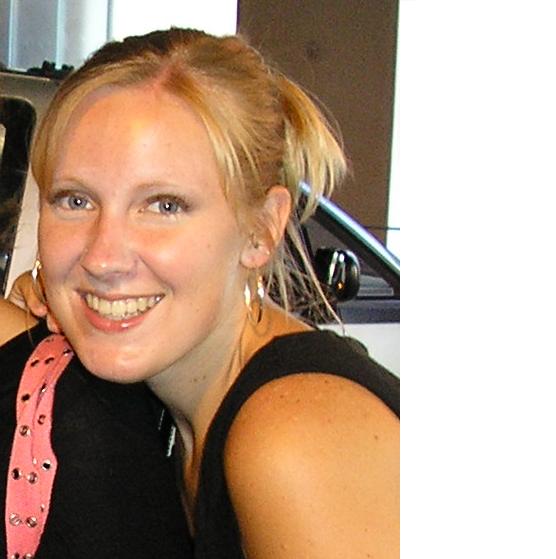
8/22/06
Today we finally started taking some concrete steps forward for our youth development project in São Domingos. We got some logistics settled for our girls’ futbol game and got to start doing the best part: going around to the different zones and getting girls to sign up to play and basically beginning to spread the word. I was nervous that we would get no response, that girls would be too shy or uninterested, but our player round-up was a great success. I think the best move we made was to start with the girls in my neighborhood who I already knew were interested—my sisters, my neighbors Sara and Keila, and Nadia and Tiffany’s sisters. These girls are so great, I can’t even describe. I got them to sign the list first and then they took us around the surrounding zones where they knew girls lived, particularly those who like futbol, and signed them all up. What’s awesome is that they literally know just about everyone and where they live, which makes things so much easier than going out on our own not knowing who we’d find. Plus having members of the community with you offers easy access to homes—the girls just walked in any home they wanted and yelled the name of who they were looking for. I think what I liked most was that they were really proactive; they took charge and ran with it, no questions asked, which is how I think it should be. Ideally we PCTs/PCVs shouldn’t be doing a whole lot on our own, we should be motivating the people involved in or affected by the project or event to do most of the work so that they are more invested, more likely to continue it in the future, and they know how to go about it. And I was pleasantly surprised at the amount of girls really interested in playing. Just walking around two zones (neighborhoods) we got 37 girls to sign up! So hopefully this will turn out to be a big deal, if we can get things all organized in time *fingers crossed*. It’s just a great feeling to finally be doing something tangible, something the community can see. It makes you feel that much more integrated, especially when you can walk around and get to know people’s names, their families, where they live, etc. It was just a really fulfilling afternoon, walking around with my favorite girls, arm-in-arm, singing songs about mosquitoes and getting excited about futbol.
Speaking of mosquitoes, I finally broke down tonight and put up my mosquito net—7 weeks into training and 3 weeks before I leave. I thought I could hold off hassling with it until I got to site, but I got so sick of being eaten alive and of walking up in the middle of the night to the pesky buzzing haunting my ears, knowing they’re picking the best spot to attack. It’s enough to make you start going insane, thinking you feel them all over you, starting to twitch. Dramatic, maybe, but I’ve spent many a sleepless night frantically swatting the little turds and crawling out of my skin feeling them all around me and itching like crazy. So the horrendously ugly green net has gone up. And it really is ugly, collapsed on one side so I have just enough room to sit up, an awful pukey color. And apparently it’s coated with some sort of substance that kills flies, who are now dropping “like flies” (haha…ha…) all over my room and creating a nice attractive layer of dead insects. So sexy. At least they’re no longer flying around in my face. Anyway, we’ll see if this nasty contraption successfully salvages what’s left of my arms and legs after the mosquitoes had their way.
8/27/06
So I’m starting to realize that the more languages you have floating around in your head, the more difficult it becomes to comprehend your own. The last two weeks (particularly since we started Portuguese last week) I’ve felt my knowledge and understanding of English fading quickly. Seriously. It’s like my brain can’t hold that much information, so it’s just booting out English little by little as new knowledge of Portuguese and Criolu come in. It sounds ridiculous, but it’s true: people have to repeat things for me all the time and it sometimes takes me awhile to understand what people actually mean. I feel like my ability to understand sarcasm is suffering too—which is the saddest part because I love my sarcasm and now I can’t tell when people are joking. Very unfortunate. Have no fear, I haven’t lost all sense of humor, there’s just like at least a 10 second delay now. I was thinking I was crazy until I realized all the other PCTs are experiencing the same thing: we’re just a big confused mess. It’s hard to explain things (like to family back home) when you can no longer articulate yourself. So I apologize for my lack of eloquence. And forget about Spanish; it has helped me in learning Portuguese because the structure is very similar and if I heard it again I’d understand perfectly, but when I try to speak it, it comes out in mush—a weird combination between Criolu, Portuguese, and what little Spanish is still hiding in corners of my brain (quickly being replaced by the two other similar languages). My LASP friends would be so disappointed. On the flip side, though, if I ever go back to Latin America (or when I go back) I think my Spanish will kick ass because I’ll understand the grammar even better and will be a master at switching between all the languages muddled in my head.
That said, two languages at once is hard, especially when you only really use one of them. Portuguese is hard enough, let alone not being able to practice it, since no one speaks it. As much as I’d like to be fluent by the end of these two years, it’s going to take a lot of outside work, and I may have to settle for being conversational. In class most of what I say comes out in Criolu, and now on the streets I’m starting to mix in Portuguese with the Criolu. My brain doesn’t quite know what to do. But I know soon enough it will all start coming together, it’ll just take time. I can’t wait for the moment when it just clicks and suddenly you feel comfortable and it makes sense. And I’m confident that will happen eventually…I have so much respect for people who can speak like 7 languages, it’s incredible.
8/28/06
Friday night we went to a party of a Volunteer who is COS-ing (close of service-ing), which was a great time, then afterwards (at crazy hours of the morning, of course) went to join the wedding festa that was going on in my neighborhood for the woman who owns one of the mercados and was getting married on Saturday. The thing about Cape Verde, as I think I mentioned before, is that they’ll take any excuse to party for days on end—so a wedding means a party the day before, a party the day of, and a party the next day…and probably some more partying somewhere inbetween. The weddings we’ve seen so far in town have had the actual event in Praia, and then all the partying is done in São Domingos, the bride and groom paraded through town in a decorated car. A good time is had by all, and most of the men in town are drunk by 1 or 2 in the afternoon. Speaking of drunk men, when we stopped by the party on Friday night, we went to the top balcony of the local hotel where everyone was dancing to partake in the fun. One might think that when you notice very few women dancing and an assload of drunken men, it might be best not to partake, but we learned that lesson too late. We stayed on the outer edge of the party, but were eventually lured in to the sea of men who proceeded to act like flies on a spoonful of honey, grabbing at all parts of your body, pulling you in every direction to come dance with them. I don’t know that I have ever had that many guys touching me at one time. I had to yell to my neighbor friend Igor to come rescue me, so I danced safely with him and then ran back to the edge of the crowd with the American guys who were watching and praising the Lord they were male Peace Corps Volunteers, not “cursed” with being female. Well it was an experience anyway. And not the last, I’m positive. I’m becoming good at ignoring the men that call out and make the famous Cape Verdean “pssssciu” sound as you walk down the road: better safe than sorry, right?
* * *
On Saturday all the PCTs went to Tarrafal with the staff and took a little tour inbetween of Picos, Assomada, and the concentration camp in Tarrafal created by Portuguese colonialists. Altogether it was a pretty good day, and I got to learn more about my site, which makes me even more excited to be there in two weeks! Assomada is full of history, particularly because it’s located in the interior, where the slaves ran to flee from Portuguese colonizers in Praia. So a lot of the traditional African culture preserved by the slaves and transformed into its unique Cape Verdean context was borne out of Assomada. The traditional music tabanka, from which funana and batuk came, was originally a way for the slaves to communicate with each other. It involves a rhythmic beat with women slapping their knees with their hands (for lack of drums), women singing to the beat, and men playing conch shells. This music was the only way they could speak to each other under slave rule, so they used it to communicate in all ways, to let each other know that they were going to escape into the hills, to speak of each other’s pain, etc. When they had no food, no water, and were near dead from exhaustion, tabanka was a way for them to stave off the pain and forget about their surroundings. The lady that was telling us all about it gave a demonstration, and you couldn’t help but be caught up in the energy and the rhythm of it all. It made me really excited to be staying there for the next two years, with such a rich musical history. Plus they have this wonderful huge women's market on Wednesdays, which I'm excited to see in action.
After the tabanka lesson, we went to the concentration camp in Tarrafal, which was created in 1936 and modeled after the camps used by the Nazis, complete with torture devices including what was called the frigideira, a dark enclosed space with a few puncture holes for air. This represented the camp’s “slow death” philosophy as nearly all who entered died soon after leaving it. The camp existed primarily for political prisoners, many of whom were Portuguese anti-fascists during World War II. Later, when Cape Verdeans began to be imprisoned there in the 60’s, it was mainly used for rebels against Portuguese colonial rule, those who fought for Cape Verdean’s and Guinea-Bissau’s independence. It was pretty bizarre to find a place like that in Cape Verde; although it wasn’t nearly as dramatic or intense as Auschwitz for example, you don’t expect to find a place like this in the little African islands no one knows about.
We spent the rest of the day on the beach at Tarrafal, one of the nicer beaches on Santiago, and I was happy to be reminded that I will be only a quick hiace ride away from visiting Nina (another PCT who will be living there) as often as possible. I really just love the beach. I love swimming, laying in the sun, everything about it. It was overall just a happy day, relaxed, informative, and of course sunny. It really pays to be doing the Peace Corps in an island nation…such amazing benefits!
8/29/06
So there’s this boy. I know what you’re thinking, and I don’t want to hear it—just hear me out first. The boy is my neighbor and he is simply beautiful. He’s very kind, humble, fun, sensitive, and he has a smile that knocks you clear off your feet. Seriously, he’s just plain gorgeous. He’s worked hard all his life to support his family since his father died when he was six months old, so he’s very family-oriented. And so I’d like to continue to be friends with this boy, who has recently told me (very shyly) that he likes me (how very kindergarten) and wants to come visit me in Assomada to get to know me better. Hmmm…I told him I wouldn’t mind. Now before you start to lecture me, understand that I plan to take our friendship at turtle pace, not to mention not putting expectations on the situation. If anything, it could just be a fun flirtation. So stop worrying (because I know you are, Mom)! The awkward part of it all is a good friend of mine (a PCT) likes him as well, so he is being very cautious not to hurt her feelings. Thank goodness in two weeks I won’t have to worry too much about it—she’ll be on another island and we can preserve our friendship without drama, it’s the last thing any of us needs. Damn dateable Cape Verdeans (we have all decided that Cape Verdeans, being the culture that it is here, are very dateable: not as big of a leap as it might be in other Peace Corps countries for other PCVs trying to make relationships work in drastically different cultures). And so there’s my story about this boy, which I figured I could share with you all, being my avid blog-readers and all (all three of you…:)). Who doesn’t love sharing their thoughts on the world wide web for the whole world to see?
Tuesday, August 29, 2006


Monday, August 21, 2006
Only when you´ve crossed the river can you truly say there´s a lump on the crocodile´s snout
Well kiddos, time for another update, only this time, I actually know for sure where I´m going!!! I will officially be living in Assomada on the island of Santiago (the island I´m on now) working for two ICM centers and a CEJ (youth center). We had our official site announcement ceremony on Saturday, during which we all received a balloon with a proverb and a person´s name and site inside. We then had to pop the balloon, read that person´s proverb (mine is the title for this blog), and then announce where the person was going...it was really a unique way to have us all involved in each other´s exciting news and we all really enjoyed it:) Afterwards, our families all came to the center and we had a cross-cultural event with American food we had cooked and Cape Verdean food they had cooked, and then danced to Batuk, which is a traditional Cape Verdean music/dance. I took videos, don´t you all wish you could see?? Haha, maybe later. First I have to figure out how to get to a computer that will let me upload pictures. In the meantime, I am sending them to my Mom and Paige, so if you really want to see some pictures, bug them about it! Hehe, they´ll love me for that one...
Okay, so as before I´ve attached my journals, not as much this time as before, but we´re getting busier and busier, so there will be more to say later. Enjoy and be sure to update me on how you are all doing! PS on the link section to the right, my friend Nadia´s blog was added so if you want to check out another Trainee´s experience, feel free. Take care!
8/16/06
Now that the rains have started (the first downpours came a few weeks ago), Sao Domingos is quickly turning greener than we all thought it could in such a short time. Tiny tufts of green creep out of every crack and crevice, and the hillsides are starting to look more and more like fertile Latin America and less and less like arid Africa. The best part about the rains is how excited Cape Verdeans get. They’re constantly in a good mood in the house when it rains, so much so that you might believe the rain brings some sort of magical powers with it. And I’m starting to think it does, because not two days after the first rain, plants were growing like crazy everywhere you looked. Families immediately headed for the hills to start planting corn, peanuts, etc. and things started sprouting right away, like the flag had been waved for some sort of secret race that began among the plots of land. It’s really just a good time to be in Cape Verde—it’s more beautiful, people are happy, the air is fresher (though more humid), and resources are in greater quantity (though not necessarily in abundance). When I see my mom in the mornings after it rains, she gives me this huge grin and thumbs up and yells “Txuba!!” (rain). It comes up in most conversations, in which you’re expected to be as ecstatic as they are, since of course rain is the most glorious thing that can occur on this earth. And here, it’s kind of true, it’s so much more necessary for survival than we’re used to with all of our many ways of securing water sources. And so usually I am just as ecstatic, especially since it’s a lot warmer and only comes in quick spurts, rather than the cold rain that lasts without end for months at a time in Seattle, which I hated. In Cape Verde the rain can’t be depressing, everyone’s too happy for the promise it contains. And it’s contagious, you can’t help but share in their joy and catch yourself yelling “Txuba!!” all over the place. Plus it’s fun because the rain usually causes a giant Willy Wonka-style chocolate river that runs rapidly through the back of town. Makes you want to jump in…until you remember it’s mud.
* * *
Tomorrow the CD (Community Development) group starts computer model school for two days where we have to teach participants from the community how to do basic functions on a computer (i.e. turn computer on, point and click, open programs, save a file, use Paint). It’s primarily for the IT subgroup, but the rest of us have to be involved on the chance we may have to informally show community members how to use computers—which is of course always more fun to do in Criolu. The “awesome” part is that there are maybe 12 working computers in the town that are pieced together from random parts, a jumbled mass of mousse, monitors, keyboards, etc. The second “awesome” part is that we’ve had about 2 days to prepare, which includes informing the community and gathering participants, preparing the lab (combining parts to see if any of the computers work), getting a well-developed lesson plan together (in Criolu), and coming up with a back-up plan in case there’s no electricity (at least a 50% chance). Awesome. True Peace Corps style, as per how the rest of training has gone so far. But I will say this: I’m thankful that these 9 weeks have prepared me for what it will look like to organize things at site, how it will really look when trying to accomplish anything. Crazy mixed-up schedules, problems with communication, changes in plans every five minutes, flying by the seat of your pants, etc. So thank you, Peace Corps. I now know what to expect when coming into a Cape Verdean organization with an American mindset—initial frustration and moderate cursing, followed by a “What the hell, it’ll happen eventually” island mentality. Awesome. Actually I kind of like how it brings out your ingenuity and flexibility, not to mention self-motivation: if you don’t force yourself to sit down and work to plan/organize things, they won’t get done. And all of this is what I’ve been mentally preparing myself for during the past year. I expected a bureaucratic US organization to be exactly as so. It’s how things work, I suppose.
8/18/06
So here’s the real story about my site (even though announcements aren’t until tomorrow): my site is secured, because I and my director want me at the all-girls ICM in Assomada, however the housing situation is the problem, and makes me want to cry a little. The option Peace Corps is initially authorized to give me is to live with a current female Volunteer starting her second year; additionally there’s another Trainee going to Assomada whom I can live with, but he’s male so we have to agree on it together on our own and then PC will approve it. The problem is that the female Volunteer strongly doesn’t want a roommate for her last year, so I talked with the male Trainee, who also wants to live alone, but would suck it up if I needed him to. Wow, what wonderful options, apparently no one truly wants me to be with them and one way or the other someone will end up “stuck” with me. Sweet. And it has nothing to do with me personally, there’s not necessarily a personality clash since none of us really know each other all that well, they just don’t want any roommate at all, but I have to go somewhere. Screwed either way I go. I know it will all work out, and things can be adjusted once we get to site (someone can move to a different site, etc.), but I don’t like the feeling of living with someone who doesn’t truly want to be living with me and will secretly be bitter the whole time. So that’s the story of Courtney’s next two years’ living arrangement. Like the last kid picked in dodgeball or something. What I keep telling myself is that no matter what the living arrangements end up being, the most important part is that I integrate into my community and fully immerse myself in the job I will be doing, that I put all of my heart into the youth in the community and into encouraging change and writing my thesis. Roommates are just a secondary concern. And we’re all here to serve, right? So they can’t be too upset, one of them will just have to be flexible. Anyway, after tomorrow I’ll be able to tell you the final resolution…
* * *
Speaking of my job at site, I found out when we visited the ICM in Praia that if I want to, I can request to act as an edukador social, which is an informal social worker who doesn’t have an MSW (masters in social work), but still is able to do many of the tasks of a social worker, like making house visits, working with the families, etc. This is really awesome for me, because it means I can get some great social work experience under my belt for when I go back to the States and potentially try to work in that field, or if I want to work in international social work for awhile, I will have a pretty sweet resume to carry with me. Not to mention it’s a chance to jump in and do exactly what I have been wanting to do for the last year. I think it will be really helpful for me to be able to “test-drive” international social work and see if it’s where I fit or what I want to be doing after Peace Corps. Plus, with the conditions of social services in the developing world, any social work job in the future will look like paradiseJ. Okay, not really, it’s never an easy job, but with the infrastructural problems to complicate an already difficult situation, it may shape up to be a tough two years here. But the beauty I’m starting to realize of being in Cape Verde is that it isn’t in the same situation as mainland or sub-Saharan Africa, or really any other countries. Cape Verde is really a baby in the scheme of things, a brand new nation with a new Constitution and a new government that have the benefit of existing successful systems throughout the world to build off of. They are in a unique position being just above the poorest of the African countries, in that they are on the brink between poverty and great possibility (not to deny that all African countries have great possibility, but there’s a bit less work to be done before that is reached), giving us great opportunity to make some significant change. The orphanage system at the ICMs in Cape Verde have only been around for 3 years—that’s nothing! So we youth development people are hoping that there will really be some room for change, if people are willing. Nu bai odja!
8/18/06
I finally got to talk to my sisters the other day about this whole pikena deal, where guys have several pikenas (girls-on-the-side) at the same time, a situation I have been trying to understand since I got here. I wanted to see what girls actually think of the situation and if they’re completely fine with it, to see if I’m crazy for thinking it sucks. Apparently I’m not. Vandiza told me she doesn’t like it and can’t understand why some girls accept it. She won’t be with any guy who has pikenas and has been with her one namoradu for over a year, before which she was with another guy for 5 years until he started collecting his pikenas and she said “See ya.” My older sister Tania was in the same situation where she found out her boyfriend had other girls and she left. Apparently now she doesn’t want to get married at all. I wonder if that’s because she doesn’t feel she has the option of being with someone without sharing him with several other women. If so, that’s sad. But Vandiza assured me there are plenty of good guys out there, to which I replied that I have pretty high expectations—just to make sure she doesn’t start setting me up with the neighborhood “rapas”. In any case, it’s reassuring to hear that it might not solely be a deeply-rooted cultural institution, that some girls are making the decision to stand up for themselves or how they feel about the situation. And I suppose if some women are okay with this pseudo-polygamous situation (and there are plenty who are) and can lead content lives sharing their men, who am I to jump in and say they’re living incorrectly? Just because it makes me uncomfortable doesn’t mean it makes them uncomfortable, and really it’s been a part of a lot of African cultures from “the beginning”. I think the important part is that women aren’t being pushed down, hindered from making decisions that affect their happiness and their life directions. And it seems that the attitude for change for women is starting to grow among the young generation in Cape Verde, or at least is at the very beginning stage. We’ll say if any of this is just hot air, my own perceptions and thoughts, when I start integrating into my new community and get to know all the women and their feelings.
Okay, so as before I´ve attached my journals, not as much this time as before, but we´re getting busier and busier, so there will be more to say later. Enjoy and be sure to update me on how you are all doing! PS on the link section to the right, my friend Nadia´s blog was added so if you want to check out another Trainee´s experience, feel free. Take care!
8/16/06
Now that the rains have started (the first downpours came a few weeks ago), Sao Domingos is quickly turning greener than we all thought it could in such a short time. Tiny tufts of green creep out of every crack and crevice, and the hillsides are starting to look more and more like fertile Latin America and less and less like arid Africa. The best part about the rains is how excited Cape Verdeans get. They’re constantly in a good mood in the house when it rains, so much so that you might believe the rain brings some sort of magical powers with it. And I’m starting to think it does, because not two days after the first rain, plants were growing like crazy everywhere you looked. Families immediately headed for the hills to start planting corn, peanuts, etc. and things started sprouting right away, like the flag had been waved for some sort of secret race that began among the plots of land. It’s really just a good time to be in Cape Verde—it’s more beautiful, people are happy, the air is fresher (though more humid), and resources are in greater quantity (though not necessarily in abundance). When I see my mom in the mornings after it rains, she gives me this huge grin and thumbs up and yells “Txuba!!” (rain). It comes up in most conversations, in which you’re expected to be as ecstatic as they are, since of course rain is the most glorious thing that can occur on this earth. And here, it’s kind of true, it’s so much more necessary for survival than we’re used to with all of our many ways of securing water sources. And so usually I am just as ecstatic, especially since it’s a lot warmer and only comes in quick spurts, rather than the cold rain that lasts without end for months at a time in Seattle, which I hated. In Cape Verde the rain can’t be depressing, everyone’s too happy for the promise it contains. And it’s contagious, you can’t help but share in their joy and catch yourself yelling “Txuba!!” all over the place. Plus it’s fun because the rain usually causes a giant Willy Wonka-style chocolate river that runs rapidly through the back of town. Makes you want to jump in…until you remember it’s mud.
* * *
Tomorrow the CD (Community Development) group starts computer model school for two days where we have to teach participants from the community how to do basic functions on a computer (i.e. turn computer on, point and click, open programs, save a file, use Paint). It’s primarily for the IT subgroup, but the rest of us have to be involved on the chance we may have to informally show community members how to use computers—which is of course always more fun to do in Criolu. The “awesome” part is that there are maybe 12 working computers in the town that are pieced together from random parts, a jumbled mass of mousse, monitors, keyboards, etc. The second “awesome” part is that we’ve had about 2 days to prepare, which includes informing the community and gathering participants, preparing the lab (combining parts to see if any of the computers work), getting a well-developed lesson plan together (in Criolu), and coming up with a back-up plan in case there’s no electricity (at least a 50% chance). Awesome. True Peace Corps style, as per how the rest of training has gone so far. But I will say this: I’m thankful that these 9 weeks have prepared me for what it will look like to organize things at site, how it will really look when trying to accomplish anything. Crazy mixed-up schedules, problems with communication, changes in plans every five minutes, flying by the seat of your pants, etc. So thank you, Peace Corps. I now know what to expect when coming into a Cape Verdean organization with an American mindset—initial frustration and moderate cursing, followed by a “What the hell, it’ll happen eventually” island mentality. Awesome. Actually I kind of like how it brings out your ingenuity and flexibility, not to mention self-motivation: if you don’t force yourself to sit down and work to plan/organize things, they won’t get done. And all of this is what I’ve been mentally preparing myself for during the past year. I expected a bureaucratic US organization to be exactly as so. It’s how things work, I suppose.
8/18/06
So here’s the real story about my site (even though announcements aren’t until tomorrow): my site is secured, because I and my director want me at the all-girls ICM in Assomada, however the housing situation is the problem, and makes me want to cry a little. The option Peace Corps is initially authorized to give me is to live with a current female Volunteer starting her second year; additionally there’s another Trainee going to Assomada whom I can live with, but he’s male so we have to agree on it together on our own and then PC will approve it. The problem is that the female Volunteer strongly doesn’t want a roommate for her last year, so I talked with the male Trainee, who also wants to live alone, but would suck it up if I needed him to. Wow, what wonderful options, apparently no one truly wants me to be with them and one way or the other someone will end up “stuck” with me. Sweet. And it has nothing to do with me personally, there’s not necessarily a personality clash since none of us really know each other all that well, they just don’t want any roommate at all, but I have to go somewhere. Screwed either way I go. I know it will all work out, and things can be adjusted once we get to site (someone can move to a different site, etc.), but I don’t like the feeling of living with someone who doesn’t truly want to be living with me and will secretly be bitter the whole time. So that’s the story of Courtney’s next two years’ living arrangement. Like the last kid picked in dodgeball or something. What I keep telling myself is that no matter what the living arrangements end up being, the most important part is that I integrate into my community and fully immerse myself in the job I will be doing, that I put all of my heart into the youth in the community and into encouraging change and writing my thesis. Roommates are just a secondary concern. And we’re all here to serve, right? So they can’t be too upset, one of them will just have to be flexible. Anyway, after tomorrow I’ll be able to tell you the final resolution…
* * *
Speaking of my job at site, I found out when we visited the ICM in Praia that if I want to, I can request to act as an edukador social, which is an informal social worker who doesn’t have an MSW (masters in social work), but still is able to do many of the tasks of a social worker, like making house visits, working with the families, etc. This is really awesome for me, because it means I can get some great social work experience under my belt for when I go back to the States and potentially try to work in that field, or if I want to work in international social work for awhile, I will have a pretty sweet resume to carry with me. Not to mention it’s a chance to jump in and do exactly what I have been wanting to do for the last year. I think it will be really helpful for me to be able to “test-drive” international social work and see if it’s where I fit or what I want to be doing after Peace Corps. Plus, with the conditions of social services in the developing world, any social work job in the future will look like paradiseJ. Okay, not really, it’s never an easy job, but with the infrastructural problems to complicate an already difficult situation, it may shape up to be a tough two years here. But the beauty I’m starting to realize of being in Cape Verde is that it isn’t in the same situation as mainland or sub-Saharan Africa, or really any other countries. Cape Verde is really a baby in the scheme of things, a brand new nation with a new Constitution and a new government that have the benefit of existing successful systems throughout the world to build off of. They are in a unique position being just above the poorest of the African countries, in that they are on the brink between poverty and great possibility (not to deny that all African countries have great possibility, but there’s a bit less work to be done before that is reached), giving us great opportunity to make some significant change. The orphanage system at the ICMs in Cape Verde have only been around for 3 years—that’s nothing! So we youth development people are hoping that there will really be some room for change, if people are willing. Nu bai odja!
8/18/06
I finally got to talk to my sisters the other day about this whole pikena deal, where guys have several pikenas (girls-on-the-side) at the same time, a situation I have been trying to understand since I got here. I wanted to see what girls actually think of the situation and if they’re completely fine with it, to see if I’m crazy for thinking it sucks. Apparently I’m not. Vandiza told me she doesn’t like it and can’t understand why some girls accept it. She won’t be with any guy who has pikenas and has been with her one namoradu for over a year, before which she was with another guy for 5 years until he started collecting his pikenas and she said “See ya.” My older sister Tania was in the same situation where she found out her boyfriend had other girls and she left. Apparently now she doesn’t want to get married at all. I wonder if that’s because she doesn’t feel she has the option of being with someone without sharing him with several other women. If so, that’s sad. But Vandiza assured me there are plenty of good guys out there, to which I replied that I have pretty high expectations—just to make sure she doesn’t start setting me up with the neighborhood “rapas”. In any case, it’s reassuring to hear that it might not solely be a deeply-rooted cultural institution, that some girls are making the decision to stand up for themselves or how they feel about the situation. And I suppose if some women are okay with this pseudo-polygamous situation (and there are plenty who are) and can lead content lives sharing their men, who am I to jump in and say they’re living incorrectly? Just because it makes me uncomfortable doesn’t mean it makes them uncomfortable, and really it’s been a part of a lot of African cultures from “the beginning”. I think the important part is that women aren’t being pushed down, hindered from making decisions that affect their happiness and their life directions. And it seems that the attitude for change for women is starting to grow among the young generation in Cape Verde, or at least is at the very beginning stage. We’ll say if any of this is just hot air, my own perceptions and thoughts, when I start integrating into my new community and get to know all the women and their feelings.
Saturday, August 12, 2006
Being the change we want to see in the world
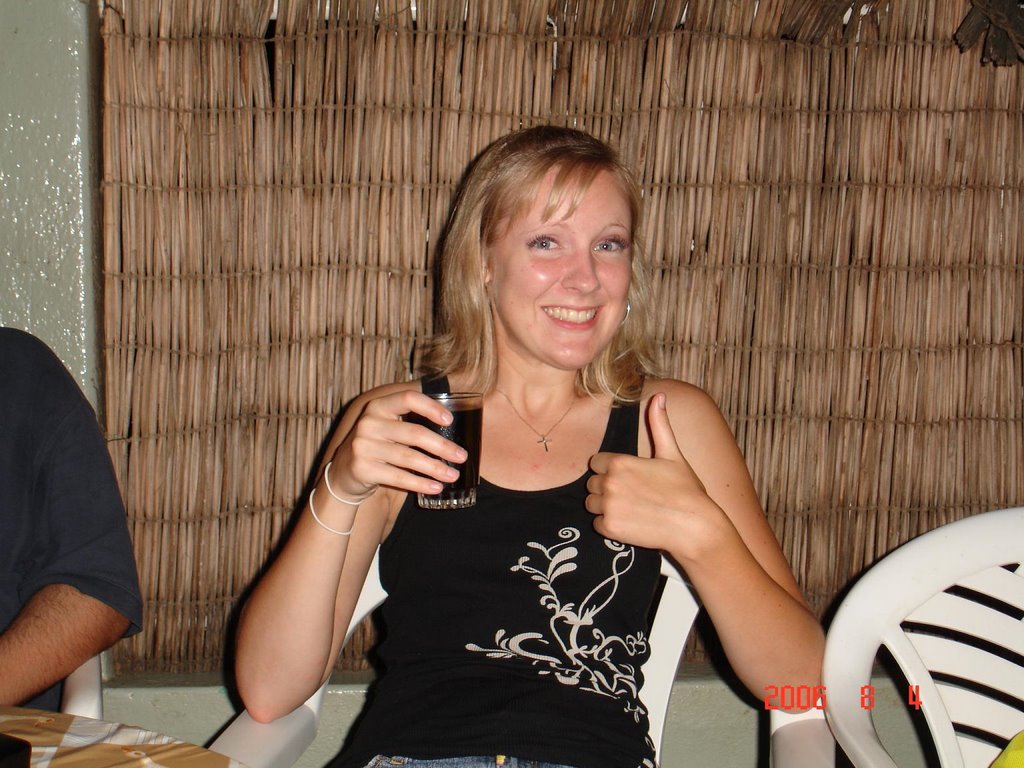
What a glorious week full of internet!! Here I am again, ready to give a quick update, and realizing more and more that internet is a double-edged sword, a blessing and a curse at the same time because it always makes me happy at first, and then I quickly move to sadness thinking about home and friends, etc. It´s like an addiction, you start needing it more and more, the quick fix to make you feel a short high...maybe not having it in São Domingos is a good thing.
Anyhow, I won´t write much because I´m writing on the fly, nothing pre-prepared for you. Life is good, tomorrow we´re going to Tarrafal, the beach I mentioned earlier, and hopefully we´ll get to work on the tan a little. Tonight a bunch of us are going to try and cook our first real Cape Verdean meal by ourselves, we´ll see how it turns out! Hopefully by the time I get home I´ll have learned how to take care of myself in the kitchen...
They just finished paving the new road in São Domingos, which has turned out not to be the greatest thing (in my opinion). It of course opens the town up to more transportation and opportunities, but things have just gotten much more dangerous. The drivers drive ten times as fast, and just this morning, a little boy flew off the back of a helix (one of the public open-back trucks) and smashed his head on the concrete...we´re pretty sure he didn´t make it, as they grabbed him off the ground and rushed him to the hospital, no ambulance, no backboard, nothing. It´s very sad, but the youth development people (me and three other Trainees) are planning a youth day with a girl´s futbol tournament and we´re hoping to incorporate street safety into the day as our overall message. Hopefully we can make people more aware of the dangers, as I´m sure they´re already becoming.
Anyhow, I should get off the computer now, but I might get another chance to hop on tomorrow, so hopefully I´ll have more to report. In the meantime, it looks like I might be in Assomada living with another Trainee named Nick, working at an all-girls ICM...we´ll know after next Saturday! Okay, I love and miss you all. Take care.
Thursday, August 10, 2006
Ahh, Michael Jackson would be proud...
So here I am enjoying delightful internet once again, very briefly to the tune of "Beat it"...and it looks like once again I might not be able to upload pictures. Bummer. But don´t worry, once I get to site, I will have much more regular internet access and better computers, this one is kind of a fluke. Anyhow, as per my previous post, I´m just including all my journals in order, so enjoy the journey through the last couple weeks! Much love, everyone...
7/30/06
One of the things I like best about Sao Domingos is that it has that small community feel to it, yet there’s always something going on or somewhere to be. Any excuse to throw a festa (party) and a large boisterous group of Cape Verdeans is there. Example: last night my neighborhood (and that of two other Trainees that live nearby—all our little sisters are best friends) threw a block party complete with excellent dance music and more chicken than I’ve ever seen in one place in my life. It was a good time. The fun part about these block parties is that they run on island time, so they all wander in around 10-11pm or whenever they feel like it, and then supposedly the parties last until 6am (I left last night around 1am, so I can’t say if anyone actually stayed that late). All the families in the neighborhood (primarily about 5-6 families) are best friends and spend all their time together. Next weekend we’re all going to Tarrafal, a supposedly beautiful beach a couple hours away—all 35-ish of us in 2 hiaces. It should be great, we’re a pretty fun bunchJ. The whole area feels very interconnected, like one big family (of course half the time they actually are family, cousins and nephews and aunts and uncles—you’re never really sure who belongs to what family). My sisters are always over at the neighbors’ houses and neighbors are always coming and going in our house, playing cards and Chinese jumprope in between. The group of young girls (Carla and her friends) are my favorite because they always run up and give me hugs and then grab my hand and pull me down the street to whatever exciting thing they’re off to see. The best part: they spend the bulk of their time choreographing dances to Cape Verdean music, which they perform anywhere and everywhere as often as they get the chance. They definitely made an appearance last night at the festa, and let me just tell you this—these girls know how to shake their butts like there’s no tomorrow. So awesome. I think it’s one of the first things you’re taught as a child;). Watching them reminds me of how Lindsey, Paige, and I used to choreograph dances to Mariah Carey and perform them for our doting parents.
I can’t say enough how much I love this concept of closeknit community, that speaks strongly to what I’ve always wanted and still hope to have. A support network, familiarity, an ease of interaction that gives life depth and simplicity simultaneously. Predictable, yet rarely boring. I say this now, though I’m sure a lifetime in a small rural community might send me overboard. I suppose that’s why it’s great that community transcends geography and we can have networks across borders and continents of people who understand and care about each other. I love being able to hear from you all how life carries on at home, while knowing that you are equally as interested in my life here in Africa. Yet I can’t help but note the difference between day-to-day life in the States and life here in this small community. There’s something about being able to just walk into your neighbor’s house unannounced and join in whatever game they’re playing or conversation they’re having. To be able to always walk through town and see someone you know, or if not at least be able to expect “hellos” from most people you see along the way. And to make passing through town to greet people a priority in your day to begin with. I like living in a community where I don’t look around me and see individualistic competition or the values of market-driven capitalism superseding the need to support one another. In a small town like Sao Domingos you can have a dozen mini-mercados, all selling virtually the same thing, and they all do just fine because it’s understood that you spread your business out and take care of the others around you—understood both by clients and the businesses themselves, who will urge you to go to Maria Antonia’s bar tonight because you went to theirs two nights in a row and she could use the business. This setting makes micro-finance and micro-credit projects very feasible, because they don’t necessarily have to compete with larger corporations or monopolies (yet…just wait for globalization to take over).
8/6/06
I haven’t really journaled all week for various reasons, so I’m going to attempt to update all at once. Get ready for long-winded Courtney.
We’ll start with yesterday. Yesterday was what I’ll call my first shitty day in Cape Verde. And I almost feel bad calling it shitty, because really not all that much specifically happened, at least nothing huge or life-altering. But I feel justified in allowing myself to have a bad day once in awhile and not let it mean I’m not happy in general. Come on—I’m adjusting to a new culture, frustration happens. Anyway, yesterday was just full of me feeling sick and generally down-in-the-mouth. It was one of those days when you want or need a little extra rest, but you get the opposite—not five consecutive minutes alone. One of those days when you don’t understand 90% of what’s going on around you because you’ve suddenly lost all mental capacity to comprehend or speak Criolu. One of those days when you just plain miss home, want someone to allow you to be sad, want your Mom. Which is what I spent most of the day looking forward to—the opportunity to talk to my whole family all at once. Mom’s side of the family had a reunion, so everyone was going to be altogether at once, and so she was going to call so I could talk to everyone, including Lindsey since it was her birthday. Instead, the house phone chose that exact moment (literally, it was working ten minutes before when my dad called) to stop working, apparently because it was going to rain and the phone poops out when it’s going to rain (damn psychic phone). So no phone calls for me. I went to my friend Tiffany’s house to try and use her phone and calling card, called every number I had and left three messages on cell phones, which I wasn’t even sure they were getting. I waited to see if they would call me on that phone, every minute growing sadder and more exhausted. No one called. I went home and cried for the first time since I got here. It’s so strange because I knew before I left for the Peace Corps that communication would probably be difficult, and I’ve been fortunate to even be able to talk to my family at all, but it still broke me down last night. Just one of those moments when all you want is the one thing you can’t have, and you’re helpless. And it won’t be the last of those moments, but they’re not the end of the world. Really I suppose that should be the least of my problems. But man I just wanted to hear everyone’s voices and remember that I am loved. Oh well. Happy birthday, Lindsey. Sorry I couldn’t pull through for you.
So after that I got dragged to a late-night festa where I was forced to dance in a hot sweaty room until 2 am. I was beyond exhausted. Although I will say this: the festa was pretty entertaining, well worth the exhaustion. We couldn’t figure out exactly what the purpose of the party was (probably just an excuse to dance), but everyone had to wear black and pay to get in (presumably to cover food and drink costs. They said the black had something to do with witches…I think they just wanted an excuse to look fancy. It was all young people, about 17-28ish years old, and all about crazy dancing and letting loose. Picture a truly traditional African version of Dirty Dancing—except the parents know about the dancing and support it, and would probably take part in it if it wasn’t so late at night. Really, though, observing this was exactly what I pictured an African dance party (minus the indigenous outfits and surroundings) would look like. It was like for one night the true African spirit snuck out for everyone to see. No modernized European influence, just tribal-like shrieking and fast, energetic movement. In the middle of the festa they busted out a pastry and birthday candles and started screaming the name of the person celebrating a birthday. Cape Verdeans definitely know how to celebrate a birthday in style—nothing mediocre or somber about it. They swept him off the ground and carried him high above the crowd, singing at the tops of their lungs. Sometime after that they busted out the food: huge platters of rice, meat, and vegetables. Cape Verdeans can’t have a group of people together without having food present, and lots of it. And they’re so sad (or confused) when you don’t have the appetite to eat a large meal at 1:00 in the morning. Anyway, the party continued on to the wee hours and all in all was a pretty good time, though it might have been more fun if I wasn’t so ridiculously tired.
* * *
So we’re all starting to get pretty anxious to hear our site announcements, which is somewhere between 1-2 weeks away (it changes every day). Not knowing exactly where you’re going can make it hard to mentally prepare yourself for service. For me, it is apparently a little more difficult to find a placement because I have to be doing my thesis at the same time, so even though I want to be in a rural site, I have to have regular electricity and semi-regular internet access. It seems likely that I might end up staying on Santiago working at an ICM in a community called Santa Catalina near Assomada, but I’m not entirely sure. I’m trying not to think about it and just let what happens happen. It’s just weird to think about us all separating off to various islands, not being able to hang out all the time and have fun on the weekends together. It’s nice to have a group of people you can experience all of this with…but I’ll be the first to admit that it’ll be great to move out on my own and try to regain a tiny bit of independence. Being under the wing of a large bureaucratic U.S. institution can be reassuring and frustrating at the same time, more frequently the latter during training…though I’m sure it will get better.
It’s interesting how suddenly I’ve switched from spending time with Karla to spending most of my time with Vandiza, my 21-year-old sister. I get the strange feeling sometimes that Karla got bored of me—she’s 13, it happens. Vandiza’s a fun girl, spunky and social and still very youthful. The hopeful, naïve little girl in her pops out every once in awhile, and I’m reminded that even with adult responsibilities and a strength most American 21-year-olds wouldn’t imagine or need to have, girls in the developing world sometimes go through emotional development in similar ways as girls in modernized countries, feeling themselves out in small pieces at a time and finding their place in the community. She is still often self-conscious, worried that she’s not pretty, and not ready to settle down with a husband and a family (she giggles at every mention of boyfriends). One minute she’s fulfilling arduous household chores and the next she’s showing me the old Britney Spears picture she found in a magazine in Praia and posted on her wall, asking with anxious eyes if I love Britney as much as she does. She is competitive and fierce, yet soft and girly when she wants to be, begging me to let her paint my toenails. They’re pink now. Spending time with her (not to mention the rest of my family, and hell, all Cape Verdeans) has shattered my personal space bubble completely. Luckily in some situations that bubble wasn’t too big (or important to me) to begin with. My sides are constantly pinched, fingers interlaced with various girls’, hair tangled with curious hands, and even my chest grabbed by my nonchalant older sister Tania (in a 5-seond language lesson as she passed by, she first pointed to my nose—“what’s this?”—then shoulder—“what’s this?”—then latched onto a boob—“what’s this?”—like it was nothing). The space issue doesn’t really bother me, in fact when it’s my sisters or other women it’s often comforting. Because there’s no stigma here: people touch, they’re open with their bodies, and it doesn’t usually have any type of sexual connotation. The traditional dance funana (very close with lots of hip action) is learned almost as soon as a child can walk, and girls, siblings, adults, everyone really, does it together and at every chance they get. What looks very sexual (and possibly for us awkward) to Americans is just a way to have fun and move to the music for Cape Verdeans. The instant the music comes on a group of Cape Verdeans is there dancing and grabbing your hand to show you how to do it, erupting with glee when you shake your butt like they love to do. And somehow they have all mastered the ability to shake only heir butts while perfectly balancing cups of liquid on their heads. Amazing. Add that to the list of things I want to be able to do by the time I get home.
8/7/06
My mom likes to sit down and watch me eat every meal—every single on, all the way through. At first I found it odd, maybe she’s worried about what I eat, making sure I eat it all, fascinated by me, who knows? But I’ve realized that she memorizes every detail of what I eat, taking note of the things I eat most of, what I don’t eat, and changes her meals accordingly. Extreme, I know, but I think it’s kind of sweet, her way of showing she cares, her way of taking care of me. And also a way to avoid wasting food—why bother with food I won’t end up eating? Plus her sitting with me has proved a challenge for me to continuously think of new things to say or talk about during the frequent awkward silences. Sometimes I just look at her and smile, and she always just laughs. She is truly beautiful.
We often have the sporadic “isn’t-America-great-and-aren’t-you-all-rich?” conversation, to which I stumble through an answer of “Well, no…I mean not everyone…I mean yes, some people have a lot of money, but not everyone…” I try to explain that America is complex, that there are lots of extremes with plenty of grey area, that we have lots of homeless people, and that we aren’t overwhelmed with the plentiful abundance of jobs for all who seeks them. But I always catch myself pausing to think that, well, yes we are rich in a relative sense, in comparison to most. Really my life is vastly different from others because of the wealth and opportunity I’ve experienced. To pretend we don’t experience a certain privilege in our comfortable lives is almost insulting. How confusing it must be to hear from the white girl with her own car in America and a ticket to Cape Verde that no, not all Americans are rich. No wonder she always gives me an amused look of disbelief. It’s interesting to think where some of the mistaken perceptions must come from—she was surprised to find out we have mosquitoes in the States too—but I suppose if your only real exposure to the US is one past Peace Corps Trainee and brief clips from a Brazilian novella called “America”, you might end up making up your own oasis-like idea of what life must be in that faraway wealthy country. Mama always jokes that Karla will eventually come to the States and I can show her what life is like. Her perception of America is much like the more rural areas we encountered in Central America (and assuredly throughout the rest of the developing world), an idealized notion of the “American dream” that represents everything they feel they are lacking. And I suppose so much of that perception is or may be determined by the country’s interaction with the US: Cape Verde doesn’t have a past history or current experience of violent or negative relations that were/are prevalent in other parts of the world—instead, many of their families live in the States and send back money to Cape Verde. Of course they must think there’s endless money in America. And of course each person’s opinion will be different depending on their own experience.
8/8/06
Today was another excellent day for CD class, in a different way than the day we went to SOS. A Volunteer in Mindelo, Sao Vicente who works for an emergency infant center under an ICM (Cape Verde’s short-term orphanage organizations I will be working for) came to speak to our class about the problems with youth in Cape Verde. He gave a very realistic perspective of what it will truly be like to work for an ICM or other organizations that work with severely disadvantaged youth—very frustrating. At the center, they temporarily house kids up to age 12 who have dangerous or abusive home situations, who are usually sent to the Center when the police have been called and social workers come to remove the child(ren) from the home. There are so many holes and problems with social services here it’s hard to know where to begin. They are desperately understaffed, underfunded, and under-motivated. The system is inherently flawed because little is being done (or is able to done) to work with families to change behavior or increase understanding/awareness of child-rearing or child development, nor is much done to rehabilitate families or provide counseling, treatment, etc. Instead, kids come to the Center for 9 months, are sent back to their families, then return to the Center again so that it becomes a revolving door for the same troubled children, who come back worse (i.e. with more problems) each time. There are no laws in Cape Verde regulating the behavior of minors (i.e. criminality), and therefore there isn’t a juvenile court in existence. The relationships between social workers and judges who decide where these youth are to go are apparently very informal and superficial, and kids are almost always returned to their abusive families. There is a temporary-care system through the ICM (like short-term foster care), but it is under-promoted with a shortage of willing couples/families ready to take on more children. In Cape Verde, it is an odd concept that someone outside of your biological/extended family could take your child—even if you aren’t adequately providing for your children or even care about them. So families want their children back home, even if there are ten other kids, none of whom they can really take care of. This is a major problem in Cape Verde—they have so many kids and a very high teen pregnancy rate (especially since males generally have several girlfriends, or pikenas, all over the place), with not enough resources to help these kids and families. The result is a very apathetic attitude—“These underprivileged kids are beyond our capacity to help, so why bother if we can’t even provide for our own children?” It’s a very lost-cause mentality, truly sad, but one in which there will hopefully be room for improvement. The government of CV and provision of services are so new that it will understandably take some time to get things up and running smoothly. And what better time to be able to get involved, when things are being molded and change can be made…it’s quite a challenge to think about, something that needs a lot of work and that runs the risk of feeling overwhelming, but I’m encouraged that small improvements can be made. It was also very helpful for the Volunteer to describe the real conditions, the real hardships, and the real attitudes he has encountered. How depressing it can be to know that all the children have scabies (I won’t describe the awful condition in detail, just trust me that it’s miserable) and play in sandboxes filled with cat feces, and there’s little you can do to help them and people are reluctant to assist in preventive measures. How helpless you can sometimes feel. And it’s something that I know will be hard for me (not taking the job home, not carrying the weight of these poor children on my shoulders), but something I think I can and want to overcome, something I want to challenge myself with and that can stretch me in a lot of ways. I suppose overall today was a day of healthy, encouraging realism—not everything is perfect or runs smoothly, and there is a lot of frustrating and heartbreaking work to be done. I’m ready to go to it. It’s where I truly want to be right now.
7/30/06
One of the things I like best about Sao Domingos is that it has that small community feel to it, yet there’s always something going on or somewhere to be. Any excuse to throw a festa (party) and a large boisterous group of Cape Verdeans is there. Example: last night my neighborhood (and that of two other Trainees that live nearby—all our little sisters are best friends) threw a block party complete with excellent dance music and more chicken than I’ve ever seen in one place in my life. It was a good time. The fun part about these block parties is that they run on island time, so they all wander in around 10-11pm or whenever they feel like it, and then supposedly the parties last until 6am (I left last night around 1am, so I can’t say if anyone actually stayed that late). All the families in the neighborhood (primarily about 5-6 families) are best friends and spend all their time together. Next weekend we’re all going to Tarrafal, a supposedly beautiful beach a couple hours away—all 35-ish of us in 2 hiaces. It should be great, we’re a pretty fun bunchJ. The whole area feels very interconnected, like one big family (of course half the time they actually are family, cousins and nephews and aunts and uncles—you’re never really sure who belongs to what family). My sisters are always over at the neighbors’ houses and neighbors are always coming and going in our house, playing cards and Chinese jumprope in between. The group of young girls (Carla and her friends) are my favorite because they always run up and give me hugs and then grab my hand and pull me down the street to whatever exciting thing they’re off to see. The best part: they spend the bulk of their time choreographing dances to Cape Verdean music, which they perform anywhere and everywhere as often as they get the chance. They definitely made an appearance last night at the festa, and let me just tell you this—these girls know how to shake their butts like there’s no tomorrow. So awesome. I think it’s one of the first things you’re taught as a child;). Watching them reminds me of how Lindsey, Paige, and I used to choreograph dances to Mariah Carey and perform them for our doting parents.
I can’t say enough how much I love this concept of closeknit community, that speaks strongly to what I’ve always wanted and still hope to have. A support network, familiarity, an ease of interaction that gives life depth and simplicity simultaneously. Predictable, yet rarely boring. I say this now, though I’m sure a lifetime in a small rural community might send me overboard. I suppose that’s why it’s great that community transcends geography and we can have networks across borders and continents of people who understand and care about each other. I love being able to hear from you all how life carries on at home, while knowing that you are equally as interested in my life here in Africa. Yet I can’t help but note the difference between day-to-day life in the States and life here in this small community. There’s something about being able to just walk into your neighbor’s house unannounced and join in whatever game they’re playing or conversation they’re having. To be able to always walk through town and see someone you know, or if not at least be able to expect “hellos” from most people you see along the way. And to make passing through town to greet people a priority in your day to begin with. I like living in a community where I don’t look around me and see individualistic competition or the values of market-driven capitalism superseding the need to support one another. In a small town like Sao Domingos you can have a dozen mini-mercados, all selling virtually the same thing, and they all do just fine because it’s understood that you spread your business out and take care of the others around you—understood both by clients and the businesses themselves, who will urge you to go to Maria Antonia’s bar tonight because you went to theirs two nights in a row and she could use the business. This setting makes micro-finance and micro-credit projects very feasible, because they don’t necessarily have to compete with larger corporations or monopolies (yet…just wait for globalization to take over).
8/6/06
I haven’t really journaled all week for various reasons, so I’m going to attempt to update all at once. Get ready for long-winded Courtney.
We’ll start with yesterday. Yesterday was what I’ll call my first shitty day in Cape Verde. And I almost feel bad calling it shitty, because really not all that much specifically happened, at least nothing huge or life-altering. But I feel justified in allowing myself to have a bad day once in awhile and not let it mean I’m not happy in general. Come on—I’m adjusting to a new culture, frustration happens. Anyway, yesterday was just full of me feeling sick and generally down-in-the-mouth. It was one of those days when you want or need a little extra rest, but you get the opposite—not five consecutive minutes alone. One of those days when you don’t understand 90% of what’s going on around you because you’ve suddenly lost all mental capacity to comprehend or speak Criolu. One of those days when you just plain miss home, want someone to allow you to be sad, want your Mom. Which is what I spent most of the day looking forward to—the opportunity to talk to my whole family all at once. Mom’s side of the family had a reunion, so everyone was going to be altogether at once, and so she was going to call so I could talk to everyone, including Lindsey since it was her birthday. Instead, the house phone chose that exact moment (literally, it was working ten minutes before when my dad called) to stop working, apparently because it was going to rain and the phone poops out when it’s going to rain (damn psychic phone). So no phone calls for me. I went to my friend Tiffany’s house to try and use her phone and calling card, called every number I had and left three messages on cell phones, which I wasn’t even sure they were getting. I waited to see if they would call me on that phone, every minute growing sadder and more exhausted. No one called. I went home and cried for the first time since I got here. It’s so strange because I knew before I left for the Peace Corps that communication would probably be difficult, and I’ve been fortunate to even be able to talk to my family at all, but it still broke me down last night. Just one of those moments when all you want is the one thing you can’t have, and you’re helpless. And it won’t be the last of those moments, but they’re not the end of the world. Really I suppose that should be the least of my problems. But man I just wanted to hear everyone’s voices and remember that I am loved. Oh well. Happy birthday, Lindsey. Sorry I couldn’t pull through for you.
So after that I got dragged to a late-night festa where I was forced to dance in a hot sweaty room until 2 am. I was beyond exhausted. Although I will say this: the festa was pretty entertaining, well worth the exhaustion. We couldn’t figure out exactly what the purpose of the party was (probably just an excuse to dance), but everyone had to wear black and pay to get in (presumably to cover food and drink costs. They said the black had something to do with witches…I think they just wanted an excuse to look fancy. It was all young people, about 17-28ish years old, and all about crazy dancing and letting loose. Picture a truly traditional African version of Dirty Dancing—except the parents know about the dancing and support it, and would probably take part in it if it wasn’t so late at night. Really, though, observing this was exactly what I pictured an African dance party (minus the indigenous outfits and surroundings) would look like. It was like for one night the true African spirit snuck out for everyone to see. No modernized European influence, just tribal-like shrieking and fast, energetic movement. In the middle of the festa they busted out a pastry and birthday candles and started screaming the name of the person celebrating a birthday. Cape Verdeans definitely know how to celebrate a birthday in style—nothing mediocre or somber about it. They swept him off the ground and carried him high above the crowd, singing at the tops of their lungs. Sometime after that they busted out the food: huge platters of rice, meat, and vegetables. Cape Verdeans can’t have a group of people together without having food present, and lots of it. And they’re so sad (or confused) when you don’t have the appetite to eat a large meal at 1:00 in the morning. Anyway, the party continued on to the wee hours and all in all was a pretty good time, though it might have been more fun if I wasn’t so ridiculously tired.
* * *
So we’re all starting to get pretty anxious to hear our site announcements, which is somewhere between 1-2 weeks away (it changes every day). Not knowing exactly where you’re going can make it hard to mentally prepare yourself for service. For me, it is apparently a little more difficult to find a placement because I have to be doing my thesis at the same time, so even though I want to be in a rural site, I have to have regular electricity and semi-regular internet access. It seems likely that I might end up staying on Santiago working at an ICM in a community called Santa Catalina near Assomada, but I’m not entirely sure. I’m trying not to think about it and just let what happens happen. It’s just weird to think about us all separating off to various islands, not being able to hang out all the time and have fun on the weekends together. It’s nice to have a group of people you can experience all of this with…but I’ll be the first to admit that it’ll be great to move out on my own and try to regain a tiny bit of independence. Being under the wing of a large bureaucratic U.S. institution can be reassuring and frustrating at the same time, more frequently the latter during training…though I’m sure it will get better.
It’s interesting how suddenly I’ve switched from spending time with Karla to spending most of my time with Vandiza, my 21-year-old sister. I get the strange feeling sometimes that Karla got bored of me—she’s 13, it happens. Vandiza’s a fun girl, spunky and social and still very youthful. The hopeful, naïve little girl in her pops out every once in awhile, and I’m reminded that even with adult responsibilities and a strength most American 21-year-olds wouldn’t imagine or need to have, girls in the developing world sometimes go through emotional development in similar ways as girls in modernized countries, feeling themselves out in small pieces at a time and finding their place in the community. She is still often self-conscious, worried that she’s not pretty, and not ready to settle down with a husband and a family (she giggles at every mention of boyfriends). One minute she’s fulfilling arduous household chores and the next she’s showing me the old Britney Spears picture she found in a magazine in Praia and posted on her wall, asking with anxious eyes if I love Britney as much as she does. She is competitive and fierce, yet soft and girly when she wants to be, begging me to let her paint my toenails. They’re pink now. Spending time with her (not to mention the rest of my family, and hell, all Cape Verdeans) has shattered my personal space bubble completely. Luckily in some situations that bubble wasn’t too big (or important to me) to begin with. My sides are constantly pinched, fingers interlaced with various girls’, hair tangled with curious hands, and even my chest grabbed by my nonchalant older sister Tania (in a 5-seond language lesson as she passed by, she first pointed to my nose—“what’s this?”—then shoulder—“what’s this?”—then latched onto a boob—“what’s this?”—like it was nothing). The space issue doesn’t really bother me, in fact when it’s my sisters or other women it’s often comforting. Because there’s no stigma here: people touch, they’re open with their bodies, and it doesn’t usually have any type of sexual connotation. The traditional dance funana (very close with lots of hip action) is learned almost as soon as a child can walk, and girls, siblings, adults, everyone really, does it together and at every chance they get. What looks very sexual (and possibly for us awkward) to Americans is just a way to have fun and move to the music for Cape Verdeans. The instant the music comes on a group of Cape Verdeans is there dancing and grabbing your hand to show you how to do it, erupting with glee when you shake your butt like they love to do. And somehow they have all mastered the ability to shake only heir butts while perfectly balancing cups of liquid on their heads. Amazing. Add that to the list of things I want to be able to do by the time I get home.
8/7/06
My mom likes to sit down and watch me eat every meal—every single on, all the way through. At first I found it odd, maybe she’s worried about what I eat, making sure I eat it all, fascinated by me, who knows? But I’ve realized that she memorizes every detail of what I eat, taking note of the things I eat most of, what I don’t eat, and changes her meals accordingly. Extreme, I know, but I think it’s kind of sweet, her way of showing she cares, her way of taking care of me. And also a way to avoid wasting food—why bother with food I won’t end up eating? Plus her sitting with me has proved a challenge for me to continuously think of new things to say or talk about during the frequent awkward silences. Sometimes I just look at her and smile, and she always just laughs. She is truly beautiful.
We often have the sporadic “isn’t-America-great-and-aren’t-you-all-rich?” conversation, to which I stumble through an answer of “Well, no…I mean not everyone…I mean yes, some people have a lot of money, but not everyone…” I try to explain that America is complex, that there are lots of extremes with plenty of grey area, that we have lots of homeless people, and that we aren’t overwhelmed with the plentiful abundance of jobs for all who seeks them. But I always catch myself pausing to think that, well, yes we are rich in a relative sense, in comparison to most. Really my life is vastly different from others because of the wealth and opportunity I’ve experienced. To pretend we don’t experience a certain privilege in our comfortable lives is almost insulting. How confusing it must be to hear from the white girl with her own car in America and a ticket to Cape Verde that no, not all Americans are rich. No wonder she always gives me an amused look of disbelief. It’s interesting to think where some of the mistaken perceptions must come from—she was surprised to find out we have mosquitoes in the States too—but I suppose if your only real exposure to the US is one past Peace Corps Trainee and brief clips from a Brazilian novella called “America”, you might end up making up your own oasis-like idea of what life must be in that faraway wealthy country. Mama always jokes that Karla will eventually come to the States and I can show her what life is like. Her perception of America is much like the more rural areas we encountered in Central America (and assuredly throughout the rest of the developing world), an idealized notion of the “American dream” that represents everything they feel they are lacking. And I suppose so much of that perception is or may be determined by the country’s interaction with the US: Cape Verde doesn’t have a past history or current experience of violent or negative relations that were/are prevalent in other parts of the world—instead, many of their families live in the States and send back money to Cape Verde. Of course they must think there’s endless money in America. And of course each person’s opinion will be different depending on their own experience.
8/8/06
Today was another excellent day for CD class, in a different way than the day we went to SOS. A Volunteer in Mindelo, Sao Vicente who works for an emergency infant center under an ICM (Cape Verde’s short-term orphanage organizations I will be working for) came to speak to our class about the problems with youth in Cape Verde. He gave a very realistic perspective of what it will truly be like to work for an ICM or other organizations that work with severely disadvantaged youth—very frustrating. At the center, they temporarily house kids up to age 12 who have dangerous or abusive home situations, who are usually sent to the Center when the police have been called and social workers come to remove the child(ren) from the home. There are so many holes and problems with social services here it’s hard to know where to begin. They are desperately understaffed, underfunded, and under-motivated. The system is inherently flawed because little is being done (or is able to done) to work with families to change behavior or increase understanding/awareness of child-rearing or child development, nor is much done to rehabilitate families or provide counseling, treatment, etc. Instead, kids come to the Center for 9 months, are sent back to their families, then return to the Center again so that it becomes a revolving door for the same troubled children, who come back worse (i.e. with more problems) each time. There are no laws in Cape Verde regulating the behavior of minors (i.e. criminality), and therefore there isn’t a juvenile court in existence. The relationships between social workers and judges who decide where these youth are to go are apparently very informal and superficial, and kids are almost always returned to their abusive families. There is a temporary-care system through the ICM (like short-term foster care), but it is under-promoted with a shortage of willing couples/families ready to take on more children. In Cape Verde, it is an odd concept that someone outside of your biological/extended family could take your child—even if you aren’t adequately providing for your children or even care about them. So families want their children back home, even if there are ten other kids, none of whom they can really take care of. This is a major problem in Cape Verde—they have so many kids and a very high teen pregnancy rate (especially since males generally have several girlfriends, or pikenas, all over the place), with not enough resources to help these kids and families. The result is a very apathetic attitude—“These underprivileged kids are beyond our capacity to help, so why bother if we can’t even provide for our own children?” It’s a very lost-cause mentality, truly sad, but one in which there will hopefully be room for improvement. The government of CV and provision of services are so new that it will understandably take some time to get things up and running smoothly. And what better time to be able to get involved, when things are being molded and change can be made…it’s quite a challenge to think about, something that needs a lot of work and that runs the risk of feeling overwhelming, but I’m encouraged that small improvements can be made. It was also very helpful for the Volunteer to describe the real conditions, the real hardships, and the real attitudes he has encountered. How depressing it can be to know that all the children have scabies (I won’t describe the awful condition in detail, just trust me that it’s miserable) and play in sandboxes filled with cat feces, and there’s little you can do to help them and people are reluctant to assist in preventive measures. How helpless you can sometimes feel. And it’s something that I know will be hard for me (not taking the job home, not carrying the weight of these poor children on my shoulders), but something I think I can and want to overcome, something I want to challenge myself with and that can stretch me in a lot of ways. I suppose overall today was a day of healthy, encouraging realism—not everything is perfect or runs smoothly, and there is a lot of frustrating and heartbreaking work to be done. I’m ready to go to it. It’s where I truly want to be right now.
Saturday, July 29, 2006
Long time, no blog
I arrived in Sao Domingos for homestay almost three weeks ago, and time is already flying right by! They made special arrangements for us internet-crazed Americans to get online really quick, so here I am trying to update all at once. I think what will be easiest is to give you a brief intro to Sao Domingos and then just post all the journals I have written in chronological order, so that you can walk through my days with me. Currently it´s not letting me upload pictures, but don’t worry, I’ll get to it later—you’ll just have to be on your toes for awhile!
Sao Domingos is a semi-rural town of about less than a thousand people, with “regular” electricity and “running water” (water is bought in town by each individual family, carried on their heads to the house, and poured into a large tank, which is run through pipes in the house to sinks and toilets, etc.). There are hiaces (public vans that cram in as many people as possible and blast loud funana music) that run to and from Praia and other cities so that many people from Sao Domingos are able to work in Praia. Most houses have telephones and televisions, though there are only about 3 channels that have reception about 60% of the time, one for the news and two that rotate various telenovelas (soap operas) all day long. So during meals I get to practice Portuguese (which many people don’t speak) from watching cheesy dramas that are even funnier in other languages than they are in English. There is one high school (where we do our training) and one primary school in town, one hospital/clinic, a police station, a few churches, and several small markets where food and basic necessities can be bought. There is a municipal camara and a youth center, as well as a recreation center where soccer (futbol) and basketball can be played. It is an incredibly friendly and safe community, where everyone knows one another and openly smiles and greets you on the streets. The more impoverished areas lie on the outskirts and up into the dry hills that envelop Sao Domingos (side note: apparently people live in the hills because the slaves ran up there to escape the pirates that frequently raided Cape Verde circa Sir Francis Drake’s era). All kinds of animals roam freely throughout the streets and houses (how they keep track of their livestock, I have no clue), and especially this time of year without school you never lack for seeing children running, laughing, and playing in the streets after chores are done. Most things are carried on your head (a skill I’m determined to learn), babies carried on your back, and hands left free to give a thumbs-up or to grab the hand of a wandering child.
My family consists of my mama and papa, and five siblings, four in their 20s and one 13 year old sister named Carla (my father has other children from a different woman that live in Praia). Tania and Vandiza, my other sisters, love to play with my hair and are very sweet, though most of the time they just laugh goodnaturedly at the weird faces I make and random things I say. Vandiza is patient with me and really I think she just gets a kick out of this weird white girl. My two older brothers, Nilton and Adi aren’t around much, one because he spends all his time working out his ridiculous muscles (of which he’s very proud), and the other because he’s usually playing futbol. My papa, Menu, is very sociable and fun, full of energy and generally pretty hardworking. My mama Fatinha is kind, proud, and beautiful, will sacrifice anything for the people she cares about, and you can see in her eyes how much she cares. She speaks loudly and with force but isn’t one for many words, so when she does speak, you listen. I couldn’t be happier with my family.
7/11/06
Short reflections
Each day gets a little better as you get a little more courage (and a little more vocabulary) to put yourself out there and ask questions
Yes, apparently they do kick vicious dogs to protect humans just as we were warned…P.S. most of my family would cry at the sight of the skinny malnourished cats running around, but I suppose if you have to make a choice between feeding your ten kids or feeding the ten kittens running around, having a pet might be a luxury
Playing dance music until midnight that the whole village can hear might just be a regular thing
It doesn’t matter if you’re late to school as long as your pants get ironed and you eat a full breakfast
Pride in one’s country supersedes circumstance and can shine through one’s eyes in a way that makes you think twice about things
Speaking your own Spanish version of Criolu only works 50% of the time
Criolu actually is more logical than it sounds
I was too quick to forget how exhausting it is to be in another culture, pick up another language, and try to figure out what to say/what others are saying to you
Kindness, respect, and taking care of your foreign white girl can come in many forms, even if not always with a smile…their love shines in ways that can’t always be described
There’s not a whole lot you can do with your hair without a blowdryer, etc. and maybe it’s important to stop caring
I’ll need to get used to feeling confident and capable one minute, and overwhelmed and deficient the next—it will come together and I’m not doing this alone
Learning Criolu from a native speaker who doesn’t speak English really is the best way to learn because you have to ask around the question if you don’t have the vocab—don’t cheat by looking everything up in the dictionary
If virtually every house has some type of latrine or toilet, why does everyone find it necessary to just pee off of their roofs, on their roofs, on the streets, or anywhere they see fit?
Leaving your culture is truly the best way to appreciate your own on some level: we don’t just have to be the bad guys, we can appreciate the values that shape our character while picking up others; maybe this is what I need to truly resolve my challenges and difficulties with white privilege
Don’t get cocky in class with your language skills—you don’t know all that much and will still make a fool of yourself
There is no word in Criolu for blonde, is that because they almost never see blonde hair? What about on TV or other PCVs?
I’m not sure what to think about my father coming home drunk and trying to dance with me and my friend, but it makes me a little uncomfortable…it doesn’t seem to be an every night thing at least, but alcoholism is definitely a problem in Cape Verde
It truly makes my day when I discover a new word and get to see Carla’s big toothy grin, well worth any frustration. She is teaching me the parts of the body, the fruits and vegetables, and anything else we can think of to translate
Why do modern cultures (“us”) not understand how efficient it is to carry heavy loads on our heads? It really does work! Instead we feel we have to spend time and money building machines and contraptions to carry them for us. My 13 year old sister carried my suitcase on her head to our house, no problem
It frustrates me to keep hearing all these conversations (i.e. with other Trainees or in class) indicating how much better our way of life is and how it’s our initiative to make them look and act like us, be modern like us (i.e. technology is king). I’m still unsure how to reconcile the inevitability of globalization with its demeaning and often exploitative consequences. Since they’ve already been exposed to modernity, to technology, to western culture (or know on some level that it exists), is it too late to turn back, so now we should make them a carbon copy of us? I’m not satisfied with that answer. How do we avoid the power differential in the midst of transfer of knowledge and skills?—it inherently counters empowerment. Especially as a white person, how do I avoid the obvious, eliminate the history, erase the preconceptions so that they aren’t agreeing with me or participating in my project because they want to please or are used to being controlled by white people? How do I know it’s what they truly want or need? And how do I make it as culturally sensitive as possible? What scares me is that I’m not sure these thoughts have even crossed some of the Trainee’s minds. I kept hearing “exploit their resources” and “capitalize on what they have”, which for some reason continue to rub me the wrong way. I see the value in helping them to find their strengths and be able to use them, but sometimes I wonder what our end goal is. Is there a way to end poverty that doesn’t involve draining resources and enlisting a formulaic marketing plan that turns something beautiful into something selfish, wealthy outsiders can grab onto and make superficial? Is tourism the only option? Ideologically and emotionally it doesn’t fit with me—“Come greedy tourists and see our cookie cutter-molded island dream nation to suit all your tropical needs”. I know my opinion is not a common one—most people think that tourism is the best new form of development (and if you’re impoverished, maybe it’s more important to take it as it comes), but the attitude, the approach, seem wrong to me. Can’t we encourage other ways of building infrastructure and financial stability, like international advocacy and culturally appropriate forms of export that stay true to Cape Verde and not to western expectations? What about international aid and debt cancellation that allow the country to stabilize its relatively new government and subsequently be able to provide its own services to its own people without us telling them exactly how to do it? Maybe this is all crazy, maybe it doesn’t work that way, maybe the goal is to make everyone rich, but in the grand scheme of things are we just fooling ourselves into thinking this is the right way to live? My heart constantly desires to protect the traditional, to salvage the simplicity of indigenous living, but I think I’m losing the battle. In any case, I know there has to be a chance to do some good, and that always starts with the youth, with the new generation that has a chance to protect their culture and provide for its future.
7/13/06
I taught Carla how to play the card game “speed” today, and she was so excited—“American games are fun!” she said, and couldn’t wait to finally be able to teach her older sister a new game that she could be better at. We plan to teach the whole neighborhood. Carla reminds me every day why I love kids so much. She has endless patience and a way of explaining things and teaching Criolu like no one else in the family can. I spend most of my time with her and it’s just easy and fun.
My sister Tania braided my hair last night in tight cornrow-style braids: I’m officially a true Cape VerdeanJ. I think I definitely scored some cool points in the community. I’ve never seen so much of my scalp before, and it’s a little creepy. Definitely solves the “what in the world do I do with my hair today” dilemma.
I can’t wait to be able to start songwriting again…it’s weird to feel as though I have no place/time/opportunity to just sing like I’m used to—as loud and passionately as I want. No time to truly process things at a deep enough level to write a good song, nor the uninterrupted opportunity to do so. So much luxurious independence in the States traded for equally luxurious interdependence and cross-cultural interaction in Cape Verde. Hopefully I’ll soon be able to balance or encompass both. Still, thus far I’m enjoying every minute here more and more. Though training itself is getting off to a rocky start, I’m just plain happy. Happy to have a Cape Verdean family that loves me and wants me to stay. Happy to be learning Criolu (and picking it up quickly) and pushing myself to use it as often as possible. Happy to feel Africa seeping slowly into my veins, running through me like the coolness of a river you feel drawn to and refreshed by. I’m falling in love with all that I see. With the women who work hard all day but spare huge smiles and hearty laughter when you try to practice your meager language skills and end up resigning to “tudu fixi” (said countless times per day and in reference to just about anything). I’m falling in love with the pace, the steady beat of patience and humble service, of laughter and masterful futbol skills. I’m even falling in love with the smells, with the goats and pigs and chickens and cows scattered everywhere you look, with the disheveled and unfinished buildings, and the lack of much outside communication or inundation with popular culture. Have I romanticized Africa? There’s still progress to be made and service to be offered, but the vibrant Africa I’m presented with is for now one version of perfection.
7/15/06
Mama and Carla taught me how to wash clothes today. Damn, these women are strong! I tried, and they laughed because I’m so sadly weak—“mas forca, mas forca!” they giggled. The kind of work they’re used to is so different from the work I’m used to in the States—they touch my hands and say “My goodness, how soft! It’s because you don’t work them hard,” and I want to butt in and say “I do work! Just in a different way.” Anyway, I kept trying and eventually caught on to the clothes-washing. Finally, a way to buff up my wimpy arms. With things like this you learn what to care about and what doesn’t really matter. Washing all your clothes in the same water that quickly gets dirty and rinsing them in soapy water that keeps a nice thick layer of soap on your clothes when you hang them to dry may not seem optimal to those of us spoiled with washing machines and dryers our whole lives, but what does it really matter? They’ll get dirty with all the dust in the air and tar on the road anyway. And I kind of like it. I like not caring too much. They have an interesting balance here between the desire to be neat and presentable and the acknowledgment that truly remaining clean is improbable. God, what they must think of this American girl with her ridiculous amount of clothes—we started running out of clothesline.
It’s hard to describe how you feel when you turn around and find yourself in the middle of a dream you’ve had a million times. You know the surroundings, you can taste the air, feel the familiar sounds all around you. It’s been playing through your mind for so long you start to wonder if what you’re experiencing is just an extension of this dream. Or if maybe you may have dreamed it into life. Everything in its place, just as I imagined. And so maybe it isn’t fabricated, maybe Africa really does exist. And maybe I was right to see beauty in this way of life. Maybe I was also wrong to think it can only be one way or the other. Every once in awhile we’ll find ourselves in the middle of discussing globalization and cultural imperialism, and though I’m sure I felt the answer would come to me eventually, I still feel pulled in multiple directions, making no progress. I can’t stomach some of the ways we destroy culture, take it from the hands of those who have no strength left to hold it. And then I see where I’m at—I am everywhere, seeing a little of myself in everything and seeing the promise of cross-cultural communication, the privilege I embrace and sacrifice my life for. How far do I take it? How do I crush machismo without crushing culture? Am I allowed to say that it’s a universal value to uplift and protect women? Yes. To say that we have to reverse the gender roles we see all around the world? Not without realizing that not all gender roles have to be oppressive. It keeps coming back to me, this struggle with gender and I can’t resolve it. All I can do is appreciate the beauty in femininity, admire the unending strength and quiet humility I see everyday in my mama and sisters, working tirelessly all day while I sit in privilege. And I’m itching to do something, to get out there, make a difference, feel useful. And I have to remind myself every day to be patient and to let life come as it comes. The time will come for change, both small and large.
Every once in awhile I find a break in time and I remember to be sad. We’ve been so busy, practicing Criolu, going to class, hanging out in groups, loving Africa, etc. that I forget how much I miss everyone. And I know secretly I wanted it that way so I could avoid being sad, the depression of knowing that slowly, slowly it will be forgotten that I’m gone. But there are those moments—I let a few slip by—and I miss my mommy. I miss goofing off with Paige. I miss feeling at home in Oregon. I miss everyone else that I don’t have room to list. I miss the idea of certain others that I desperately want to linger in my life, that I’m not ready to let go of, but who I know might want or need to let go of me. I can only hope I haven’t disappeared yet. And again I’m back in that spot I find myself in so often, where I long for someone who knows me, truly sees and knows my heart without saying a word, without having to start all over again. That place of foolish self-doubt where you illogically tell yourself no one will ever really see and love you the way you want. But it’s only these brief moments when I remember sadness, and then it helps me when I need to know joy and let it wash over me.
This morning we learned the Cape Verdean game Oril, which Americans might know as mancala. It actually started as an African tradition and was played largely by slaves, which brought the tradition to Cape Verde. It’s played for everyday leisure, as well as on the day of a funeral. It’s meant to be entirely social, encouraging people to have fun and interact together (if you play alone, you are said to be playing with the devil), and they get competitive at it! It’s pretty fun, I think I can get used to this kind of leisure as opposed to the ritualistic movie-watching in the StatesJ. P.S. speaking of games, Mom will be glad to know the Pacific Northwest playing cards were a big hit, my siblings love to play cards, we seriously play all the time. The whole neighborhood now knows “speed”, and next I want to teach them how to play “spoons”—I think they’ll like it!
7/16/06
Today I went to the local Catholic church with my little sister Carla and our neighbors; the rest of the family doesn’t like to go. It was virtually just as I expected: an African version of the typical church services I’ve been to. It was outside (with the priest under covering) and many of the people had to stand. The service was in Portuguese and the priest was obviously Portuguese (the only other white person besides a few of us Trainees), which is interesting considering most people only speak Criolu unless they can afford to go to the 3-language high school that teaches Portuguese and English (and I think French…). The whole time I wondered how many people fully understood what was being said. For that matter do they have a Criolu Bible? I’m sure the Wycliffe people are on it.
It continually interests me that the language of religion always seems to translate the same no matter the culture. In three uniquely different cultures I have found myself zoning out to the tune of Christianese. At the same time that I find an intangible comfort in a place of faith and in seeing faith be celebrated, I also start to think about the origin and fate of it all. Portugal colonized Cape Verde and brought Catholicism—the country is 90-something-% Catholic—but what if a predominantly Muslim country had colonized the islands? How would the culture look different? How much has religion changed and transformed the culture? Would the African descendants then be mimicking their own version of Islam? Whose hands stir the pot? It’s hard to say where it all comes from sometimes, or who decides and who lacks the right to decide. I suppose no matter the situation, the experience/feeling/expression of faith and spirituality becomes universally important and fulfilling, even if it wears different hats. Sometimes I wonder if I’ll ever fully resolve my spiritual dilemmas.
7/18/06
Those days when you find yourself on a mountaintop (both literally and figuratively) are always when you see things clearest, feel things the fullest. We decided to hike up one of the many mountains (or large hills) that surround us and into which many of the houses are built, and I got to see just how beautiful all of Sao Domingos is. I never thought a place so dry and brown could be so breathtaking. With the sun setting over the peaks and people scurrying below to finish outdoor chores, seeing lights start to twinkle on and off, you can’t help but be at peace. Unfortunately, I didn’t have my camera, but we plan on going regularly, so I’ll have more chances. There are a million little things about this culture that you observe here and there, and that without you noticing paint an intricate picture—one that when trying to write a blog becomes difficult to describe. A day is filled with a hundred smiles, a few dozen thumbs up paired with a “tudu fixi?”, several random goats crossing your path and often dragging a stray leash behind them, a child or two being bathed on the rooftop for anyone who cares to view, and perhaps a wink from your teasing sisters who you know are secretly amused by everything you try to say. As I walk along the freshly-tarred road, I can see children carrying large buckets of water on their head or dragging homemade toy cars behind them, precious old women carrying babies on their back and pausing to give you a weary but gentle and kind smile, groups of cocky boys learning how to laugh, be though, and play futbol, and big, happy African mamas who can’t wait to show you where so-and-so lives and ask you whose house you live in—and they always know exactly who it is. I see kids and adults of all ages doing hard manual labor on the side of the road until long past sundown. A few minutes farther up the road I see a bar full of young and middle-aged men settling their days with a few glasses of grog, the local cheap liquor, and perking up when they see a few Americans walk in for their usual and much-needed social hour.
Yesterday I received bensu from Tiffany’s grandma, a tradition I hope never truly dies from this culture. Bensu is a blessing that is given to youth (as well as adults) by an elder that you pass by, a way of acknowledging the wisdom and experience of the elder and respecting them as a valuable part of the community. The young person holds out their hand to the elder, asking for blessing, and the elder takes the person’s hand and holds it to their forehead. It’s beautiful, and the elder always gives a kind smile, and it reminds me how much I love cultures that respect the older population, that take care of the previous generations. Apparently it is more practiced in rural areas and is beginning to be lost in more urban areas (not surprising), but I truly hope it isn’t lost with any modernization that passes through with foreign development work. Too often we replace tradition with obsessions with time and efficiency.
Cape Verdeans sometimes remind me of Costa Ricans (a broad generalization, I know): you can’t read their thoughts right away, and though they’re always polite and respectful, they wait to show you their true feelings (both good and bad), though it doesn’t always take long. What I’ve been learning and loving is the discovery (or affirmation) that humor is universal—when in doubt, laugh at yourself, say something funny, act silly, and try your best to tell jokes. I’m sure this has led my family to believe I’m the biggest dork, but I can always get a smile out of them without having to use a ton of language skills. If you can’t laugh at the mistakes you make, you’ll end up spending too much time frustrated. They probably just shake their heads and say to the other families, “Oh, our silly white girl, she likes to dance around and make weird faces and laugh a lot.” In my world, there could be much worse things! A smile and a giggle from my mama is all the reassuring I need.
Tonight the lights went out (as they frequently do) during dinner and as I stumbled through the house searching for my flashlight, I realized I didn’t at all mind the darkness. My mind wasn’t panicked thinking about what paper was due tomorrow that I wouldn’t be able to write (praise the Lord for this break from being an official student) or about how I’d have to go to bed early for lack of things I’d be able to do (writing in a journal by flashlight isn’t so bad). Instead I brushed my teeth, played cards with Carla, and decided I’m very lucky to be here. Hopefully that’s a good sign as I get ready to leave for my Volunteer-shadowing weekend in a very rural area (i.e. 3-hour hike to get there, no running water or electricity, 350 people total in the whole zona)—we’ll see if I’m prepared to handle it like I’m hoping I am. I know some parts will be more pleasant than others: bucket baths and candlelight I can handle, but waiting weeks or months to hop onto the internet (which would be necessary if I lived there) to see how my family is doing gives me some anxiety. A weird paradox, huh? I’ll have much more to tell after this weekend, as long as I can eventually find a place to update this blog! Boa sorti ami!
7/19/06
Sometimes I get frustrated hearing impatience and complaining all around me from other Trainees, people who want what they’re looking for now and who aren’t as willing to adapt to the culture. I know that’s normal, it’s not easy to leave all behind and maybe it’s natural to look at things that are different with a little hesitance, but I guess I just think differently. Anything that’s different is an exciting new opportunity for me, something that I can add to who I am, something I might like that I never knew about before, something that can make me stronger. And I guess it’s just part of my personality to grow weary of complainers—I don’t like tension, negativity, etc. and would much prefer to squeeze the goodness dry from most things. But when you’re surrounded by other Americans or people of your same situation, it becomes easy to do just the opposite; the negative attitude becomes contagious and suddenly everyone is talking about how they hate the food, wish their host moms would just let them live like they’re used to, and don’t understand why they can’t embrace their independent lifestyle here. I know that I have to claim guilt at times as well, it’s easy to do: “Yeah, I’m hot and sweaty and tired and sick of Criolu too!!” But more than anything it just gets annoying. And not everyone does it, for the most part this is a great group of warm-hearted and caring people, it’s just that sometimes I catch myself doing a double-take at certain comments and attitudes, wondering “didn’t you choose to come here and drastically change your lifestyle?” Then I have to remind myself that it’s only the second week of training, it’s natural to struggle with adjustment and feel cranky and tired. So the moral of the story is: give people some grace and realize that just because they complain doesn’t make them a bad person—but it doesn’t mean you have to join in the complaining. And just because they don’t want to be open to new perspectives and other people’s ideas doesn’t mean I can’t keep striving to be a good listener to those around me. It’s often hard for Americans (or people in general?) to stop and truly listen to what people are saying, validating their perspective without jumping to share their own experience. We talk so much and rarely feel truly listened to, so we keep talking more and more trying to be heard and never really feeling fulfilled. No wonder we’re such a loud culture. I don’t mean to lump all Americans (or all of my fellow Trainees) into an over-generalized category, it’s just something I’ve noticed while observing people (it’s what I do).
7/22/06
The past two days were spent shadowing a current Volunteer in a town called Hortelao, one of the most rural sites Peace Corps has open in Cape Verde. Which is of course quite a different picture of “rural” than exists in other parts of Africa and the developing world. I was surprised at how comfortable the living standards were (relatively), or I suppose how easy it was to adjust to having no light, running water, or toilet. I think anyone can get used to that—it’s the isolation and frequent boredom that would do most foreigners in. We played a lot of Solitaire by candlelight.
The Volunteer I and two other Trainees shadowed was a CD (Community Development) Volunteer who works mainly with the agricultural sector in nearby Calheta Sao Miguel. There wasn’t much going on with her projects this time of year because everyone goes out to plant corn from July to September/October, so no one is around during the day. She has been trying to start a bee-keeping project in her community, since they have the resources and can try to avoid importing honey, but as we started to understand, it’s difficult sometimes to get things underway in a rural area. You don’t have the same access to things that exist in urban areas, travel (time, distance, etc.) is much more difficult, priorities and understanding of time are quite a bit different, and with projects like this it’s hard to establish a sense of urgency within the community.
The first day we hiked up into the Ribeira, which is a gorgeous, tropical-feeling valley that proves that parts of Cape Verde are actually green. It was great to walk through the surrounding villages and see how the Volunteer had integrated, how everyone called out her name as she walked by, how she stopped and talked with all her neighbors and friends, and how she was so comfortable and fluent with her Criolu. We ate fresh mangos off the trees, saw where sugarcane is cultivated, where grog is made, where the kids have to hike up to school, and where the water tanks collect water to irrigate the land as well as to be brought back and used in homes. We walked by the community center she works with to see their community garden and marmalade-bottling project, and saw where the donkeys convene to help carry water up the mountains to people’s homes. We also saw the community washing area where people can wash clothes together, which exists both for convenience (not having to lug as much water up to the homes) and for social purposes—women like to talkJ.
That night she cooked dinner for us: rice with zucchini, beans, and other assorted vegetables she had picked up, very delicious for having little resources with which to cook. There are no mercados near her area, so she has to pick up all her food when she’s in Calheta and plan accordingly. So I suppose you stock up on nonperishable items, especially without having a refrigerator. Another great thing about this culture and particularly rural areas: the trust and willingness to always look out for each other. She said if she’s in Praia traveling and won’t be home for a few days and doesn’t want to lug her groceries around on a crowded hiace, she sends them on with one of the drivers (whom she knows by now) who drops them off at her door. Sweet.
Speaking of hiace rides, talk about hot, sweaty, and slightly nauseating. We had to take between two and four hiaces to get anywhere, and it always seemed to take my stomach a little while to recover afterwards. And not really just because of the roads or the jerky driving, but because they cram 20+ people in 9-12 passenger vans. A little stuffy.
The thing about living in a remote area and not having electricity is that you have to be easily able to entertain yourself. You have to plan your day according to when the last hiace or helix comes your way and when it starts getting dark. So your day kind of has to wrap up starting around 5:30 pm. Although it helps to have a community you know well and that is safe, because our Volunteer was able to go up the Ribeira alone (once we got to Hortelao) the second night to meet with her counterpart, and didn’t return until 10:00 pm. We were worried at first that it was so dark and she was alone, but the neighbors laughed at our overprotection and informed us that she knew her way around and was completely safe in the community. In the meantime, we chatted, played cards and oril, and read books. I just finished Kurt Vonnegut’s “A Man Without a Country”, which was great by the way. You really have to learn to relax in a rural area…which brings us back to the lack of entertainment: our Volunteer said the hardest thing about being at a rural site, especially without another Volunteer, is the isolation and loneliness. I think that would be the hardest part for me, not being able to go out and socialize in the same way I’m used to. It does help (or force) you to integrate really well into the community and seek them out for social interaction, but shadowing in a rural site helped me to see what some of my challenges would be. Who knows how one might react to the situation though, right? I’m starting to think no matter where they put me (to a certain extent), I’ll learn to adapt and be fine.
Kudos to the Peace Corps for arranging the shadowing experience—it’s a pretty useful tool to see what it’s really like (granted to a limited extent) to live and work as a Volunteer. I know not everyone had as positive of an experience (there’s always room for improvement), but watching a PCV interact in his/her community is the best way to prepare us, or to dispel/affirm different expectations. I would have appreciated a bit more concrete technical stuff: how does the organization you work with function? How do you get funding for things? How do you work with the camara? Also, a little more expectations for the PCTs would be nice—expect us to speak more Criolu, make us figure out more of the transportation and food, etc. Easier said than done, I suppose. Overall it was a very positive experience, though. No real complaints!
7/27/06
So I haven’t journaled for awhile because sometimes you have to wait for those moments when motivation skips along your way. It’s been an interesting week, full of highs and lows and mixed emotions. I think when you get past that first quick hump of euphoric idealism, the moments of exhaustion, doubt, and stress start to sneak up on you unexpectedly. I was talking with a fellow Trainee the other day about how in order to do this (Peace Corps, development work, crossing cultures, etc.) you have to be extra optimistic and positive, a step beyond what you might be normally if for no other reason but to protect your sanity. I consider myself an eternal optimist, a pretty idealistic person (of course mixed in with a little healthy realism), but even I’ve certainly had my moments this week. Sometimes you just wake up feeling crabby. Not eloquent, not excited, not articulate or centered, just blah. And I’ve decided that’s okay. I burned a hole through one of my skirts yesterday when I tried to iron it. Stupid little setbacks like that fill your mind with doubts—am I incompetent and unable to take care of myself? You second-guess your language skills, ability to adapt, etc. etc. And then the afternoon comes and you realize that you’re not the only one going through it—and that maybe you’re not completely crazy. And I suppose that’s what it’s all about—being able to take a step back, be self-aware, get your groundings and be confident in who you are and what you’re doing here. And then life can be pretty again and you can realize that we’re all just doing the best we can. Attitude is everything.
We had a mini “girl gab session” (I guess) last night with my sisters, mom, and neighbors, and of course the first thing they asked me was if I had a namoradu, or boyfriend/betrothed person (they have a separate word for all the girls-on-the-side that the men maintain, a very common part of this culture). They couldn’t get their minds around my answer of “no” and my explanation that two years away from a significant other in another country wasn’t desirable to me. They then assumed that it was one of my goals here to find a Cape Verdean. Later that night my sister pointedly introduced me to several young men who were apparently my “potentials”. “Courtney, you like Carlitos? He’s a nice boy!” A quick clarification (largely for my mom’s sake): I am not here to find a husband and don’t plan to bring one home, so don’t start worrying. I’m still a little childishly scared of boys, especially when there are big cultural stigmas and barriers. If I meet someone great, I promise everyone will be there for the weddingJ.
I’m getting impatient with my Criolu skills, mainly because the best way to get to know someone on a meaningful level is to hear what they have to say and to be able to respond and validate them. That’s hard to do when you still struggle through explaining what you learned in class today. A friend of my Cape Verdean mama’s died this week and I didn’t have the language skills to try and talk about it, or to know what’s appropriate to say when she’s obviously sad about it. Plus language skills would be nice when everyone’s laughing (at you) and you’re not sure what someone said (about you) that’s so funny. Being able to laugh at yourself is an essential skill. Or when in doubt, teach them how to play “spoons”, which they will subsequently play for hours late into the night. Then you’re kind of like a small hero.
7/28/06
Today was by far my favorite day in Cape Verde. Man, today was what I’m here for, what it’s all about…the Community Development people (about 16 of us) took a field trip to a town between Sao Domingos and Praia where an international NGO called SOS has one of its two Cape Verde locations (the other in Assomada). SOS is an organization started in Austria that exists all over the world and throughout West Africa, and that houses orphaned, abandoned, abused, and impoverished children in bad home situations. The location we went to (which is only 3 years old) houses about 64 children of all ages, and the one in Assomada, (about 22 years old) houses over 100 children. The setup is pretty great: they built houses that can hold 8 children and one mother, with a kitchen, living/dining room, and two bathrooms. The “mother” I spoke of is an adoptive mother that devotes her life to taking care of these youth, living there 24/7 except for one day of the week in which they go home to their biological families. They cook their meals, watch after them, etc. and the organization also provides preschool/kindergarten education and various activities to keep the children busy. We all got to spread out and eat lunch in one of the homes with the kids and mama, and it was so great! When the kids are old enough to attend primary school, SOS has a collaborative relationship with the community primary school in which they pay for the youth to be able to attend for free (i.e. paying for all the supplies, etc.), which they also do for high school when the youth are old enough to attend liceu. Additionally SOS organizes a sponsorship program where each child has one or more “padrinhus”, which are people all around the world who want to help support the child’s education and other basic needs (similar to something like World Vision or other sponsorship programs, but much more interactive). The children continually write letters and communicate with their padrinhus, and some even have up to seven sponsors! The best part of SOS (in my opinion) is what is currently being formulated, which is a program that helps families in their homes with social and economic problems, in an effort to prevent the need for children to be taken from their homes in the first place. They are working on helping families with micro-financing, counseling, educational workshops, etc. so that those children who come to SOS for lack of stable family environment have the opportunity to return home and assimilate back into their community. This is much more sustainable, as opposed to trying to house the thousands of children who need good homes and are on the waiting list to get into SOS…helping families to rebuild and provide a strong supportive system for children. THAT is why I want to work in youth and family development. Organizations like this. It’s amazing to see the kindness and compassion that fills every corner of the organization, that glistens in the eyes of the workers and the adoptive mamas, and that you can’t help but take away with you. I want so badly to work with this NGO, I´m hoping there will be a chance in the future to do some volunteering, or at least with an organization that does similar things. Afterwards we all went to another organization called ACRIDES that works with disadvantaged youth who are often forced to work on the streets. It provides extracurricular activities for them to do as well as teen mentors who volunteer and who often went through the program themselves. During the summer they run several summer camps (like we have in the States) and go camping at various places throughout the island. We had a chance to just sit and exchange views and thoughts with the teen volunteers and just share why we are here and what we want to do in Cape Verde. A very valuable experience, altogether. I think one of the best parts of the day was just being able to see right in front of you the possibilities of what we could be doing as Volunteers--not sitting in a classroom talking about fluffy abstract concepts I was immersed in last year, but seeing what people are out there doing, asking questions, being inspired. And inspired I am:) Next I just need to find out where I'm actually going!! Okay, hopefully pictures will come later! Take care, everyone.
Sao Domingos is a semi-rural town of about less than a thousand people, with “regular” electricity and “running water” (water is bought in town by each individual family, carried on their heads to the house, and poured into a large tank, which is run through pipes in the house to sinks and toilets, etc.). There are hiaces (public vans that cram in as many people as possible and blast loud funana music) that run to and from Praia and other cities so that many people from Sao Domingos are able to work in Praia. Most houses have telephones and televisions, though there are only about 3 channels that have reception about 60% of the time, one for the news and two that rotate various telenovelas (soap operas) all day long. So during meals I get to practice Portuguese (which many people don’t speak) from watching cheesy dramas that are even funnier in other languages than they are in English. There is one high school (where we do our training) and one primary school in town, one hospital/clinic, a police station, a few churches, and several small markets where food and basic necessities can be bought. There is a municipal camara and a youth center, as well as a recreation center where soccer (futbol) and basketball can be played. It is an incredibly friendly and safe community, where everyone knows one another and openly smiles and greets you on the streets. The more impoverished areas lie on the outskirts and up into the dry hills that envelop Sao Domingos (side note: apparently people live in the hills because the slaves ran up there to escape the pirates that frequently raided Cape Verde circa Sir Francis Drake’s era). All kinds of animals roam freely throughout the streets and houses (how they keep track of their livestock, I have no clue), and especially this time of year without school you never lack for seeing children running, laughing, and playing in the streets after chores are done. Most things are carried on your head (a skill I’m determined to learn), babies carried on your back, and hands left free to give a thumbs-up or to grab the hand of a wandering child.
My family consists of my mama and papa, and five siblings, four in their 20s and one 13 year old sister named Carla (my father has other children from a different woman that live in Praia). Tania and Vandiza, my other sisters, love to play with my hair and are very sweet, though most of the time they just laugh goodnaturedly at the weird faces I make and random things I say. Vandiza is patient with me and really I think she just gets a kick out of this weird white girl. My two older brothers, Nilton and Adi aren’t around much, one because he spends all his time working out his ridiculous muscles (of which he’s very proud), and the other because he’s usually playing futbol. My papa, Menu, is very sociable and fun, full of energy and generally pretty hardworking. My mama Fatinha is kind, proud, and beautiful, will sacrifice anything for the people she cares about, and you can see in her eyes how much she cares. She speaks loudly and with force but isn’t one for many words, so when she does speak, you listen. I couldn’t be happier with my family.
7/11/06
Short reflections
Each day gets a little better as you get a little more courage (and a little more vocabulary) to put yourself out there and ask questions
Yes, apparently they do kick vicious dogs to protect humans just as we were warned…P.S. most of my family would cry at the sight of the skinny malnourished cats running around, but I suppose if you have to make a choice between feeding your ten kids or feeding the ten kittens running around, having a pet might be a luxury
Playing dance music until midnight that the whole village can hear might just be a regular thing
It doesn’t matter if you’re late to school as long as your pants get ironed and you eat a full breakfast
Pride in one’s country supersedes circumstance and can shine through one’s eyes in a way that makes you think twice about things
Speaking your own Spanish version of Criolu only works 50% of the time
Criolu actually is more logical than it sounds
I was too quick to forget how exhausting it is to be in another culture, pick up another language, and try to figure out what to say/what others are saying to you
Kindness, respect, and taking care of your foreign white girl can come in many forms, even if not always with a smile…their love shines in ways that can’t always be described
There’s not a whole lot you can do with your hair without a blowdryer, etc. and maybe it’s important to stop caring
I’ll need to get used to feeling confident and capable one minute, and overwhelmed and deficient the next—it will come together and I’m not doing this alone
Learning Criolu from a native speaker who doesn’t speak English really is the best way to learn because you have to ask around the question if you don’t have the vocab—don’t cheat by looking everything up in the dictionary
If virtually every house has some type of latrine or toilet, why does everyone find it necessary to just pee off of their roofs, on their roofs, on the streets, or anywhere they see fit?
Leaving your culture is truly the best way to appreciate your own on some level: we don’t just have to be the bad guys, we can appreciate the values that shape our character while picking up others; maybe this is what I need to truly resolve my challenges and difficulties with white privilege
Don’t get cocky in class with your language skills—you don’t know all that much and will still make a fool of yourself
There is no word in Criolu for blonde, is that because they almost never see blonde hair? What about on TV or other PCVs?
I’m not sure what to think about my father coming home drunk and trying to dance with me and my friend, but it makes me a little uncomfortable…it doesn’t seem to be an every night thing at least, but alcoholism is definitely a problem in Cape Verde
It truly makes my day when I discover a new word and get to see Carla’s big toothy grin, well worth any frustration. She is teaching me the parts of the body, the fruits and vegetables, and anything else we can think of to translate
Why do modern cultures (“us”) not understand how efficient it is to carry heavy loads on our heads? It really does work! Instead we feel we have to spend time and money building machines and contraptions to carry them for us. My 13 year old sister carried my suitcase on her head to our house, no problem
It frustrates me to keep hearing all these conversations (i.e. with other Trainees or in class) indicating how much better our way of life is and how it’s our initiative to make them look and act like us, be modern like us (i.e. technology is king). I’m still unsure how to reconcile the inevitability of globalization with its demeaning and often exploitative consequences. Since they’ve already been exposed to modernity, to technology, to western culture (or know on some level that it exists), is it too late to turn back, so now we should make them a carbon copy of us? I’m not satisfied with that answer. How do we avoid the power differential in the midst of transfer of knowledge and skills?—it inherently counters empowerment. Especially as a white person, how do I avoid the obvious, eliminate the history, erase the preconceptions so that they aren’t agreeing with me or participating in my project because they want to please or are used to being controlled by white people? How do I know it’s what they truly want or need? And how do I make it as culturally sensitive as possible? What scares me is that I’m not sure these thoughts have even crossed some of the Trainee’s minds. I kept hearing “exploit their resources” and “capitalize on what they have”, which for some reason continue to rub me the wrong way. I see the value in helping them to find their strengths and be able to use them, but sometimes I wonder what our end goal is. Is there a way to end poverty that doesn’t involve draining resources and enlisting a formulaic marketing plan that turns something beautiful into something selfish, wealthy outsiders can grab onto and make superficial? Is tourism the only option? Ideologically and emotionally it doesn’t fit with me—“Come greedy tourists and see our cookie cutter-molded island dream nation to suit all your tropical needs”. I know my opinion is not a common one—most people think that tourism is the best new form of development (and if you’re impoverished, maybe it’s more important to take it as it comes), but the attitude, the approach, seem wrong to me. Can’t we encourage other ways of building infrastructure and financial stability, like international advocacy and culturally appropriate forms of export that stay true to Cape Verde and not to western expectations? What about international aid and debt cancellation that allow the country to stabilize its relatively new government and subsequently be able to provide its own services to its own people without us telling them exactly how to do it? Maybe this is all crazy, maybe it doesn’t work that way, maybe the goal is to make everyone rich, but in the grand scheme of things are we just fooling ourselves into thinking this is the right way to live? My heart constantly desires to protect the traditional, to salvage the simplicity of indigenous living, but I think I’m losing the battle. In any case, I know there has to be a chance to do some good, and that always starts with the youth, with the new generation that has a chance to protect their culture and provide for its future.
7/13/06
I taught Carla how to play the card game “speed” today, and she was so excited—“American games are fun!” she said, and couldn’t wait to finally be able to teach her older sister a new game that she could be better at. We plan to teach the whole neighborhood. Carla reminds me every day why I love kids so much. She has endless patience and a way of explaining things and teaching Criolu like no one else in the family can. I spend most of my time with her and it’s just easy and fun.
My sister Tania braided my hair last night in tight cornrow-style braids: I’m officially a true Cape VerdeanJ. I think I definitely scored some cool points in the community. I’ve never seen so much of my scalp before, and it’s a little creepy. Definitely solves the “what in the world do I do with my hair today” dilemma.
I can’t wait to be able to start songwriting again…it’s weird to feel as though I have no place/time/opportunity to just sing like I’m used to—as loud and passionately as I want. No time to truly process things at a deep enough level to write a good song, nor the uninterrupted opportunity to do so. So much luxurious independence in the States traded for equally luxurious interdependence and cross-cultural interaction in Cape Verde. Hopefully I’ll soon be able to balance or encompass both. Still, thus far I’m enjoying every minute here more and more. Though training itself is getting off to a rocky start, I’m just plain happy. Happy to have a Cape Verdean family that loves me and wants me to stay. Happy to be learning Criolu (and picking it up quickly) and pushing myself to use it as often as possible. Happy to feel Africa seeping slowly into my veins, running through me like the coolness of a river you feel drawn to and refreshed by. I’m falling in love with all that I see. With the women who work hard all day but spare huge smiles and hearty laughter when you try to practice your meager language skills and end up resigning to “tudu fixi” (said countless times per day and in reference to just about anything). I’m falling in love with the pace, the steady beat of patience and humble service, of laughter and masterful futbol skills. I’m even falling in love with the smells, with the goats and pigs and chickens and cows scattered everywhere you look, with the disheveled and unfinished buildings, and the lack of much outside communication or inundation with popular culture. Have I romanticized Africa? There’s still progress to be made and service to be offered, but the vibrant Africa I’m presented with is for now one version of perfection.
7/15/06
Mama and Carla taught me how to wash clothes today. Damn, these women are strong! I tried, and they laughed because I’m so sadly weak—“mas forca, mas forca!” they giggled. The kind of work they’re used to is so different from the work I’m used to in the States—they touch my hands and say “My goodness, how soft! It’s because you don’t work them hard,” and I want to butt in and say “I do work! Just in a different way.” Anyway, I kept trying and eventually caught on to the clothes-washing. Finally, a way to buff up my wimpy arms. With things like this you learn what to care about and what doesn’t really matter. Washing all your clothes in the same water that quickly gets dirty and rinsing them in soapy water that keeps a nice thick layer of soap on your clothes when you hang them to dry may not seem optimal to those of us spoiled with washing machines and dryers our whole lives, but what does it really matter? They’ll get dirty with all the dust in the air and tar on the road anyway. And I kind of like it. I like not caring too much. They have an interesting balance here between the desire to be neat and presentable and the acknowledgment that truly remaining clean is improbable. God, what they must think of this American girl with her ridiculous amount of clothes—we started running out of clothesline.
It’s hard to describe how you feel when you turn around and find yourself in the middle of a dream you’ve had a million times. You know the surroundings, you can taste the air, feel the familiar sounds all around you. It’s been playing through your mind for so long you start to wonder if what you’re experiencing is just an extension of this dream. Or if maybe you may have dreamed it into life. Everything in its place, just as I imagined. And so maybe it isn’t fabricated, maybe Africa really does exist. And maybe I was right to see beauty in this way of life. Maybe I was also wrong to think it can only be one way or the other. Every once in awhile we’ll find ourselves in the middle of discussing globalization and cultural imperialism, and though I’m sure I felt the answer would come to me eventually, I still feel pulled in multiple directions, making no progress. I can’t stomach some of the ways we destroy culture, take it from the hands of those who have no strength left to hold it. And then I see where I’m at—I am everywhere, seeing a little of myself in everything and seeing the promise of cross-cultural communication, the privilege I embrace and sacrifice my life for. How far do I take it? How do I crush machismo without crushing culture? Am I allowed to say that it’s a universal value to uplift and protect women? Yes. To say that we have to reverse the gender roles we see all around the world? Not without realizing that not all gender roles have to be oppressive. It keeps coming back to me, this struggle with gender and I can’t resolve it. All I can do is appreciate the beauty in femininity, admire the unending strength and quiet humility I see everyday in my mama and sisters, working tirelessly all day while I sit in privilege. And I’m itching to do something, to get out there, make a difference, feel useful. And I have to remind myself every day to be patient and to let life come as it comes. The time will come for change, both small and large.
Every once in awhile I find a break in time and I remember to be sad. We’ve been so busy, practicing Criolu, going to class, hanging out in groups, loving Africa, etc. that I forget how much I miss everyone. And I know secretly I wanted it that way so I could avoid being sad, the depression of knowing that slowly, slowly it will be forgotten that I’m gone. But there are those moments—I let a few slip by—and I miss my mommy. I miss goofing off with Paige. I miss feeling at home in Oregon. I miss everyone else that I don’t have room to list. I miss the idea of certain others that I desperately want to linger in my life, that I’m not ready to let go of, but who I know might want or need to let go of me. I can only hope I haven’t disappeared yet. And again I’m back in that spot I find myself in so often, where I long for someone who knows me, truly sees and knows my heart without saying a word, without having to start all over again. That place of foolish self-doubt where you illogically tell yourself no one will ever really see and love you the way you want. But it’s only these brief moments when I remember sadness, and then it helps me when I need to know joy and let it wash over me.
This morning we learned the Cape Verdean game Oril, which Americans might know as mancala. It actually started as an African tradition and was played largely by slaves, which brought the tradition to Cape Verde. It’s played for everyday leisure, as well as on the day of a funeral. It’s meant to be entirely social, encouraging people to have fun and interact together (if you play alone, you are said to be playing with the devil), and they get competitive at it! It’s pretty fun, I think I can get used to this kind of leisure as opposed to the ritualistic movie-watching in the StatesJ. P.S. speaking of games, Mom will be glad to know the Pacific Northwest playing cards were a big hit, my siblings love to play cards, we seriously play all the time. The whole neighborhood now knows “speed”, and next I want to teach them how to play “spoons”—I think they’ll like it!
7/16/06
Today I went to the local Catholic church with my little sister Carla and our neighbors; the rest of the family doesn’t like to go. It was virtually just as I expected: an African version of the typical church services I’ve been to. It was outside (with the priest under covering) and many of the people had to stand. The service was in Portuguese and the priest was obviously Portuguese (the only other white person besides a few of us Trainees), which is interesting considering most people only speak Criolu unless they can afford to go to the 3-language high school that teaches Portuguese and English (and I think French…). The whole time I wondered how many people fully understood what was being said. For that matter do they have a Criolu Bible? I’m sure the Wycliffe people are on it.
It continually interests me that the language of religion always seems to translate the same no matter the culture. In three uniquely different cultures I have found myself zoning out to the tune of Christianese. At the same time that I find an intangible comfort in a place of faith and in seeing faith be celebrated, I also start to think about the origin and fate of it all. Portugal colonized Cape Verde and brought Catholicism—the country is 90-something-% Catholic—but what if a predominantly Muslim country had colonized the islands? How would the culture look different? How much has religion changed and transformed the culture? Would the African descendants then be mimicking their own version of Islam? Whose hands stir the pot? It’s hard to say where it all comes from sometimes, or who decides and who lacks the right to decide. I suppose no matter the situation, the experience/feeling/expression of faith and spirituality becomes universally important and fulfilling, even if it wears different hats. Sometimes I wonder if I’ll ever fully resolve my spiritual dilemmas.
7/18/06
Those days when you find yourself on a mountaintop (both literally and figuratively) are always when you see things clearest, feel things the fullest. We decided to hike up one of the many mountains (or large hills) that surround us and into which many of the houses are built, and I got to see just how beautiful all of Sao Domingos is. I never thought a place so dry and brown could be so breathtaking. With the sun setting over the peaks and people scurrying below to finish outdoor chores, seeing lights start to twinkle on and off, you can’t help but be at peace. Unfortunately, I didn’t have my camera, but we plan on going regularly, so I’ll have more chances. There are a million little things about this culture that you observe here and there, and that without you noticing paint an intricate picture—one that when trying to write a blog becomes difficult to describe. A day is filled with a hundred smiles, a few dozen thumbs up paired with a “tudu fixi?”, several random goats crossing your path and often dragging a stray leash behind them, a child or two being bathed on the rooftop for anyone who cares to view, and perhaps a wink from your teasing sisters who you know are secretly amused by everything you try to say. As I walk along the freshly-tarred road, I can see children carrying large buckets of water on their head or dragging homemade toy cars behind them, precious old women carrying babies on their back and pausing to give you a weary but gentle and kind smile, groups of cocky boys learning how to laugh, be though, and play futbol, and big, happy African mamas who can’t wait to show you where so-and-so lives and ask you whose house you live in—and they always know exactly who it is. I see kids and adults of all ages doing hard manual labor on the side of the road until long past sundown. A few minutes farther up the road I see a bar full of young and middle-aged men settling their days with a few glasses of grog, the local cheap liquor, and perking up when they see a few Americans walk in for their usual and much-needed social hour.
Yesterday I received bensu from Tiffany’s grandma, a tradition I hope never truly dies from this culture. Bensu is a blessing that is given to youth (as well as adults) by an elder that you pass by, a way of acknowledging the wisdom and experience of the elder and respecting them as a valuable part of the community. The young person holds out their hand to the elder, asking for blessing, and the elder takes the person’s hand and holds it to their forehead. It’s beautiful, and the elder always gives a kind smile, and it reminds me how much I love cultures that respect the older population, that take care of the previous generations. Apparently it is more practiced in rural areas and is beginning to be lost in more urban areas (not surprising), but I truly hope it isn’t lost with any modernization that passes through with foreign development work. Too often we replace tradition with obsessions with time and efficiency.
Cape Verdeans sometimes remind me of Costa Ricans (a broad generalization, I know): you can’t read their thoughts right away, and though they’re always polite and respectful, they wait to show you their true feelings (both good and bad), though it doesn’t always take long. What I’ve been learning and loving is the discovery (or affirmation) that humor is universal—when in doubt, laugh at yourself, say something funny, act silly, and try your best to tell jokes. I’m sure this has led my family to believe I’m the biggest dork, but I can always get a smile out of them without having to use a ton of language skills. If you can’t laugh at the mistakes you make, you’ll end up spending too much time frustrated. They probably just shake their heads and say to the other families, “Oh, our silly white girl, she likes to dance around and make weird faces and laugh a lot.” In my world, there could be much worse things! A smile and a giggle from my mama is all the reassuring I need.
Tonight the lights went out (as they frequently do) during dinner and as I stumbled through the house searching for my flashlight, I realized I didn’t at all mind the darkness. My mind wasn’t panicked thinking about what paper was due tomorrow that I wouldn’t be able to write (praise the Lord for this break from being an official student) or about how I’d have to go to bed early for lack of things I’d be able to do (writing in a journal by flashlight isn’t so bad). Instead I brushed my teeth, played cards with Carla, and decided I’m very lucky to be here. Hopefully that’s a good sign as I get ready to leave for my Volunteer-shadowing weekend in a very rural area (i.e. 3-hour hike to get there, no running water or electricity, 350 people total in the whole zona)—we’ll see if I’m prepared to handle it like I’m hoping I am. I know some parts will be more pleasant than others: bucket baths and candlelight I can handle, but waiting weeks or months to hop onto the internet (which would be necessary if I lived there) to see how my family is doing gives me some anxiety. A weird paradox, huh? I’ll have much more to tell after this weekend, as long as I can eventually find a place to update this blog! Boa sorti ami!
7/19/06
Sometimes I get frustrated hearing impatience and complaining all around me from other Trainees, people who want what they’re looking for now and who aren’t as willing to adapt to the culture. I know that’s normal, it’s not easy to leave all behind and maybe it’s natural to look at things that are different with a little hesitance, but I guess I just think differently. Anything that’s different is an exciting new opportunity for me, something that I can add to who I am, something I might like that I never knew about before, something that can make me stronger. And I guess it’s just part of my personality to grow weary of complainers—I don’t like tension, negativity, etc. and would much prefer to squeeze the goodness dry from most things. But when you’re surrounded by other Americans or people of your same situation, it becomes easy to do just the opposite; the negative attitude becomes contagious and suddenly everyone is talking about how they hate the food, wish their host moms would just let them live like they’re used to, and don’t understand why they can’t embrace their independent lifestyle here. I know that I have to claim guilt at times as well, it’s easy to do: “Yeah, I’m hot and sweaty and tired and sick of Criolu too!!” But more than anything it just gets annoying. And not everyone does it, for the most part this is a great group of warm-hearted and caring people, it’s just that sometimes I catch myself doing a double-take at certain comments and attitudes, wondering “didn’t you choose to come here and drastically change your lifestyle?” Then I have to remind myself that it’s only the second week of training, it’s natural to struggle with adjustment and feel cranky and tired. So the moral of the story is: give people some grace and realize that just because they complain doesn’t make them a bad person—but it doesn’t mean you have to join in the complaining. And just because they don’t want to be open to new perspectives and other people’s ideas doesn’t mean I can’t keep striving to be a good listener to those around me. It’s often hard for Americans (or people in general?) to stop and truly listen to what people are saying, validating their perspective without jumping to share their own experience. We talk so much and rarely feel truly listened to, so we keep talking more and more trying to be heard and never really feeling fulfilled. No wonder we’re such a loud culture. I don’t mean to lump all Americans (or all of my fellow Trainees) into an over-generalized category, it’s just something I’ve noticed while observing people (it’s what I do).
7/22/06
The past two days were spent shadowing a current Volunteer in a town called Hortelao, one of the most rural sites Peace Corps has open in Cape Verde. Which is of course quite a different picture of “rural” than exists in other parts of Africa and the developing world. I was surprised at how comfortable the living standards were (relatively), or I suppose how easy it was to adjust to having no light, running water, or toilet. I think anyone can get used to that—it’s the isolation and frequent boredom that would do most foreigners in. We played a lot of Solitaire by candlelight.
The Volunteer I and two other Trainees shadowed was a CD (Community Development) Volunteer who works mainly with the agricultural sector in nearby Calheta Sao Miguel. There wasn’t much going on with her projects this time of year because everyone goes out to plant corn from July to September/October, so no one is around during the day. She has been trying to start a bee-keeping project in her community, since they have the resources and can try to avoid importing honey, but as we started to understand, it’s difficult sometimes to get things underway in a rural area. You don’t have the same access to things that exist in urban areas, travel (time, distance, etc.) is much more difficult, priorities and understanding of time are quite a bit different, and with projects like this it’s hard to establish a sense of urgency within the community.
The first day we hiked up into the Ribeira, which is a gorgeous, tropical-feeling valley that proves that parts of Cape Verde are actually green. It was great to walk through the surrounding villages and see how the Volunteer had integrated, how everyone called out her name as she walked by, how she stopped and talked with all her neighbors and friends, and how she was so comfortable and fluent with her Criolu. We ate fresh mangos off the trees, saw where sugarcane is cultivated, where grog is made, where the kids have to hike up to school, and where the water tanks collect water to irrigate the land as well as to be brought back and used in homes. We walked by the community center she works with to see their community garden and marmalade-bottling project, and saw where the donkeys convene to help carry water up the mountains to people’s homes. We also saw the community washing area where people can wash clothes together, which exists both for convenience (not having to lug as much water up to the homes) and for social purposes—women like to talkJ.
That night she cooked dinner for us: rice with zucchini, beans, and other assorted vegetables she had picked up, very delicious for having little resources with which to cook. There are no mercados near her area, so she has to pick up all her food when she’s in Calheta and plan accordingly. So I suppose you stock up on nonperishable items, especially without having a refrigerator. Another great thing about this culture and particularly rural areas: the trust and willingness to always look out for each other. She said if she’s in Praia traveling and won’t be home for a few days and doesn’t want to lug her groceries around on a crowded hiace, she sends them on with one of the drivers (whom she knows by now) who drops them off at her door. Sweet.
Speaking of hiace rides, talk about hot, sweaty, and slightly nauseating. We had to take between two and four hiaces to get anywhere, and it always seemed to take my stomach a little while to recover afterwards. And not really just because of the roads or the jerky driving, but because they cram 20+ people in 9-12 passenger vans. A little stuffy.
The thing about living in a remote area and not having electricity is that you have to be easily able to entertain yourself. You have to plan your day according to when the last hiace or helix comes your way and when it starts getting dark. So your day kind of has to wrap up starting around 5:30 pm. Although it helps to have a community you know well and that is safe, because our Volunteer was able to go up the Ribeira alone (once we got to Hortelao) the second night to meet with her counterpart, and didn’t return until 10:00 pm. We were worried at first that it was so dark and she was alone, but the neighbors laughed at our overprotection and informed us that she knew her way around and was completely safe in the community. In the meantime, we chatted, played cards and oril, and read books. I just finished Kurt Vonnegut’s “A Man Without a Country”, which was great by the way. You really have to learn to relax in a rural area…which brings us back to the lack of entertainment: our Volunteer said the hardest thing about being at a rural site, especially without another Volunteer, is the isolation and loneliness. I think that would be the hardest part for me, not being able to go out and socialize in the same way I’m used to. It does help (or force) you to integrate really well into the community and seek them out for social interaction, but shadowing in a rural site helped me to see what some of my challenges would be. Who knows how one might react to the situation though, right? I’m starting to think no matter where they put me (to a certain extent), I’ll learn to adapt and be fine.
Kudos to the Peace Corps for arranging the shadowing experience—it’s a pretty useful tool to see what it’s really like (granted to a limited extent) to live and work as a Volunteer. I know not everyone had as positive of an experience (there’s always room for improvement), but watching a PCV interact in his/her community is the best way to prepare us, or to dispel/affirm different expectations. I would have appreciated a bit more concrete technical stuff: how does the organization you work with function? How do you get funding for things? How do you work with the camara? Also, a little more expectations for the PCTs would be nice—expect us to speak more Criolu, make us figure out more of the transportation and food, etc. Easier said than done, I suppose. Overall it was a very positive experience, though. No real complaints!
7/27/06
So I haven’t journaled for awhile because sometimes you have to wait for those moments when motivation skips along your way. It’s been an interesting week, full of highs and lows and mixed emotions. I think when you get past that first quick hump of euphoric idealism, the moments of exhaustion, doubt, and stress start to sneak up on you unexpectedly. I was talking with a fellow Trainee the other day about how in order to do this (Peace Corps, development work, crossing cultures, etc.) you have to be extra optimistic and positive, a step beyond what you might be normally if for no other reason but to protect your sanity. I consider myself an eternal optimist, a pretty idealistic person (of course mixed in with a little healthy realism), but even I’ve certainly had my moments this week. Sometimes you just wake up feeling crabby. Not eloquent, not excited, not articulate or centered, just blah. And I’ve decided that’s okay. I burned a hole through one of my skirts yesterday when I tried to iron it. Stupid little setbacks like that fill your mind with doubts—am I incompetent and unable to take care of myself? You second-guess your language skills, ability to adapt, etc. etc. And then the afternoon comes and you realize that you’re not the only one going through it—and that maybe you’re not completely crazy. And I suppose that’s what it’s all about—being able to take a step back, be self-aware, get your groundings and be confident in who you are and what you’re doing here. And then life can be pretty again and you can realize that we’re all just doing the best we can. Attitude is everything.
We had a mini “girl gab session” (I guess) last night with my sisters, mom, and neighbors, and of course the first thing they asked me was if I had a namoradu, or boyfriend/betrothed person (they have a separate word for all the girls-on-the-side that the men maintain, a very common part of this culture). They couldn’t get their minds around my answer of “no” and my explanation that two years away from a significant other in another country wasn’t desirable to me. They then assumed that it was one of my goals here to find a Cape Verdean. Later that night my sister pointedly introduced me to several young men who were apparently my “potentials”. “Courtney, you like Carlitos? He’s a nice boy!” A quick clarification (largely for my mom’s sake): I am not here to find a husband and don’t plan to bring one home, so don’t start worrying. I’m still a little childishly scared of boys, especially when there are big cultural stigmas and barriers. If I meet someone great, I promise everyone will be there for the weddingJ.
I’m getting impatient with my Criolu skills, mainly because the best way to get to know someone on a meaningful level is to hear what they have to say and to be able to respond and validate them. That’s hard to do when you still struggle through explaining what you learned in class today. A friend of my Cape Verdean mama’s died this week and I didn’t have the language skills to try and talk about it, or to know what’s appropriate to say when she’s obviously sad about it. Plus language skills would be nice when everyone’s laughing (at you) and you’re not sure what someone said (about you) that’s so funny. Being able to laugh at yourself is an essential skill. Or when in doubt, teach them how to play “spoons”, which they will subsequently play for hours late into the night. Then you’re kind of like a small hero.
7/28/06
Today was by far my favorite day in Cape Verde. Man, today was what I’m here for, what it’s all about…the Community Development people (about 16 of us) took a field trip to a town between Sao Domingos and Praia where an international NGO called SOS has one of its two Cape Verde locations (the other in Assomada). SOS is an organization started in Austria that exists all over the world and throughout West Africa, and that houses orphaned, abandoned, abused, and impoverished children in bad home situations. The location we went to (which is only 3 years old) houses about 64 children of all ages, and the one in Assomada, (about 22 years old) houses over 100 children. The setup is pretty great: they built houses that can hold 8 children and one mother, with a kitchen, living/dining room, and two bathrooms. The “mother” I spoke of is an adoptive mother that devotes her life to taking care of these youth, living there 24/7 except for one day of the week in which they go home to their biological families. They cook their meals, watch after them, etc. and the organization also provides preschool/kindergarten education and various activities to keep the children busy. We all got to spread out and eat lunch in one of the homes with the kids and mama, and it was so great! When the kids are old enough to attend primary school, SOS has a collaborative relationship with the community primary school in which they pay for the youth to be able to attend for free (i.e. paying for all the supplies, etc.), which they also do for high school when the youth are old enough to attend liceu. Additionally SOS organizes a sponsorship program where each child has one or more “padrinhus”, which are people all around the world who want to help support the child’s education and other basic needs (similar to something like World Vision or other sponsorship programs, but much more interactive). The children continually write letters and communicate with their padrinhus, and some even have up to seven sponsors! The best part of SOS (in my opinion) is what is currently being formulated, which is a program that helps families in their homes with social and economic problems, in an effort to prevent the need for children to be taken from their homes in the first place. They are working on helping families with micro-financing, counseling, educational workshops, etc. so that those children who come to SOS for lack of stable family environment have the opportunity to return home and assimilate back into their community. This is much more sustainable, as opposed to trying to house the thousands of children who need good homes and are on the waiting list to get into SOS…helping families to rebuild and provide a strong supportive system for children. THAT is why I want to work in youth and family development. Organizations like this. It’s amazing to see the kindness and compassion that fills every corner of the organization, that glistens in the eyes of the workers and the adoptive mamas, and that you can’t help but take away with you. I want so badly to work with this NGO, I´m hoping there will be a chance in the future to do some volunteering, or at least with an organization that does similar things. Afterwards we all went to another organization called ACRIDES that works with disadvantaged youth who are often forced to work on the streets. It provides extracurricular activities for them to do as well as teen mentors who volunteer and who often went through the program themselves. During the summer they run several summer camps (like we have in the States) and go camping at various places throughout the island. We had a chance to just sit and exchange views and thoughts with the teen volunteers and just share why we are here and what we want to do in Cape Verde. A very valuable experience, altogether. I think one of the best parts of the day was just being able to see right in front of you the possibilities of what we could be doing as Volunteers--not sitting in a classroom talking about fluffy abstract concepts I was immersed in last year, but seeing what people are out there doing, asking questions, being inspired. And inspired I am:) Next I just need to find out where I'm actually going!! Okay, hopefully pictures will come later! Take care, everyone.
Saturday, July 08, 2006
 Some guys were practicing for their soccer team right on the beach, about a five minute walk from where we´re staying until tomorrow.
This is the view from a friend´s bedroom window at sunset. I wish I could have captured its beauty completely--we are so very blessed. I´m having some trouble downloading the rest of my pictures, and my time is almost up, so we´ll see if I can add more later.
Already there´s talk at every meal table about relationships--who will hook up within the next few weeks, who will marry a Cape Verdean, who will go home to their loved ones. Everywhere I turn, there it is. The pressure is incredible! It´s funny that all the things I was thinking about before leaving are the things everyone else is thinking about too--and apparently what all other Peace Corps Volunteers do. Almost everyone in the last rotation (who are now finishing their first year) started dating each other or Cape Verdeans within the first year! Watch out family, apparently I´m not allowed to leave the Peace Corps without a husband! Haha.
It´s funny how for so long you picture your future, how your life is going to turn out, and even though sometimes the image isn´t crystal clear, you imagine it all coming together, pieces fitting perfectly in a way only our dreams can illuminate. Somehow I´ll find the perfect man, start a wonderful family, do what I love, live with passion every moment--as though it is a given. And even for awhile we have no doubt, no question that it will just work out somehow. And then we have those moments in which we´re punched by reality, seeing that maybe it´s not an arbitrary sense of fate that determines our paths, but our choices. Maybe we choose to settle for something we didn´t picture in the first place rather than wait for an elusive sense of perfection that may never come. Or maybe what we choose can become our perfection, becoming what we never knew we wanted in the first place. Perhaps in that sense it becomes how we choose to react to life. How we choose to live with what comes, to be happy no matter the circumstance. I choose to be open to life, to endure whatever comes, but I still allow that little girl in me to dream that fate will somehow make everything perfection so that one day I turn around and have everything I dreamed of. There´s nothing wrong with having a little of both right? Idealistic realism, maybe...
Well, enough over-analysis. I hate to inform you, but we just found out that we won´t have internet access in São Domingos where we´re staying for homestay. So for the next nine weeks I might not be able to post...we´ll see if we can work something out, but in the meantime I will be journaling on my own, so that when I do get internet again, I´ll update all the posts I´ve written. Then you´ll be all caught up. Sorry! I´m disappointed too, but know that in the meantime I´m having the time of my life so far. A lot of anxieties, a bit of self doubt (can I really start a bunch of programs from scratch??), nervousness about not speaking Creole, but overall so very happy to be here. Keep praying for me and hopefully you´ll hear from me sooner rather than later!!
Friday, July 07, 2006
Onde È Internet???
After two long, full days of sweaty, greasy, exhausting travel I am officially in Praia, Cabo Verde!! I am ridiculously excited, thankfully joined by other ridiculously excited American foreigners who altogether make quite the scene speaking virtually no Portuguese. I´m muddling through, though and hey at least it got me to the Internet! Of which I have only 5 minutes, so this will be a quick tease for you all.
Let me just say, for lack of time and eloquence, that Cabo Verde is beautiful, fun, and everything I expected, so far. It has a very Latin American feel to it for all its tropical beaches and gorgeous plants, but with a more African landscape--drier, browner, and a little less mountainous. The people are very nice and with my clumsy Portuguese I was able to let a woman know I needed Internet and a bank, to which she walked the full several blocks with me. I made myself eat all the fish I was given last night on the plane before I could eat my dessert because I´m determined to get used to it so that I don´t ever have to turn down the food I´m given. I think I´ll be alright...eventually. :) This morning after breakfast we walked the five minutes to the beach where a team of Cape Verdeans was practicing soccer, right on the surf! Don´t worry I took pictures, but I haven´t yet loaded them onto my jump drive, so look for them in the next day or two.
The climate is nice and hot, humid (for us pansy northwesterners), and a bit dusty, but overall so beautiful. I´m in love already, I know I won´t want to leave. The whole group of us that came together and will do our training together is about 32 people, all as wide-eyed, young, and idealistic as myself, so we all get along great! There are two older women, which is great because they provide great life experience that some of us fresh-out-of-college kids can´t. Upon meeting them all I felt a lot better about my packing decisions--I definitley didn´t overpack. My luggage is almost exactly 80 pounds and pretty easy to lug around, while a few girls have had issues with too many bags and too many pounds. It all works out, righ? We have two more days in the main city (Praia), and then we meet our host families on Sunday--yikes! I´m very excited, but so scared that we won´t be able to communicate for quite awhile...I was remembering this morning how I felt meeting my Costa Rican family for the first time, not knowing what to say, stumbling over phrases, clinging to my dictionary, and even then I knew three year´s worth of Spanish. So it will be humbling and challenging, and so worth every minute.
Traveling these past few days has been exhausting, and we are still waiting for the other half of our group to get to Praia (only 17 of us came last night, the rest stayed in Senegal). As we stepped off the fun little Cape Verdean airplane in Praia, we were greeted by a group of excited, cheering, picture-snapping current Volunteers, who have been helpful in showing us the ropes in a place they now love to call their home. It seems that everyone who has served here is so thankful to be in this country. It is and will be such a unique experience, different from mainland Africa, different from Latin America, and different on each island, a world all its own that we have yet to explore and be able to truly define. I will have the time of my life trying.
Look for more updates and pictures soon!
Let me just say, for lack of time and eloquence, that Cabo Verde is beautiful, fun, and everything I expected, so far. It has a very Latin American feel to it for all its tropical beaches and gorgeous plants, but with a more African landscape--drier, browner, and a little less mountainous. The people are very nice and with my clumsy Portuguese I was able to let a woman know I needed Internet and a bank, to which she walked the full several blocks with me. I made myself eat all the fish I was given last night on the plane before I could eat my dessert because I´m determined to get used to it so that I don´t ever have to turn down the food I´m given. I think I´ll be alright...eventually. :) This morning after breakfast we walked the five minutes to the beach where a team of Cape Verdeans was practicing soccer, right on the surf! Don´t worry I took pictures, but I haven´t yet loaded them onto my jump drive, so look for them in the next day or two.
The climate is nice and hot, humid (for us pansy northwesterners), and a bit dusty, but overall so beautiful. I´m in love already, I know I won´t want to leave. The whole group of us that came together and will do our training together is about 32 people, all as wide-eyed, young, and idealistic as myself, so we all get along great! There are two older women, which is great because they provide great life experience that some of us fresh-out-of-college kids can´t. Upon meeting them all I felt a lot better about my packing decisions--I definitley didn´t overpack. My luggage is almost exactly 80 pounds and pretty easy to lug around, while a few girls have had issues with too many bags and too many pounds. It all works out, righ? We have two more days in the main city (Praia), and then we meet our host families on Sunday--yikes! I´m very excited, but so scared that we won´t be able to communicate for quite awhile...I was remembering this morning how I felt meeting my Costa Rican family for the first time, not knowing what to say, stumbling over phrases, clinging to my dictionary, and even then I knew three year´s worth of Spanish. So it will be humbling and challenging, and so worth every minute.
Traveling these past few days has been exhausting, and we are still waiting for the other half of our group to get to Praia (only 17 of us came last night, the rest stayed in Senegal). As we stepped off the fun little Cape Verdean airplane in Praia, we were greeted by a group of excited, cheering, picture-snapping current Volunteers, who have been helpful in showing us the ropes in a place they now love to call their home. It seems that everyone who has served here is so thankful to be in this country. It is and will be such a unique experience, different from mainland Africa, different from Latin America, and different on each island, a world all its own that we have yet to explore and be able to truly define. I will have the time of my life trying.
Look for more updates and pictures soon!
Wednesday, July 05, 2006
Ready...set...GO!!!!
Well. It's the 4th of July and I'm blessed enough to get to experience the overwhelming and sometimes obscene patriotism (*cough, cough, gag*) by spending it in our nation's capital as I prepare for two years of work representing our country abroad. How appropriate. Don't worry, I love my country and am proud to serve in a way I find honorable, but I can only handle so much red, white, and blue. Truly, though I felt lucky to get to see the fireworks over the Washington Monument. Check it out:

A little blurry, but there it is! My first time seeing the Capitol Building. Wonder what good ole Bush is doing right now?...
 And here I am, all greasy from the insane humidity and sleepy from travel and information overload.
 That's the abstract blurriness of the Monument...wish I would've had time to grab my camera, this was another girl's picture. Oh well. I have to be a snob and say that Seattle's fireworks are better anyway:).
I wish I could begin to describe the thoughts that are going through my mind as I prepare to leave tomorrow for two exhausting days of travel, but what can I really say at 11:30 when I have to be up and ready by 6:00 am? I suppose all I can say (with the promise of updating more later) is that I am soooo excited and so ready. My confidence in making the decision to come here is repeatedy affirmed, and all in all I feel as prepared as I can be. Throw it at me, World, I can take it! Somewhere inside it's right and true and my doubts of my own capacity are fading. I am confident they will blatantly reappear the moment I attempt Criolu and land at my site all alone, but for now I'm content to let them fade into the background, basking in the glow of following my dreams without hesitance, just pure optimism. It's a nice glow, and I think I'd like to stay for awhile. :)

A little blurry, but there it is! My first time seeing the Capitol Building. Wonder what good ole Bush is doing right now?...
 And here I am, all greasy from the insane humidity and sleepy from travel and information overload.
 That's the abstract blurriness of the Monument...wish I would've had time to grab my camera, this was another girl's picture. Oh well. I have to be a snob and say that Seattle's fireworks are better anyway:).
I wish I could begin to describe the thoughts that are going through my mind as I prepare to leave tomorrow for two exhausting days of travel, but what can I really say at 11:30 when I have to be up and ready by 6:00 am? I suppose all I can say (with the promise of updating more later) is that I am soooo excited and so ready. My confidence in making the decision to come here is repeatedy affirmed, and all in all I feel as prepared as I can be. Throw it at me, World, I can take it! Somewhere inside it's right and true and my doubts of my own capacity are fading. I am confident they will blatantly reappear the moment I attempt Criolu and land at my site all alone, but for now I'm content to let them fade into the background, basking in the glow of following my dreams without hesitance, just pure optimism. It's a nice glow, and I think I'd like to stay for awhile. :)
Subscribe to:
Posts (Atom)