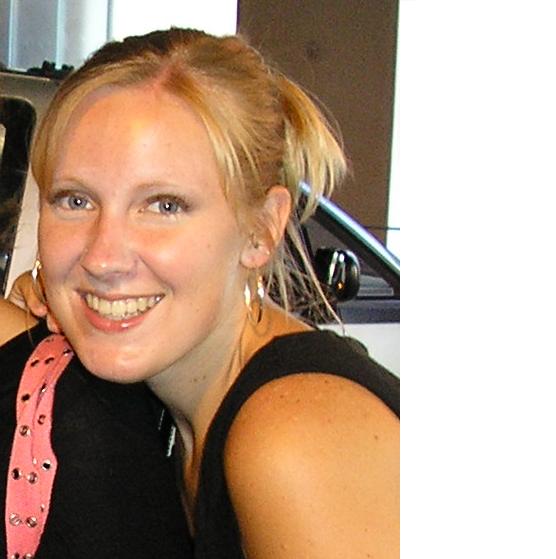
11/21/06
So. I am officially a cook. I now actually make complete dishes, quite edible ones at that, and am even starting to get creative! I just had to share this because I’m pretty proud of myself, I’ve been waiting quite awhile for me to get my ass in gear and learn to cook. I now have perfected a goat cheese fettuccini that Mel says is restaurant-worthy, rosemary chicken that gained the approval of a picky European, pizza that rivals anything Cape Verde has thus far been able to put out, and grão di biku that while not entirely aesthetically appealing, tastes just as good as any I’ve had made by a Cape Verdean. I can now play around with several types of pasta (since it’s easy and accessible here in Assomada), can make excellent garlic mashed potatoes, co-created amazing chicken quesadillas with Mel, and made a pretty good cream of potato soup with cheese (of course). I baked cookies with the girls, and they turned out wonderful, turning Cape Verdeans (and apparently Italians) on to the wonderful world of American obesity-inducing baked goods. I plan to introduce brownies next, if I can get my hands on cocoa. In the dinner department next I’ll need to perfect a fish dish or two to be well-rounded (at least by Cape Verdean standards, since once I get back to the States the chances of me making fish are virtually nonexistent)—we’ll go for bifi di atum (tuna steaks), my favorite Cape Verdean dish. And then cachupa, the national CV dish. That one’s nice and hearty, stays in your stomach the whole day.
So Mel and Nick taking me under their wing in the kitchen has thus far proved successful, the proof of which is currently gathering on my ass. The first thing my boss Aguido said to me when he saw me the other day was “Oh, you’ve gotten fatter, how great!” Exactly what every American girl wants to hear, but it’s to be expected. And it’s quite the compliment here, they think it’s more attractive and have been telling me all along that I need to be fatter. Well it worked. And Aguido’s comment worked also: I finally got myself out of bed at 6am this morning to go on a run. I hope to make that a more regular thing, rather than the fat comments. As much as I don’t really care if my weight fluctuates (God bless crossing cultures and its affect on your vanity), I don’t want to ignore it and become unhealthy. So the running begins.
* * *
Things at work are as crazy busy as ever. We’re gearing up for the concelho’s holiday, Nha Santa Catarina, which is on Saturday, and then next week the International Fight Against AIDS Day, so the CEJ is chock full of activities that started Sunday and will go till about the 8th of December. I was put in charge of organizing a door-to-door AIDS campaign to talk to all the families in the area about HIV/AIDS and pass out information (stupid since not all families can or want to read, but the country is overflowing with small useless pamphlets, so why not circulate them?). We’re also having theater, music, poetry, and capoeira (a Brazilian dance/self-defense art form) in our main plaza, anonymous HIV testing done by the hospital, passing out of medical supplies to those already infected with the virus, and a silent march through town on the actual day, the 1st of December. We’re doing a workshop with local fisherman and people who sell fish and other food in the markets about hygiene and health practices to prevent disease among them and the people buying their food. Needless to say the CEJ I’m helping at is pretty well organized and already programmed countless activities before I got here. So I go to the meetings, give moral support, a pat on the back, and a few suggestions here and there. And help organize the youth to participate. And hopefully I’ll get the girls at the Center to write a batuque song about trust and respect in relationships that they can present during one of the cultural afternoons where music is presented. There’s about a zillion other activities we’re doing within all of this, in addition to the task of trying to plan next year’s PST which will be held here in Assomada, which all adds up to not a second free throughout the day. And a cranky housemate who apparently finds it stressful to pick up our electric bill on his own. But that’s besides the point…
At the Center, I feel like I haven’t been there a full day in awhile…okay since last Wednesday, but really that is awhile. So I miss my girl time, but after all this AIDS stuff settles down I’ll have more time and a slightly more regular schedule to spend with them. Currently, Zelda is out of the institution in Praia and is staying with Andreia in Orgãos, who brings Zelda with her to the Center every day, which is interesting, though admittedly better than her situation at the institution, or solely at the Center for that matter. She is much calmer, taking her medication (though she constantly gets frustrated at taking it and says it gives her a stomachache), and I got a glorious glimpse of the Zelda I missed. She came up to the room I was working in yesterday to sit with me (and probably to get away from the 20 other girls yelling and running around in the Center), and started talking with her old hopeful and curious self. She asked me to sing the song she heard me sing for the girls (it’s a worship song that has been translated in Portuguese and is on a CD they constantly play; in English it’s “Here I am to Worship”), which I gladly did just for her. Usually when the girls ask me to sing it (about once a day) I tell them they need to pick a new song because I barely liked it before I sang it for the millionth time, but for her I had no problem, just to see the smile on her face was worth it. And it’s not a bad songJ.
11/30/06
Yet another glimpse at the overwhelming prospect of updating everything all at once. We’ll start with AIDS. We did the door-to-door campaign to tell people that AIDS exists (most people already know that) and that they should be afraid, very afraid. Not my chosen words, but certainly those that came out of the mouths of the youth I was walking around with. Not much was said to most people, just “AIDS exists, still haven’t cured it, read this pamphlet.” When it was my turn to speak I tried to elaborate more, but it’s awkward standing there when they don’t care much what you’re saying; and to be honest, sometimes I didn’t care much what I was saying. I was cranky and tired and felt the campaign was shaping up to be moderately useless, except to get rid of pamphlets and tell people about the march we’re having on the 1st, World Fight Against AIDS Day. Don’t get me wrong, I’m glad we did it, and you never know who will benefit from just saying a few words—and you never know who might stumble across the pamphlet, be able to read it, and truly increase their awareness. But I couldn’t help but wonder if there was a better option, a better route to go that doesn’t just leave them with the responsibility of reading (which many won’t) and that actually reaches for a change in mentality rather than increased use of condoms. Of course, protect yourself, but what about trust in relationships, acknowledging responsibility and the seriousness of your decisions and their effects on others? I don’t know, overall something just felt futile about it.
The next day we finally made it to the festivities they’d been having at night at the end of the main street—food stalls, music, drinking, etc. Wasn’t very impressed, seeing as all I encountered was a bunch of drunk Cape Verdean men treating me to the famous “rape eyes” I’m ever so fond of. We were sitting down when two of them sat with us, one of which proceeded to stare unceasingly at me, not even pausing for a moment, just continually repeating “you’re so beautiful; here, have some ponche”. I was so uncomfortable, I mentioned what should have been obvious to my housemate and PCV friend, who did nothing but laugh. So finally I got up to leave, as obviously they were going to make no move to leave the table. Thanks, guys. My ability to laugh it off only continues to a certain point until it’s just not fun. That’s not how I’ll choose to spend my evenings.
The next day was better, it was the official Santa Catarina Day that everything had been building up to. In the afternoon, people have big lunch parties at their houses, and you’re supposed to go from house to house to enjoy people’s company and excellent feasts. This meant I ate three lunches on Saturday, and my stomach wasn’t thanking me—so, so full. After that I took a group of girls out to see the festivities and make popcorn at my house, since they were cooped up all day, nowhere to go. Then at night, the fun began and Assomada began filling to well beyond what I thought was its capacity. I’ve never seen Assomada so full of people in my life! I forgot where I was, it felt like the Puyallup Fair on steroids, nowhere to walk, just faces streaming past you. People came from all over the island (and even from other islands) to enjoy the holiday and the concerts that took place on Saturday and Sunday. You could pick out the Praia people from the Assomada people easily: those with BMWs and jewelry came from the city, and those from the almost-city just tried to hard. International groups came to play on a stage I never thought could exist here—it was like a high-class concert in the States! It was quite the set-up with strobe lights, fog machines, and an intense sound system. Very few moments that night did I feel like I was in the Peace Corps. Every day it feels more and more like that. But it was really a great night, I saw virtually everyone I knew from the area there, ate delicious food (pork on a stick—so amazing), got to see PCVs from all over the island, and hung out with Andreia and her boyfriend listening to music all night long. Literally, we stayed out until about 6 am. We left because we were tired, but there was still another group or two to play, so bands were going until about 9 in the morning. And people stayed! When we left, it was still an enormous mass of people. That’s how they roll here.
* * *
On Sunday Peace Corps had our Thanksgiving party, since it’s obviously not a celebrated holiday here and everyone had to work on Thursday. So we had a big potluck in Praia at the Embassy Rec Center, where for the second time in one weekend I ate myself silly. There was so much amazing food I didn’t know what to do with myself. Pumpkin pie, pecan pie, amazing turkey, cranberry sauce sent from the States, garlic mashed potatoes, sweet potato soufflé, fruit salad, three kinds of stuffing, a curry cauliflower dish, and homemade chocolate chip cookies. My mouth is watering just remembering. We each took home several plates of leftovers. So all in all, I was ridiculously spoiled this weekend. Plus Monday was an unofficial holiday in Santa Catarina because of the party (I think they refer to it as “recovery day”), so I got an actual day of rest, much needed. I hiked to this extremely large tree (I think the largest in Cape Verde, or at least on the island) about 30 minutes from my house to just be alone, relax, and read a book. I took a little lunch and sincerely enjoyed myself, until a group of young boys came to play and climb the tree. They were nice kids, I took pictures of them, we talked a bit, and then they left me to my much-appreciated solitude. When I got home I washed clothes for several hours, so much work (but it’s good for me). So I must say I enjoyed a satisfying three days, no complaints.
* * *
On Tuesday of this week, a girl came to my house looking for my friend Mel (one of the other girl PCVs in Assomada). Nick directed her to the right house, and several minutes later, Mel called the house a little frantic, wanting me to come over and deal with the girl that was now sitting in her kitchen crying. So I went over and talked to the girl. It turns out her father drinks a lot and has a habit of beating her. Something happened the day before and her father told her to pack her bag and leave, no longer welcome in the house. She spoke with her friends, who told her it would be a good idea to look for foreigners, who are often able to help—that’s what they’re here for, right? Her friends were volunteers at the CEJ I work at, so they knew we lived in town and that I might be able to help her out since I exist here for all things youth. Hence she was here at Mel’s doorstep. She looked terrified, not knowing what to do and having nowhere to go, and asked if she could stay with Mel, offering to do all the housework and promising that she wouldn’t be a burden. She was desperate to finish school but unable to do so if she stayed in the house or went to live with relatives in Praia. She just wanted a place to stay until she could complete her education. We were kind of blown away by this surprise, seeing the fear and despair in her face and not really having any option. There’s no way she could stay permanently with us, it’s not our house and Peace Corps would throw a fit. We offered to let her stay for the night, but I told her the next day I would have to speak with my colleagues at work to see if they could work up any options at the ICM, what their opinion was of the situation. She declined to stay the night, saying she had no clothes with her and would try and stay in her aunt’s room (same house as the parents) for the night. We told her to come back the next evening, or that night if something happened, and we would see what could be done. So yesterday she came back, after I had talked with Ivete and Andreia to see what they thought. They told me to bring her by the next day (today) to speak with them, which I told her and she agreed. So today hopefully she will be coming to the Center to speak with Ivete and we can see what can be done. But God we felt like we were kicking a stray dog on the street. What do you do in this situation? How do you turn someone genuinely fearful away? It makes you realize the need for teen shelters or shelters for abused women, even though most don’t seek out help for fear and lack of options outside of their husband’s support. But what do you do with those who are desperate enough to seek out help? There’s no alternative. If I had the time and money that would be my next project, starting some kind of teen shelter where they could stay overnight if needed. More things that shouldn’t have to exist, but are needed nonetheless.
Thursday, November 30, 2006


Thursday, November 16, 2006
Classroom management's a bitch
11/15/06
Okay, so here continues the update, better late than never. I believe as we left off I was describing our Halloween goodness, so we’ll go from there. The day after our festa was a national holiday for Cape Verde, so no one had work or school, but instead I decided to take a couple of girls out to ice cream (we just recently got ice cream in Assomada! It’s imported of course), and then back to my house. But on the way back to the house we ran into Andreia and her boyfriend, who were planning to take a group of girls to Orgãos to visit a family who likes to have the girls from the Center come once in awhile to spend the afternoon. So we joined them and spent the afternoon in Orgãos. We made couscous (not the Middle Eastern couscous you may be thinking, this is a thick, heavy, cake-like food made from ground corn and flour), sang batuque songs the girls had written about the Center, and just relaxed and spent time together. You can’t help but feel calm in the more rural parts of Cape Verde’s interior, with the animals, the beautiful views, the slower pace of living, no busy streets or zillions of youth coming into town for school (students come from all over the island to go to school in Assomada), and the kind hospitality of humble Cape Verdeans. And this house has a wonderful view of Pico de Antonio, the highest point on Santiago, and all the other beautiful mountainsides, which are now beginning their descent into complete dryness as the rainy season has ended. Alas, our beautiful green has disappeared as quickly as it came, leaving dried out stalks of corn and a much browner terrain. It was beautiful while it lasted.
In any case, the afternoon in Orgãos was very peaceful, a fresh break from the “city”. And I came home with a bag full of fresh eggs from the free range chickens they have at their place, which are so good and normally twice the price at the market. So a successful afternoon. This happens to be a family who is planning to adopt one of the girls from the Center, so there tends to be a lot of interaction and all the girls know the family. I’ve been there three times in the last few weeks already.
* * *
During that week I had started to feel like I was getting sick again. My first month at site along with the week before I left (for a total of 5 weeks) I was sick with an increasingly stubborn and yucky cold, which eventually turned into bronchitis, and then finally went on its way. Because of my extended sickness, my family sent me an entire pharmacy’s worth of cold medicine, which so happened to come in handy when the week after the Halloween party I started coming down with something. I felt the scratchy sore throat and achiness, which scared me into staying home from work on Friday, to make sure I could try and combat it before it really took hold. So I went to the Center in the morning to drop some things off and let them know I wasn’t feeling well and wanted to stay home and rest. They were very concerned and sent me on my way. Later that day, after lunchtime, Andreia and three of the girls from the Center, followed by Ivete, all came to my house to check up on me. They came so sweetly concerned, panicked that I didn’t have everything I needed, wanting to know if they could go to the market for me, if they could make my meals for me, if they could clean my house, if I needed to go the doctor and get antibiotics, anything. I was overwhelmed with the kindness and concern! I assured them I was fine and just needed to get some rest, spend the afternoon lying down and catching up on much-needed R&R, and I would assuredly be fine by Monday. Andreia was insistent, not convinced that I should even be up and walking around, and claiming that no one wants to do things like cook and clean when they’re sick (so very true), and wouldn’t accept my refusals to let them clean. So the girls swept and mopped my floor (which was embarrassingly still dirty from the Halloween party), did my dishes, and stayed and talked with me for awhile to keep me company in my hour of “need”. Never before had I experienced such a huge show of affection for a time when I was sick. It’s one thing to have your mom take care of you and nurse you back to health at home, but it’s another to be in a different culture and have people from your community come and clean your house and take care of you when you merely have the flu! Andreia said it’s a completely normal cultural thing, people just naturally come and offer what they can for the people around them when they’re sick or in need. Particularly for people who live alone—it’s assumed that you will need help with things when you are feeling under the weather. So I spent the rest of my resting day feeling very loved and lucky to be in such a caring culture. It makes sick times a lot easier to bear when you’re away from Mommy who can’t make you chicken noodle soup. It also reminded me how lucky I am to have a caring and understanding work environment, one that stretches beyond coming to the Center every day to do a job, but extends to friendship and taking care of one another. I am very blessed.
* * *
Today I presented the behavioral chart (the monster I mentioned making earlier) to the girls, explaining what it was, how it worked, and what we hoped to come as a result. Let me just say this is why I’m not a teacher: classroom management’s a bitch. Getting up in front of a classroom of students to try and teach a class is hard enough, but trying to get a bunch of rowdy, untrained children and adolescents who are used to spending most of their lives on the streets or in unsupervised or abusive homes to pay attention and stop talking while you are explaining something is like getting the fat kid to throw away his popsicle. It doesn’t happen. And so I spent the better part of an hour trying to get through the explanation of the chart while the kids talked, shouted at each other, and yelled out their suggestions. There is no concept in Cape Verde of raising your hand or waiting your turn to talk. Even when you set the ground rules ahead of time, they don’t care to raise a hand or wait for another person to finish talking before they jump in with whatever it is they’re wanting to say. I can’t decide if it’s lack of respect for the people talking, or if it’s just that these girls have never really been taught appropriate manners when it comes to these situations—no good role models to teach them respect for one another in communication. I’ve already learned and started to accept that yelling or speaking very loudly to get your point across is a cultural thing here (remember when the mães were screaming at the girls during that one meeting and I said they were acting like children? Apparently that’s just how they communicate and it’s completely acceptable to most people here.). But I’m struggling with a balance in which to teach the girls respect and good communication skills while respecting their cultural boundaries. If nothing else getting them to wait their turn to start yelling and screaming would be an improvement.
Anyway, I have my doubts as to whether this chart will work and people will follow it, but hopefully when conflicts arise over it, no blood will be shed. As surely as I believe it’s probably raining in Seattle right now, I know there will be conflicts maybe even every day over this chart. It comes with the territory. And so patience will be needed every minute of these next two years. But if we were only willing to work with the “easy” kids what hope would the less “easy” kids have? I still swear to the end that these are good girls. There’s potential in them. They want it. Today one of the older girls who failed the 7th grade twice and found herself being potentially barred from school, as there were no spaces available in the high school, found out today that the director would allow her to come back and had found room for her in a 7th grade class. She began to cry and you could see in her eyes how badly she wanted it. Every day since school began she has come to me and Andreia asking when she would be able to go to school, if we had found her a spot yet. So not all days are hopeless. Today was a good one for her. Hopefully she’ll be able to catch up with all that she’s missed.
Okay, I have to get back to my Portuguese homework, but more to update later. Take care.
Okay, so here continues the update, better late than never. I believe as we left off I was describing our Halloween goodness, so we’ll go from there. The day after our festa was a national holiday for Cape Verde, so no one had work or school, but instead I decided to take a couple of girls out to ice cream (we just recently got ice cream in Assomada! It’s imported of course), and then back to my house. But on the way back to the house we ran into Andreia and her boyfriend, who were planning to take a group of girls to Orgãos to visit a family who likes to have the girls from the Center come once in awhile to spend the afternoon. So we joined them and spent the afternoon in Orgãos. We made couscous (not the Middle Eastern couscous you may be thinking, this is a thick, heavy, cake-like food made from ground corn and flour), sang batuque songs the girls had written about the Center, and just relaxed and spent time together. You can’t help but feel calm in the more rural parts of Cape Verde’s interior, with the animals, the beautiful views, the slower pace of living, no busy streets or zillions of youth coming into town for school (students come from all over the island to go to school in Assomada), and the kind hospitality of humble Cape Verdeans. And this house has a wonderful view of Pico de Antonio, the highest point on Santiago, and all the other beautiful mountainsides, which are now beginning their descent into complete dryness as the rainy season has ended. Alas, our beautiful green has disappeared as quickly as it came, leaving dried out stalks of corn and a much browner terrain. It was beautiful while it lasted.
In any case, the afternoon in Orgãos was very peaceful, a fresh break from the “city”. And I came home with a bag full of fresh eggs from the free range chickens they have at their place, which are so good and normally twice the price at the market. So a successful afternoon. This happens to be a family who is planning to adopt one of the girls from the Center, so there tends to be a lot of interaction and all the girls know the family. I’ve been there three times in the last few weeks already.
* * *
During that week I had started to feel like I was getting sick again. My first month at site along with the week before I left (for a total of 5 weeks) I was sick with an increasingly stubborn and yucky cold, which eventually turned into bronchitis, and then finally went on its way. Because of my extended sickness, my family sent me an entire pharmacy’s worth of cold medicine, which so happened to come in handy when the week after the Halloween party I started coming down with something. I felt the scratchy sore throat and achiness, which scared me into staying home from work on Friday, to make sure I could try and combat it before it really took hold. So I went to the Center in the morning to drop some things off and let them know I wasn’t feeling well and wanted to stay home and rest. They were very concerned and sent me on my way. Later that day, after lunchtime, Andreia and three of the girls from the Center, followed by Ivete, all came to my house to check up on me. They came so sweetly concerned, panicked that I didn’t have everything I needed, wanting to know if they could go to the market for me, if they could make my meals for me, if they could clean my house, if I needed to go the doctor and get antibiotics, anything. I was overwhelmed with the kindness and concern! I assured them I was fine and just needed to get some rest, spend the afternoon lying down and catching up on much-needed R&R, and I would assuredly be fine by Monday. Andreia was insistent, not convinced that I should even be up and walking around, and claiming that no one wants to do things like cook and clean when they’re sick (so very true), and wouldn’t accept my refusals to let them clean. So the girls swept and mopped my floor (which was embarrassingly still dirty from the Halloween party), did my dishes, and stayed and talked with me for awhile to keep me company in my hour of “need”. Never before had I experienced such a huge show of affection for a time when I was sick. It’s one thing to have your mom take care of you and nurse you back to health at home, but it’s another to be in a different culture and have people from your community come and clean your house and take care of you when you merely have the flu! Andreia said it’s a completely normal cultural thing, people just naturally come and offer what they can for the people around them when they’re sick or in need. Particularly for people who live alone—it’s assumed that you will need help with things when you are feeling under the weather. So I spent the rest of my resting day feeling very loved and lucky to be in such a caring culture. It makes sick times a lot easier to bear when you’re away from Mommy who can’t make you chicken noodle soup. It also reminded me how lucky I am to have a caring and understanding work environment, one that stretches beyond coming to the Center every day to do a job, but extends to friendship and taking care of one another. I am very blessed.
* * *
Today I presented the behavioral chart (the monster I mentioned making earlier) to the girls, explaining what it was, how it worked, and what we hoped to come as a result. Let me just say this is why I’m not a teacher: classroom management’s a bitch. Getting up in front of a classroom of students to try and teach a class is hard enough, but trying to get a bunch of rowdy, untrained children and adolescents who are used to spending most of their lives on the streets or in unsupervised or abusive homes to pay attention and stop talking while you are explaining something is like getting the fat kid to throw away his popsicle. It doesn’t happen. And so I spent the better part of an hour trying to get through the explanation of the chart while the kids talked, shouted at each other, and yelled out their suggestions. There is no concept in Cape Verde of raising your hand or waiting your turn to talk. Even when you set the ground rules ahead of time, they don’t care to raise a hand or wait for another person to finish talking before they jump in with whatever it is they’re wanting to say. I can’t decide if it’s lack of respect for the people talking, or if it’s just that these girls have never really been taught appropriate manners when it comes to these situations—no good role models to teach them respect for one another in communication. I’ve already learned and started to accept that yelling or speaking very loudly to get your point across is a cultural thing here (remember when the mães were screaming at the girls during that one meeting and I said they were acting like children? Apparently that’s just how they communicate and it’s completely acceptable to most people here.). But I’m struggling with a balance in which to teach the girls respect and good communication skills while respecting their cultural boundaries. If nothing else getting them to wait their turn to start yelling and screaming would be an improvement.
Anyway, I have my doubts as to whether this chart will work and people will follow it, but hopefully when conflicts arise over it, no blood will be shed. As surely as I believe it’s probably raining in Seattle right now, I know there will be conflicts maybe even every day over this chart. It comes with the territory. And so patience will be needed every minute of these next two years. But if we were only willing to work with the “easy” kids what hope would the less “easy” kids have? I still swear to the end that these are good girls. There’s potential in them. They want it. Today one of the older girls who failed the 7th grade twice and found herself being potentially barred from school, as there were no spaces available in the high school, found out today that the director would allow her to come back and had found room for her in a 7th grade class. She began to cry and you could see in her eyes how badly she wanted it. Every day since school began she has come to me and Andreia asking when she would be able to go to school, if we had found her a spot yet. So not all days are hopeless. Today was a good one for her. Hopefully she’ll be able to catch up with all that she’s missed.
Okay, I have to get back to my Portuguese homework, but more to update later. Take care.
Thursday, November 09, 2006
11/7/06
I haven’t journaled in what feels like ages, and it’s frustrating. Normally writing things down helps me to express everything I’m feeling, put it out on paper, let it exist somewhere other than in my mind and weighing on my heart. But there’s simply no time. I’m absolutely exhausted every single day. And then it builds up and becomes overwhelming. Yesterday as we were driving back from Orgãos, a more rural town between here and Praia, my heart felt so heavy with the realization that in some ways this is nothing like I imagined. I guess I had imagined what is taking place with other Peace Corps Volunteers on the continent of Africa, the rural impoverished countries of Africa—living with the bare minimum, no electricity, mud huts, slower pace of living, closer connection with the outside environment and with the earth, more time to think and relax, read a book, grow accustomed to a pattern and rhythm of living that turned away from the one I knew. All in all a more rural lifestyle. So many years of the fast-paced crazy American lifestyle where every minute of your day is planned out and you rely on constant caffeine running through your veins as you let life sweep you away before you turn around and realize it’s gone—all those years made me crave stillness, a break from the modern world. It’s too much stress, and I felt like eventually it would kill me. I want to sit on a back porch, listen to animals and chirping crickets while the sun sets over the beautiful Cape Verdean mountaintops, without worrying about how many things I need to be getting done before tomorrow. And so lately I feel as though a part of my heart has broken with the realization that coming here hasn’t been an escape from the hectic, too-full lifestyle. Almost the opposite. Instead of exploring myself, letting my true desires unfold and spread their wings to the outer reaches of the sky (the beautifully sappy picture I held in my head), I am at times busier than I’ve ever been. Sometimes there’s so much riding on my shoulders that I wonder if I was crazy to not have realized the responsibility this would entail before coming here. I knew I would have my Volunteer responsibilities along with the task of writing my thesis, but I never envisioned my lifestyle taking this shape. Running around from place to place, missing lunches, being pulled in so many directions I feel I’ll be torn to pieces. And so I suppose I’m mourning the life I envisioned and longed for, the dream that has died and been replaced by a different dream—equally fruitful and beneficial, but something I had envisioned happening much later on. I want to accomplish so many things, and many of those things are happening right now, I’m getting the experience I eventually wanted. And so I can’t complain, because in so many ways I love my job and what I have the blessing to be able to do here, but sometimes it’s a lot to take all at once. I thought all this would happen after I got the adjusting-to-African-culture part down, drinking in its richness. I don’t want to miss the subtleties while I’m swept along the busy highway. It just mixes with your emotions, trying to deal with the world, the reality you have before you while ghosts from a former life chase you into the corners of your consciousness until you can’t help but face the longings and expectations that you may never have given voice to, or continued to avoid. And so I suppose this is one of my ghosts: the perpetual conflict between wanting to accomplish so much, affect so many lives and bring joy to those around me—change the world—and wanting to step back and be dissolved into a completely foreign, more simple yet profound life that may seem to sacrifice the type of significant change I hope to see. I think I never wanted to admit that possibly the two can’t simultaneously exist. I wanted to believe that I can do all the things I want to do while at some point having a “break”, breathing in the air of silent reflection and simple living, where taking an afternoon to write a song isn’t an absurd distraction throwing a kink in your plan. And I want someone to tell me that that’s okay, to give me that space, that I'm not ridiculously foolish. During all the crazy times in my life where I’ve pushed forward at 100 miles an hour, there was always a little voice in the back of my head that prodded me forward and promised that there would be a time when it would all just stop and I would be able to breathe, when things would “settle down”. That voice convinced me that it would all be worth it: kill yourself working now and later you will finally have stability. Truthfully, that voice still shows up often in my thoughts. I’m pretty sure the voice is lying. And I had somehow convinced myself that possibly going abroad, doing the Peace Corps, would be that pause, that time when while I’m still working hard, pushing myself, stretching myself in all different ways, it would be in a separate way than my life before, in a way that challenged different parts of me and brought out my broader self. A pause from craziness to appreciate a new way of looking at the world.
To be perfectly honest I think what’s frustrating me the most is that I feel like I’m not doing enough, that I’m not pushing hard enough, at the same time that I sometimes feel I am giving too much, giving all that I have and feasibly can. How does that work? So many things I’m not doing that I want to be, that if I just make a few changes I can accomplish more with the time I have. Then the other side says “You’re killing yourself!” I’m only one person and I can’t keep getting caught in the trap of trying to do it all myself, which often helps no one. But then who will do it? Who will stand up for those who have no advocate? Who will be the “superwoman” with hundreds of projects and programs going on at once? There are those moments when it just seems so easy to quit, to slump back and admit defeat. So many doubts that can easily turn into excuses—me against the world, how do you know who to trust and what to take as truth, if it exists? Many things in the development world I’m not willing or ready to take as truth, but that can’t be an excuse to do nothing, to avoid helping to the extent I can. Anything can be turned into a “well I’m not sure about that, I’d better not bother with it”. But self-assured falsified truth is just as dangerous. Slipping into apathy is no better than pretending you know the “right” way to go.
Okay I’m starting to ramble and if I know myself, it looks like it could go on for awhile, so I’m cutting myself off. I’m exhausted and I haven’t even begun to catch up on updates of what has happened in the last week or so. Tomorrow maybe…if my heart is up to it…
11/8/06
Today I suppose it’s time for me to backtrack and recount what’s been happening the last week or two. Last week was Halloween, and Nick, Mel and I threw a party at our house for all the PCVs on Santiago and as many Cape Verdeans as we could round up and muster up an explanation of dressing in costumes for. We started preparing for this extravaganza pretty much since we got here in Assomada, so there was quite a bit of build-up. We made decorations for the house, planned costumes, made appetizers for everyone, and even made two piñatas. Yes, they have virtually nothing to do with Halloween, except for the candy that fills them, but we thought it would be entertaining to introduce the concept of beating a large paper contraption until candy explodes from it to a bunch of Cape Verdeans. Who doesn’t like beating things with a stick, much less getting a nice surprise at the end? The funniest part (besides the fact that one of the piñatas was a three-legged donkey Nick painstakingly made and painted a smiley face on) was that we snuck condoms in the piñatas with the candy, since nothing in Peace Corps Africa can be done without involving an HIV/AIDS lesson—be safe out there, kids. Before the party started, all the PCVs who came with costumes (I was Little Red Riding Hood) went to the ICM Center to help pass out candy for the girls, our own little twist on the Halloween theme, and something that truly made the girls’ night. They were elated that not only were a bunch of crazy Americans coming dressed in costumes, but they had brought candy. What a dream! They weren’t about to let us leave until we had taken pictures, explained our costumes, given everyone hugs, and danced a bit of funana. Even with all that they were bummed to see us go. So a good time was had by all.
All in all I think our party went well, even if the whole concept is something I never thought I’d come across in the Peace Corps. Adding to the list of things I never thought (or wanted) to see, was the surprise last-minute presence of—get this—a keg. Yes, a keg. Of beer. The fact that the concept even exists already here in CV helps you understand the drinking culture that most certainly goes on strong here. Let’s just say you should have seen the look on my face when I answered the door to find two men asking me where to put the “maquina de cerveja (beer machine)” that apparently my housemate and his friends had ordered. Pretty much the last thing I expected to happen. So…beer was flowing aplenty for those who like it, which seemed to have been most Cape Verdeans and virtually all of the PCVs excluding myself. I was happy holding my cup of wine and playing hostess. Anyhow, it was a good time, piñatas were broken, music was danced to, friends were made and bid farewell to (sad to see you go JC, we’ll miss you), all the makings of a successful party, complete with the random white guy who came dressed as Adam from Adam and Eve, as in the Bible. It was awkward at times, but thankfully his solitary leaf stayed in its place the whole night.
Okay I have to sign off for now, but I will update the rest of the events that have taken place since the party on the next blog. Ciao.
I haven’t journaled in what feels like ages, and it’s frustrating. Normally writing things down helps me to express everything I’m feeling, put it out on paper, let it exist somewhere other than in my mind and weighing on my heart. But there’s simply no time. I’m absolutely exhausted every single day. And then it builds up and becomes overwhelming. Yesterday as we were driving back from Orgãos, a more rural town between here and Praia, my heart felt so heavy with the realization that in some ways this is nothing like I imagined. I guess I had imagined what is taking place with other Peace Corps Volunteers on the continent of Africa, the rural impoverished countries of Africa—living with the bare minimum, no electricity, mud huts, slower pace of living, closer connection with the outside environment and with the earth, more time to think and relax, read a book, grow accustomed to a pattern and rhythm of living that turned away from the one I knew. All in all a more rural lifestyle. So many years of the fast-paced crazy American lifestyle where every minute of your day is planned out and you rely on constant caffeine running through your veins as you let life sweep you away before you turn around and realize it’s gone—all those years made me crave stillness, a break from the modern world. It’s too much stress, and I felt like eventually it would kill me. I want to sit on a back porch, listen to animals and chirping crickets while the sun sets over the beautiful Cape Verdean mountaintops, without worrying about how many things I need to be getting done before tomorrow. And so lately I feel as though a part of my heart has broken with the realization that coming here hasn’t been an escape from the hectic, too-full lifestyle. Almost the opposite. Instead of exploring myself, letting my true desires unfold and spread their wings to the outer reaches of the sky (the beautifully sappy picture I held in my head), I am at times busier than I’ve ever been. Sometimes there’s so much riding on my shoulders that I wonder if I was crazy to not have realized the responsibility this would entail before coming here. I knew I would have my Volunteer responsibilities along with the task of writing my thesis, but I never envisioned my lifestyle taking this shape. Running around from place to place, missing lunches, being pulled in so many directions I feel I’ll be torn to pieces. And so I suppose I’m mourning the life I envisioned and longed for, the dream that has died and been replaced by a different dream—equally fruitful and beneficial, but something I had envisioned happening much later on. I want to accomplish so many things, and many of those things are happening right now, I’m getting the experience I eventually wanted. And so I can’t complain, because in so many ways I love my job and what I have the blessing to be able to do here, but sometimes it’s a lot to take all at once. I thought all this would happen after I got the adjusting-to-African-culture part down, drinking in its richness. I don’t want to miss the subtleties while I’m swept along the busy highway. It just mixes with your emotions, trying to deal with the world, the reality you have before you while ghosts from a former life chase you into the corners of your consciousness until you can’t help but face the longings and expectations that you may never have given voice to, or continued to avoid. And so I suppose this is one of my ghosts: the perpetual conflict between wanting to accomplish so much, affect so many lives and bring joy to those around me—change the world—and wanting to step back and be dissolved into a completely foreign, more simple yet profound life that may seem to sacrifice the type of significant change I hope to see. I think I never wanted to admit that possibly the two can’t simultaneously exist. I wanted to believe that I can do all the things I want to do while at some point having a “break”, breathing in the air of silent reflection and simple living, where taking an afternoon to write a song isn’t an absurd distraction throwing a kink in your plan. And I want someone to tell me that that’s okay, to give me that space, that I'm not ridiculously foolish. During all the crazy times in my life where I’ve pushed forward at 100 miles an hour, there was always a little voice in the back of my head that prodded me forward and promised that there would be a time when it would all just stop and I would be able to breathe, when things would “settle down”. That voice convinced me that it would all be worth it: kill yourself working now and later you will finally have stability. Truthfully, that voice still shows up often in my thoughts. I’m pretty sure the voice is lying. And I had somehow convinced myself that possibly going abroad, doing the Peace Corps, would be that pause, that time when while I’m still working hard, pushing myself, stretching myself in all different ways, it would be in a separate way than my life before, in a way that challenged different parts of me and brought out my broader self. A pause from craziness to appreciate a new way of looking at the world.
To be perfectly honest I think what’s frustrating me the most is that I feel like I’m not doing enough, that I’m not pushing hard enough, at the same time that I sometimes feel I am giving too much, giving all that I have and feasibly can. How does that work? So many things I’m not doing that I want to be, that if I just make a few changes I can accomplish more with the time I have. Then the other side says “You’re killing yourself!” I’m only one person and I can’t keep getting caught in the trap of trying to do it all myself, which often helps no one. But then who will do it? Who will stand up for those who have no advocate? Who will be the “superwoman” with hundreds of projects and programs going on at once? There are those moments when it just seems so easy to quit, to slump back and admit defeat. So many doubts that can easily turn into excuses—me against the world, how do you know who to trust and what to take as truth, if it exists? Many things in the development world I’m not willing or ready to take as truth, but that can’t be an excuse to do nothing, to avoid helping to the extent I can. Anything can be turned into a “well I’m not sure about that, I’d better not bother with it”. But self-assured falsified truth is just as dangerous. Slipping into apathy is no better than pretending you know the “right” way to go.
Okay I’m starting to ramble and if I know myself, it looks like it could go on for awhile, so I’m cutting myself off. I’m exhausted and I haven’t even begun to catch up on updates of what has happened in the last week or so. Tomorrow maybe…if my heart is up to it…
11/8/06
Today I suppose it’s time for me to backtrack and recount what’s been happening the last week or two. Last week was Halloween, and Nick, Mel and I threw a party at our house for all the PCVs on Santiago and as many Cape Verdeans as we could round up and muster up an explanation of dressing in costumes for. We started preparing for this extravaganza pretty much since we got here in Assomada, so there was quite a bit of build-up. We made decorations for the house, planned costumes, made appetizers for everyone, and even made two piñatas. Yes, they have virtually nothing to do with Halloween, except for the candy that fills them, but we thought it would be entertaining to introduce the concept of beating a large paper contraption until candy explodes from it to a bunch of Cape Verdeans. Who doesn’t like beating things with a stick, much less getting a nice surprise at the end? The funniest part (besides the fact that one of the piñatas was a three-legged donkey Nick painstakingly made and painted a smiley face on) was that we snuck condoms in the piñatas with the candy, since nothing in Peace Corps Africa can be done without involving an HIV/AIDS lesson—be safe out there, kids. Before the party started, all the PCVs who came with costumes (I was Little Red Riding Hood) went to the ICM Center to help pass out candy for the girls, our own little twist on the Halloween theme, and something that truly made the girls’ night. They were elated that not only were a bunch of crazy Americans coming dressed in costumes, but they had brought candy. What a dream! They weren’t about to let us leave until we had taken pictures, explained our costumes, given everyone hugs, and danced a bit of funana. Even with all that they were bummed to see us go. So a good time was had by all.
All in all I think our party went well, even if the whole concept is something I never thought I’d come across in the Peace Corps. Adding to the list of things I never thought (or wanted) to see, was the surprise last-minute presence of—get this—a keg. Yes, a keg. Of beer. The fact that the concept even exists already here in CV helps you understand the drinking culture that most certainly goes on strong here. Let’s just say you should have seen the look on my face when I answered the door to find two men asking me where to put the “maquina de cerveja (beer machine)” that apparently my housemate and his friends had ordered. Pretty much the last thing I expected to happen. So…beer was flowing aplenty for those who like it, which seemed to have been most Cape Verdeans and virtually all of the PCVs excluding myself. I was happy holding my cup of wine and playing hostess. Anyhow, it was a good time, piñatas were broken, music was danced to, friends were made and bid farewell to (sad to see you go JC, we’ll miss you), all the makings of a successful party, complete with the random white guy who came dressed as Adam from Adam and Eve, as in the Bible. It was awkward at times, but thankfully his solitary leaf stayed in its place the whole night.
Okay I have to sign off for now, but I will update the rest of the events that have taken place since the party on the next blog. Ciao.
Monday, October 30, 2006
Just one of them daaaaaays....
10/30/06
I’m feeling a little disappointed in myself that I haven’t spent much time lately reflecting on my experiences, how I’m feeling, journaling a little more personally. Usually I’m good at taking a step back to analyze what’s around me, look at the bigger picture, but not lately. Yet then I realize that I barely have two minutes alone sometimes to really stop and journal. My job(s) takes up all my time, including the supposed “free” time, previously known as a weekend to some, which usually ends up being a day for me, if I’m lucky. Saturday was my one day off and I went on a walk/hike with Andreia. On our way back, I saw one of the boys from the Center in Picos, whom I had met just Friday. Alarmed that he was walking around Assomada alone and knowing he was supposed to be in the Center, I told Andreia that he was an interno who probably ran away. So we stopped him, he pretended he didn’t know me, but eventually gave in and began talking to us. I asked him if he’d run away, he said yes, and so I invited him to come with me to my house, just to sit and have something to eat. He was very suspicious and kept trying to get away from us, but eventually gave in and came with us, probably because he had nothing else to do and nowhere really to go. At my house we tried to get hold of the Picos coordinator, but no one answered, so we took him to our Assomada Center, where he stayed the night until the driver could come and take him back to Picos. He’ll probably run away again. First chance he gets.
All day Sunday I spent in Praia with the youth from the CEJ of Assomada, who had an exchange with youth from the CEJ in Praia. I was asked to speak to the crowd about volunteerism, what it means to be a Volunteer, etc. and then we spent the afternoon hanging out, playing games, listening to a spontaneous batuque performance and brief theater the youth decided to bust out with. We ate lunch, then went to Cidade Velha to hang out with the youth there. All in all, a pretty fun day. I found a guy who speaks very good English—or I should say he found me, he was pretty anxious to practice English with someone. Apparently he’s friends with all the Peace Corps Volunteers that have been in Praia for the last few years. So that’s fun.
Today I spent all day working on a gigantic behavioral chart we are trying to make at the Center. And I mean gigantic. It’s a monster really. And we have to make two because we can’t fit all the girls on one chart. We decided to make this permanent chart that lists several activities that the girls are supposed to do every day or every week: finish their homework, attend group activities, clean their room, do their designated house chore, etc. and every day the activities they successfully complete will be checked off on the chart. At the end of every week or month we’ll add up the points and those who get above a certain number will receive some sort of prize or reward—a gift, a special trip out of the Center to do a fun activity, etc. I thought pointing out the things they do well, the things they are responsible for, would be better than pointing out the negative things they do, punishing them every time they fight or misbehave. Positive reinforcement. We’ll see if it actually works. The Center is so chaotic sometimes, I wonder if we will be able to get everyone to cooperate and participate with the chart. Because it’s getting ridiculous, the amount of crap that goes on there every day. Always something. Today a group of 7 girls tried to leave the Center to go somewhere out of Assomada—we don’t know where—probably to Praia or Tarrafal, without permission. Luckily someone saw them, they were reprimanded, sent to their rooms. Then we brought in two girls who had taken a dump on the roof, likely just to show frustration for the fact that all the bathrooms were occupied or locked up (don’t ask me why they keep the bathrooms locked, I asked the same question, and only found out that sometimes they dirty it up or horse around in it; but if you ask me a locked bathroom with little girls is only asking for mess or an accident somewhere in the Center). Usually at least once a week the girls are yelled at for pooping and peeing on the roof. Or in other parts of the Center. Such is life here in the ICM. It’s hard to know which thing to try first, which solution if any will solve all these issues. And frankly sometimes I don’t have the energy to deal with it. Other times I do, and I use that energy to do as much as I can and motivate the people around me, but then there’s those days…I guess everyone has them. You just feel desperate, like if you don’t find a solution in the next five minutes, the world’s going to explode. Irrational maybe, but anxiety nonetheless.
I’m feeling a little disappointed in myself that I haven’t spent much time lately reflecting on my experiences, how I’m feeling, journaling a little more personally. Usually I’m good at taking a step back to analyze what’s around me, look at the bigger picture, but not lately. Yet then I realize that I barely have two minutes alone sometimes to really stop and journal. My job(s) takes up all my time, including the supposed “free” time, previously known as a weekend to some, which usually ends up being a day for me, if I’m lucky. Saturday was my one day off and I went on a walk/hike with Andreia. On our way back, I saw one of the boys from the Center in Picos, whom I had met just Friday. Alarmed that he was walking around Assomada alone and knowing he was supposed to be in the Center, I told Andreia that he was an interno who probably ran away. So we stopped him, he pretended he didn’t know me, but eventually gave in and began talking to us. I asked him if he’d run away, he said yes, and so I invited him to come with me to my house, just to sit and have something to eat. He was very suspicious and kept trying to get away from us, but eventually gave in and came with us, probably because he had nothing else to do and nowhere really to go. At my house we tried to get hold of the Picos coordinator, but no one answered, so we took him to our Assomada Center, where he stayed the night until the driver could come and take him back to Picos. He’ll probably run away again. First chance he gets.
All day Sunday I spent in Praia with the youth from the CEJ of Assomada, who had an exchange with youth from the CEJ in Praia. I was asked to speak to the crowd about volunteerism, what it means to be a Volunteer, etc. and then we spent the afternoon hanging out, playing games, listening to a spontaneous batuque performance and brief theater the youth decided to bust out with. We ate lunch, then went to Cidade Velha to hang out with the youth there. All in all, a pretty fun day. I found a guy who speaks very good English—or I should say he found me, he was pretty anxious to practice English with someone. Apparently he’s friends with all the Peace Corps Volunteers that have been in Praia for the last few years. So that’s fun.
Today I spent all day working on a gigantic behavioral chart we are trying to make at the Center. And I mean gigantic. It’s a monster really. And we have to make two because we can’t fit all the girls on one chart. We decided to make this permanent chart that lists several activities that the girls are supposed to do every day or every week: finish their homework, attend group activities, clean their room, do their designated house chore, etc. and every day the activities they successfully complete will be checked off on the chart. At the end of every week or month we’ll add up the points and those who get above a certain number will receive some sort of prize or reward—a gift, a special trip out of the Center to do a fun activity, etc. I thought pointing out the things they do well, the things they are responsible for, would be better than pointing out the negative things they do, punishing them every time they fight or misbehave. Positive reinforcement. We’ll see if it actually works. The Center is so chaotic sometimes, I wonder if we will be able to get everyone to cooperate and participate with the chart. Because it’s getting ridiculous, the amount of crap that goes on there every day. Always something. Today a group of 7 girls tried to leave the Center to go somewhere out of Assomada—we don’t know where—probably to Praia or Tarrafal, without permission. Luckily someone saw them, they were reprimanded, sent to their rooms. Then we brought in two girls who had taken a dump on the roof, likely just to show frustration for the fact that all the bathrooms were occupied or locked up (don’t ask me why they keep the bathrooms locked, I asked the same question, and only found out that sometimes they dirty it up or horse around in it; but if you ask me a locked bathroom with little girls is only asking for mess or an accident somewhere in the Center). Usually at least once a week the girls are yelled at for pooping and peeing on the roof. Or in other parts of the Center. Such is life here in the ICM. It’s hard to know which thing to try first, which solution if any will solve all these issues. And frankly sometimes I don’t have the energy to deal with it. Other times I do, and I use that energy to do as much as I can and motivate the people around me, but then there’s those days…I guess everyone has them. You just feel desperate, like if you don’t find a solution in the next five minutes, the world’s going to explode. Irrational maybe, but anxiety nonetheless.
Tuesday, October 24, 2006
Rage against the machine
10/19/06
We went to Trindade to see Zelda today, and brought a few of the girls from the Center, in our attempt to show some sense of solidarity. I’m not a psychiatrist; I know only the basics of abnormal psychology and psychopharmacology. But seeing Zelda brought so many doubts and questions into my head about the use of medication for mental illnesses, questions that were already there before. Sometimes they can be very useful, even imperative for the safety of the individual and those around him/her, and sometimes it is effective in reducing a great deal of anguish and mental pain. Yet at the same time it so often changes the person, makes them lose a part of themselves, so that the person you now see isn’t who you would recognize before. Seeing Zelda was like seeing someone transferring back and forth between two different worlds, one we were in and one we couldn’t see or understand. She was very subdued, obviously on some type of sedative, and her cognitive abilities were severely decreased. I don’t know what meds they have her on, but I was starting to doubt their effectiveness, as instead of eliminating her need to cry, pace, and moan about wanting to die, the meds just made her do the same things with 10% of the energy, as though she was in the same amount of anguish but less able to express it, expressing it in a dreamlike state where her moves were sluggish and her mental capacity much slower. She appeared often confused, slipping back and forth between moderate clarity and profoundly sad confusion. She cried that she wasn’t crazy but yet they had put her in a place where she’s surrounded by crazy people. She begged for the girls to stay, grabbing her hands and telling them she didn’t want to be there. At that point I wasn’t sure it was a great idea for them to be there, seeing the fear in their eyes; they had never seen someone behave like this and probably weren’t quite sure how they were supposed to respond, so they sat quietly, not a word, but trying to be supportive. I think on some level it helped: though she didn’t have the capacity to express it, I think she was glad to know people loved her and hadn’t forgotten about her here in the institution. And so eventually we left, promising to come back with more girls to visit from the Center the next time. I feel as though I’m on my toes a bit to see how her situation progresses, if being in the institution will make it worse and she’ll sink farther into herself, or if somehow eventually the medication will bring her back to us. I miss the old Zelda.
* * *
On a fairly different note, I felt the need today to express my distaste for being a girl. There are often days or moments when I feel this way, just as frequently as I remember that I love being female. But today was one of those days when I wanted to hide the blonde hair and blue eyes, or find some way to evade the blatant catcalling, whistling, and elevator eyes that look you over from top to bottom. The catcalls I can ignore, the “psssciuuuu” sound I can walk right past without looking as I’ve learned to do—which is unfortunate, considering if someone I actually know tries to get my attention, I’d probably end up inadvertently ignoring them. What gets more annoying is the few times you find yourself trapped with the guy who’s asking all about you—your name, where do you live (which I never say, except for “here in Assomada”), can I come see you, do you have a phone number—and then throws out his desperate attempt for more with the “you are so beautiful” and “you have beautiful eyes” and all the other blah blah blahs. Today I went to my favorite coffee spot and was dismayed to see that in place of the nice girls who normally work there were two young men, immediately stoked to see the blonde foreigner, and looking me up and down, pulled out their best moves. The “you have beautiful eyes” comment came out twice, and then the second young man asked me to take him to America with me. “I’ll fit in your suitcase!” Haha, cute, we can all have a nice giggle about the bring-me-to-America gag, but sometimes I want to kick the boys in the shins. I think it wouldn’t be so bad if some of these guys didn’t just ooze testosterone and overwhelming self-confidence. Like they’re just the shit and it’s a game to see who’s suave enough to land the white girl. Most of the time I don’t care, I can remain good-natured about it and cut it off when it gets to the point of absurdity (which usually takes about 12.3 seconds)—after all, what’s the point of spending all your time frustrated or defensive? You can’t let it get to you. But in the same breath, I’m hoping that my continual presence here will show them that I am here to work, not play (in the tourist sense of the word), so that eventually they will leave me alone. One might hope that after a year or two of me walking the same route, going to the same places, they might get sick of the catcalls and whistles. One might hope.
10/21/06
We took half of the girls from the Center on a little hike today to a place nearby, just on the outskirts of Assomada. I chose a small hike as kind of a “test run” to see what the girls could handle, figuring they would tire easy, especially considering the lack of exercise they’re accustomed to getting. Any excuse for them to get outside is a good thing. I think it went pretty well, all things considered. The group that went today ended up being all of the younger girls, which makes it crazier but in my opinion more funJ (they’re easier to entertain). We packed a snack, a ton of water, made sure the girls were ready with some kind of footwear (the best we could get was flipflops for most of them, which didn’t matter because they ended up taking them off halfway there anyway—barefoot’s the way to go in Cape Verde), and headed on our way. And it was just as you’d expect an excursion like this to go with a group of 6-11 year old girls; the youngest ones tired quickest and required a little extra help and encouragement, the older ones bounded off ahead, racing to see who got there first. We took a ton of pictures, which hopefully I’ll be able to include in the post—altogether more than 60 pictures were taken, as you can’t take a picture of one girl without the others screaming “me next!!” or “now me and the goat!” or “now me eating my yogurt!” or whatever random shot they can conjure. On the way back down, a small group of girls ran ahead while we were distracted with the younger ones and got so far ahead we didn’t know where they were. We finished the hike and went to look for them, freaking out that they had run away (which wouldn’t have been too unlikely), but found them waiting at the end of the main trailhead. Phew. Other than that minor scare, it was a good time. We didn’t have stop for the girls to rest at all, only stopping frequently for girls to veer off to the side, drop their pants and squat to take care of their business. So much easier than taking kids on excursions in the States. I had flashbacks of working at camp and going anywhere with the kids, constantly hearing “I have to go potty!” every five minutes, which meant arranging someone to walk with them to wherever the nearest restroom was. No one has to hold their hand here, they know what to do. And no “accidents” this way. I really did feel like I was back in camp again as a counselor, the same concept of group management, constant headcounts, dealing with the occasional whiners, etc. It was really fun, almost forgot I was in a different country for a minute, except for the language thing. And so it was a pretty good day, hopefully they all had fun too. I think they were just thankful for an excuse to get out and run around outside of the Center for an afternoon. Hopefully we can make this a regular thing.
10/23/06
If it’s not one thing, it’s another. Things don’t really ever settle down in the Center, and instead situations and conflicts just continue to build until you can cut the tension with a knife. Right now the tension between the mães and the older girls who just returned from suspension is the primary focus of all of our attention, as it’s worsening to the point that something needs to be done. The mães don’t trust the girls and treat them very poorly, and so the girls act out in response—of course—and the mães then don’t allow them to leave the Center to be with friends, run errands, go to mass, or just walk around town, which is the one thing the girls want to do. It’s this escalating cycle that no one seems willing to stop: each side steps up the aggression in response to the other and neither wants to be the one to back down. And what infuriates me is that the mães are acting more childlike than the 13-year-olds—who shouldn’t have to be the ones to act as the “bigger person”. Who’s the adult here? It would be easy for someone to come in and say “Well these are ‘bad’ girls, hopeless cases, they need to be disciplined”, etc. but it’s just not true. These girls are good girls who truly want badly to succeed, to be given a chance. They recognize that this is their last opportunity for a decent life, but want to be treated with respect and so when they don’t receive it, they respond as they’ve learned to: with fighting words. They learned very early on that human interaction is marked by aggression, violence, and disrespect, and so they come to the Center (which exists for the sole purpose of protecting them) where they are met with the same exact thing. It’s killing me to watch this all happen, like a play being acted out, not knowing which act will come next. No one’s really listening to the girls, to what they want, and so they feel cheated, unimportant, reinforcing that they are “bad seeds”. Treated like shit in the Center, stigmatized in the community, no proper family to go to. And the problem is that the mães don’t just act like this with these older girls, they are aggressive and fierce with the younger girls as well. They attack them, scream at them, yank them by the ear, drag them across the room, etc. For little unimportant reasons! I understand that the manner of discipline here in Cape Verde within families may be different, it may be existent within the culture that if a child is out of line, it is acceptable to use a minimal amount of force to correct the behavior. I am almost willing to accept that, but not here in the Center. Not at all, it’s just not acceptable. These girls come from the worst situations you can find, from environments full of conflict, abuse, aggression, negligence, and absolute lack of structure or guidance. And so the Center was created to protect these girls, to provide a safe place out of the home so that they can have the opportunity to get an education and to live in safety. For no other purpose but this. And instead they are met with aggression, blame, misunderstanding, disrespect, and apathy. Simply put, the mães that work here are only present because they need money and need some kind of job, and this happened to be available. That’s it. They don’t really care to be here, they often don’t even seem to like kids at all, and yet here they are working in a center for girls who need even more attention and care than the average youth, someone who understands their situation and is sympathetic and prepared to handle it, none of which these mães are. How does this work??
I have been spending a decent amount of time with the girls this week and last week, and have been developing a good relationship with them (particularly the older girls), built on trust and communication. And really all I did was let them talk while I sat and listened. I didn’t have an answer for the situation, felt pretty helpless actually, but I let them express their frustrations and believed them. That’s a big thing for them: no one believes what they say half the time, or it is normally just turned back on them. And so while I take everything they say with a grain of salt (they are young, not quite emotionally mature yet, and they have been known to say a mean word or two in frustration with the mães—they’re teens), I also see that their side needs to be heard. The new president of the Fundação (which funds the Center) and I talked with the older girls on Saturday after our hike with the younger girls, and they spilled all the frustrations they had been having, the things that had been going on in the Center when we’re not there. Then today they did the same with Ercília. The “tecnicas” (those of us with formal education and titles: myself, Ercília, Andreia, and Ivete) met in Andreia’s office and discussed the awful situation of what has been going on with the mães, how they’ve been neglectful, how they often respond in a childlike manner, all the things I mentioned above. We were all in agreement, and were very passionate about the fact that this could not continue in the Center, and if their behavior didn’t improve, we’d have to make an effort to have them released from their positions (which isn’t as easy as it is in the States: you can’t just say “you’re fired” and they leave then and there). I felt satisfied at least that the girls had a team of advocates, people who were trying to look out for them. So we decided to have a meeting as soon as possible with all the mães and the older girls to get things cleared, see if we could come to some sort of resolution. Not with the best results, I have to say, though I’m not sure what they were expecting to take place. It was basically just a shouting match, more or less, with a few brief moments of calm finger-pointing. The part that was hardest for me to sit through was watching two grown women screaming at the tops of their lungs at these young girls, practically jumping out of their chairs at them. I understand they're frustrated, it's not easy to deal with, but there's no excuse for acting like a child throwing a tantrum. I would expect it from 8 13-15 year old girls, but not from grown women. I expected the other adults present to be equally dismayed and perhaps to have said something regarding their behavior or need to treat the girls with more respect. But instead the meeting was spent for the most part telling the girls they needed to behave better, show the mães respect, and then spend some time thinking about what they are doing to make the mães so upset, write it down, and come up with a way to ask for forgiveness. It's such bullshit. They're not going to genuinely feel sorry for anything if no one gives them the respect of standing up for them. The mães never had to ask for forgiveness for treating the girls like shit. I'm frustrated, and I'm not sure how to deal with it. It's starting to look like nothing will be done with the mães, no attempt to discipline them or send them packing. Instead it will be the "wait and see" game to see if they calm down and magically change their disposition and feelings towards children. Maybe I'm just too pessimistic, maybe things will calm down and get better and they'll benefit from the workshops we are planning, but I still don't think it's right to completely ignore some of the abuses that are taking place. So I have to just take a deep breath and start thinking about how I can retain the respect of the mães who may remain there for awhile longer while still maintaining my role of youth advocate. That said, I need to quit journaling for now, it's getting me frustrated.
We went to Trindade to see Zelda today, and brought a few of the girls from the Center, in our attempt to show some sense of solidarity. I’m not a psychiatrist; I know only the basics of abnormal psychology and psychopharmacology. But seeing Zelda brought so many doubts and questions into my head about the use of medication for mental illnesses, questions that were already there before. Sometimes they can be very useful, even imperative for the safety of the individual and those around him/her, and sometimes it is effective in reducing a great deal of anguish and mental pain. Yet at the same time it so often changes the person, makes them lose a part of themselves, so that the person you now see isn’t who you would recognize before. Seeing Zelda was like seeing someone transferring back and forth between two different worlds, one we were in and one we couldn’t see or understand. She was very subdued, obviously on some type of sedative, and her cognitive abilities were severely decreased. I don’t know what meds they have her on, but I was starting to doubt their effectiveness, as instead of eliminating her need to cry, pace, and moan about wanting to die, the meds just made her do the same things with 10% of the energy, as though she was in the same amount of anguish but less able to express it, expressing it in a dreamlike state where her moves were sluggish and her mental capacity much slower. She appeared often confused, slipping back and forth between moderate clarity and profoundly sad confusion. She cried that she wasn’t crazy but yet they had put her in a place where she’s surrounded by crazy people. She begged for the girls to stay, grabbing her hands and telling them she didn’t want to be there. At that point I wasn’t sure it was a great idea for them to be there, seeing the fear in their eyes; they had never seen someone behave like this and probably weren’t quite sure how they were supposed to respond, so they sat quietly, not a word, but trying to be supportive. I think on some level it helped: though she didn’t have the capacity to express it, I think she was glad to know people loved her and hadn’t forgotten about her here in the institution. And so eventually we left, promising to come back with more girls to visit from the Center the next time. I feel as though I’m on my toes a bit to see how her situation progresses, if being in the institution will make it worse and she’ll sink farther into herself, or if somehow eventually the medication will bring her back to us. I miss the old Zelda.
* * *
On a fairly different note, I felt the need today to express my distaste for being a girl. There are often days or moments when I feel this way, just as frequently as I remember that I love being female. But today was one of those days when I wanted to hide the blonde hair and blue eyes, or find some way to evade the blatant catcalling, whistling, and elevator eyes that look you over from top to bottom. The catcalls I can ignore, the “psssciuuuu” sound I can walk right past without looking as I’ve learned to do—which is unfortunate, considering if someone I actually know tries to get my attention, I’d probably end up inadvertently ignoring them. What gets more annoying is the few times you find yourself trapped with the guy who’s asking all about you—your name, where do you live (which I never say, except for “here in Assomada”), can I come see you, do you have a phone number—and then throws out his desperate attempt for more with the “you are so beautiful” and “you have beautiful eyes” and all the other blah blah blahs. Today I went to my favorite coffee spot and was dismayed to see that in place of the nice girls who normally work there were two young men, immediately stoked to see the blonde foreigner, and looking me up and down, pulled out their best moves. The “you have beautiful eyes” comment came out twice, and then the second young man asked me to take him to America with me. “I’ll fit in your suitcase!” Haha, cute, we can all have a nice giggle about the bring-me-to-America gag, but sometimes I want to kick the boys in the shins. I think it wouldn’t be so bad if some of these guys didn’t just ooze testosterone and overwhelming self-confidence. Like they’re just the shit and it’s a game to see who’s suave enough to land the white girl. Most of the time I don’t care, I can remain good-natured about it and cut it off when it gets to the point of absurdity (which usually takes about 12.3 seconds)—after all, what’s the point of spending all your time frustrated or defensive? You can’t let it get to you. But in the same breath, I’m hoping that my continual presence here will show them that I am here to work, not play (in the tourist sense of the word), so that eventually they will leave me alone. One might hope that after a year or two of me walking the same route, going to the same places, they might get sick of the catcalls and whistles. One might hope.
10/21/06
We took half of the girls from the Center on a little hike today to a place nearby, just on the outskirts of Assomada. I chose a small hike as kind of a “test run” to see what the girls could handle, figuring they would tire easy, especially considering the lack of exercise they’re accustomed to getting. Any excuse for them to get outside is a good thing. I think it went pretty well, all things considered. The group that went today ended up being all of the younger girls, which makes it crazier but in my opinion more funJ (they’re easier to entertain). We packed a snack, a ton of water, made sure the girls were ready with some kind of footwear (the best we could get was flipflops for most of them, which didn’t matter because they ended up taking them off halfway there anyway—barefoot’s the way to go in Cape Verde), and headed on our way. And it was just as you’d expect an excursion like this to go with a group of 6-11 year old girls; the youngest ones tired quickest and required a little extra help and encouragement, the older ones bounded off ahead, racing to see who got there first. We took a ton of pictures, which hopefully I’ll be able to include in the post—altogether more than 60 pictures were taken, as you can’t take a picture of one girl without the others screaming “me next!!” or “now me and the goat!” or “now me eating my yogurt!” or whatever random shot they can conjure. On the way back down, a small group of girls ran ahead while we were distracted with the younger ones and got so far ahead we didn’t know where they were. We finished the hike and went to look for them, freaking out that they had run away (which wouldn’t have been too unlikely), but found them waiting at the end of the main trailhead. Phew. Other than that minor scare, it was a good time. We didn’t have stop for the girls to rest at all, only stopping frequently for girls to veer off to the side, drop their pants and squat to take care of their business. So much easier than taking kids on excursions in the States. I had flashbacks of working at camp and going anywhere with the kids, constantly hearing “I have to go potty!” every five minutes, which meant arranging someone to walk with them to wherever the nearest restroom was. No one has to hold their hand here, they know what to do. And no “accidents” this way. I really did feel like I was back in camp again as a counselor, the same concept of group management, constant headcounts, dealing with the occasional whiners, etc. It was really fun, almost forgot I was in a different country for a minute, except for the language thing. And so it was a pretty good day, hopefully they all had fun too. I think they were just thankful for an excuse to get out and run around outside of the Center for an afternoon. Hopefully we can make this a regular thing.
10/23/06
If it’s not one thing, it’s another. Things don’t really ever settle down in the Center, and instead situations and conflicts just continue to build until you can cut the tension with a knife. Right now the tension between the mães and the older girls who just returned from suspension is the primary focus of all of our attention, as it’s worsening to the point that something needs to be done. The mães don’t trust the girls and treat them very poorly, and so the girls act out in response—of course—and the mães then don’t allow them to leave the Center to be with friends, run errands, go to mass, or just walk around town, which is the one thing the girls want to do. It’s this escalating cycle that no one seems willing to stop: each side steps up the aggression in response to the other and neither wants to be the one to back down. And what infuriates me is that the mães are acting more childlike than the 13-year-olds—who shouldn’t have to be the ones to act as the “bigger person”. Who’s the adult here? It would be easy for someone to come in and say “Well these are ‘bad’ girls, hopeless cases, they need to be disciplined”, etc. but it’s just not true. These girls are good girls who truly want badly to succeed, to be given a chance. They recognize that this is their last opportunity for a decent life, but want to be treated with respect and so when they don’t receive it, they respond as they’ve learned to: with fighting words. They learned very early on that human interaction is marked by aggression, violence, and disrespect, and so they come to the Center (which exists for the sole purpose of protecting them) where they are met with the same exact thing. It’s killing me to watch this all happen, like a play being acted out, not knowing which act will come next. No one’s really listening to the girls, to what they want, and so they feel cheated, unimportant, reinforcing that they are “bad seeds”. Treated like shit in the Center, stigmatized in the community, no proper family to go to. And the problem is that the mães don’t just act like this with these older girls, they are aggressive and fierce with the younger girls as well. They attack them, scream at them, yank them by the ear, drag them across the room, etc. For little unimportant reasons! I understand that the manner of discipline here in Cape Verde within families may be different, it may be existent within the culture that if a child is out of line, it is acceptable to use a minimal amount of force to correct the behavior. I am almost willing to accept that, but not here in the Center. Not at all, it’s just not acceptable. These girls come from the worst situations you can find, from environments full of conflict, abuse, aggression, negligence, and absolute lack of structure or guidance. And so the Center was created to protect these girls, to provide a safe place out of the home so that they can have the opportunity to get an education and to live in safety. For no other purpose but this. And instead they are met with aggression, blame, misunderstanding, disrespect, and apathy. Simply put, the mães that work here are only present because they need money and need some kind of job, and this happened to be available. That’s it. They don’t really care to be here, they often don’t even seem to like kids at all, and yet here they are working in a center for girls who need even more attention and care than the average youth, someone who understands their situation and is sympathetic and prepared to handle it, none of which these mães are. How does this work??
I have been spending a decent amount of time with the girls this week and last week, and have been developing a good relationship with them (particularly the older girls), built on trust and communication. And really all I did was let them talk while I sat and listened. I didn’t have an answer for the situation, felt pretty helpless actually, but I let them express their frustrations and believed them. That’s a big thing for them: no one believes what they say half the time, or it is normally just turned back on them. And so while I take everything they say with a grain of salt (they are young, not quite emotionally mature yet, and they have been known to say a mean word or two in frustration with the mães—they’re teens), I also see that their side needs to be heard. The new president of the Fundação (which funds the Center) and I talked with the older girls on Saturday after our hike with the younger girls, and they spilled all the frustrations they had been having, the things that had been going on in the Center when we’re not there. Then today they did the same with Ercília. The “tecnicas” (those of us with formal education and titles: myself, Ercília, Andreia, and Ivete) met in Andreia’s office and discussed the awful situation of what has been going on with the mães, how they’ve been neglectful, how they often respond in a childlike manner, all the things I mentioned above. We were all in agreement, and were very passionate about the fact that this could not continue in the Center, and if their behavior didn’t improve, we’d have to make an effort to have them released from their positions (which isn’t as easy as it is in the States: you can’t just say “you’re fired” and they leave then and there). I felt satisfied at least that the girls had a team of advocates, people who were trying to look out for them. So we decided to have a meeting as soon as possible with all the mães and the older girls to get things cleared, see if we could come to some sort of resolution. Not with the best results, I have to say, though I’m not sure what they were expecting to take place. It was basically just a shouting match, more or less, with a few brief moments of calm finger-pointing. The part that was hardest for me to sit through was watching two grown women screaming at the tops of their lungs at these young girls, practically jumping out of their chairs at them. I understand they're frustrated, it's not easy to deal with, but there's no excuse for acting like a child throwing a tantrum. I would expect it from 8 13-15 year old girls, but not from grown women. I expected the other adults present to be equally dismayed and perhaps to have said something regarding their behavior or need to treat the girls with more respect. But instead the meeting was spent for the most part telling the girls they needed to behave better, show the mães respect, and then spend some time thinking about what they are doing to make the mães so upset, write it down, and come up with a way to ask for forgiveness. It's such bullshit. They're not going to genuinely feel sorry for anything if no one gives them the respect of standing up for them. The mães never had to ask for forgiveness for treating the girls like shit. I'm frustrated, and I'm not sure how to deal with it. It's starting to look like nothing will be done with the mães, no attempt to discipline them or send them packing. Instead it will be the "wait and see" game to see if they calm down and magically change their disposition and feelings towards children. Maybe I'm just too pessimistic, maybe things will calm down and get better and they'll benefit from the workshops we are planning, but I still don't think it's right to completely ignore some of the abuses that are taking place. So I have to just take a deep breath and start thinking about how I can retain the respect of the mães who may remain there for awhile longer while still maintaining my role of youth advocate. That said, I need to quit journaling for now, it's getting me frustrated.
Thursday, October 19, 2006
Humble me Lord
10/18/06
Today I realized that right now—being here in Cape Verde—is the first time I have really felt like an adult. I may have been independent, self-sufficient, and responsible in the States during college and grad school, but never did I truly feel like an adult, for some reason. Maybe there’s something about being in school that muddles your identity a bit: you’re not really an “adult” while you’re still a “student”. Or maybe it was the continual eating of top ramen and other assorted processed and boxed foods you can eat in front of the TV that inhibited me from entering the adult world. Or the lack of any real substantial job. I never really felt like I could say “I feel like a real grown-up” (though who says that anyway?) But today for some reason I feel like suddenly I’ve become some kind of official adult. As I was preparing the mop bucket to mop the bathroom and my bedroom, I realized that I have been carrying out pretty much all the activities an “adult” would by American standards. I clean the house regularly, I shop for all my food (which I’ve done before, but never have I bought food that requires much actual cooking), I am learning to cook, I have a real job that does serious things, and I am looked to as a person with a certain level of responsibility—people come to me for things, holy crap—, all of which one might consider part of adulthood. I realized I now have the pleasure, for the most part, of being looked on as someone who accomplishes things, rather than someone who is on their way to accomplishing things. Because of course in our culture (and in many others), that’s how we view it: not until you’re an “adult” are you really doing much noteworthy, other than requiring a lot of patience or tolerance from the exceedingly gracious adults, the very same who continue to chant that “children are the future.” Adolescence is merely “playtime”, or “preparation time” for when you really start to matter. Hey, kids are great at meeting whatever expectations we give them. Okay, so I’m being a little sarcastic and maybe a bit cynical, but really all this is to say the confidence that was lurking somewhere in the corners of myself that was waiting for an invitation to emerge has suddenly snuck out. I’m confident. Imagine that! No longer the student who’s perpetually and humbly learning the ropes, but the teacher who’s teaching with authority. And of course this is false, I’m always learning and not always effectively teaching, and it’s not all the time that I’m confident: I still feel like a child sometimes with my language, I still have a ways to go in earning the trust and respect of some of the workers in the ICM, and still have somewhat of a place to earn within the CEJ. But in a lot of ways, I’m striking out on my own, taking responsibility, making my place here in my new surroundings. And it feels even better than I’d hoped.
For the first time I am frequently viewed as an expert (of course I don’t consider myself one…though when does one really become an official “expert”?), a feeling I’m not accustomed to. This whole week I’ve been administering surveys during interviews with the girls to ascertain their interests and feelings within the Center, as though I’m someone official with authority. And yesterday while I was at the CEJ, a man came to see me (how he knew who I was or why I was there, I have no idea), asking if he could speak with me. Paulo (the CEJ director) ushered me into the “big chair” at the desk in his private office, as though it were my own office, and the man asked if he could make an appointment to see me. I asked what for, not understanding who he was or why he needed me, and he explained he just wanted to talk. About what? He looked a bit surprised and responded “About life, problems, things I’m dealing with.” And I started to realize he basically wanted a counseling session with the local psychologist—me. So maybe that will be a part of my duties, maybe that’s how my presence is being explained throughout the community, despite my attempts to explain the concept of appropriate credentials that exists in the States. So I’m settling into it. I’ll be one of the town psychologists. And one of the town social workers. And maybe activity coordinator for the ICM. And possibly babysitter slash cool foreign girl who hangs out in the Center. And now the beauty of Peace Corps Community Development Youth Mobilizer and all the vast inclusivity the title holds is being revealed: I will be entrusted with helping the youth in Assomada in whatever way, shape, or form that comes. Huh. Sometimes the freedom is glorious! Scary as hell, but glorious.
* * *
I thought I should update on what happened with Zelda, the girl I wrote about last week. After the first night in the hospital, I went back early in the morning to check on her, see if she had woken up, how she was doing, and just be a familiar face so she didn’t have to wake up alone in the hospital with a bunch of strangers. I spoke with the doctor, who said he would prefer her to stay there all weekend with someone familiar with her at all times, as she wasn’t in an appropriate condition to go back to the Center. When I saw her she was calm, but after a while she became agitated again, probably as soon as she started to realize they weren’t going to let her leave. So I stayed with her for a few hours, waiting for someone from the Center to show up so I could explain the situation. After awhile, two mães showed up, I told them what the doctor said, made sure that they would rotate out so that someone was always there, and then I left for the afternoon. Zelda stayed in the hospital all weekend, and on Monday, as planned, they took her to Praia to see the psychiatrist to get the official word on what should be done with her, as we still weren’t entirely sure. The doctor decided she should be institutionalized, even though she was underage, as there wasn’t really another feasible option. So to our helpless dismay, she is currently in Cape Verde’s only institution for people with severe mental disabilities—among the adults with schizophrenia and the like. And hopefully she will be cared for there better than she might be in a different place, but the idea of institutions makes me sad anyway: it’s like a final dumping place for the people society can’t (or won’t) properly take care of. And I know sometimes it’s necessary, but still…I don’t know what the conditions of Cape Verde’s institution are, or how it is viewed by those in the community, and I suppose I should consider it lucky that they even have one, but if I can assume it is like many mental institutions throughout the world, it makes my heart hurt to picture Zelda there. Or anyone for that matter. In a perfect world, no one would have to suffer from mental illness, or if they did, they would find the loving and supportive environment they needed so that they didn’t become neglected or stigmatized. I’m sure this sounds more negative than it needs to: the situation isn’t as bad as it could be, and not all people with mental illnesses are treated like refuse. But it is largely misunderstood, throughout the world. Compassion requires a lot of energy.
Today I realized that right now—being here in Cape Verde—is the first time I have really felt like an adult. I may have been independent, self-sufficient, and responsible in the States during college and grad school, but never did I truly feel like an adult, for some reason. Maybe there’s something about being in school that muddles your identity a bit: you’re not really an “adult” while you’re still a “student”. Or maybe it was the continual eating of top ramen and other assorted processed and boxed foods you can eat in front of the TV that inhibited me from entering the adult world. Or the lack of any real substantial job. I never really felt like I could say “I feel like a real grown-up” (though who says that anyway?) But today for some reason I feel like suddenly I’ve become some kind of official adult. As I was preparing the mop bucket to mop the bathroom and my bedroom, I realized that I have been carrying out pretty much all the activities an “adult” would by American standards. I clean the house regularly, I shop for all my food (which I’ve done before, but never have I bought food that requires much actual cooking), I am learning to cook, I have a real job that does serious things, and I am looked to as a person with a certain level of responsibility—people come to me for things, holy crap—, all of which one might consider part of adulthood. I realized I now have the pleasure, for the most part, of being looked on as someone who accomplishes things, rather than someone who is on their way to accomplishing things. Because of course in our culture (and in many others), that’s how we view it: not until you’re an “adult” are you really doing much noteworthy, other than requiring a lot of patience or tolerance from the exceedingly gracious adults, the very same who continue to chant that “children are the future.” Adolescence is merely “playtime”, or “preparation time” for when you really start to matter. Hey, kids are great at meeting whatever expectations we give them. Okay, so I’m being a little sarcastic and maybe a bit cynical, but really all this is to say the confidence that was lurking somewhere in the corners of myself that was waiting for an invitation to emerge has suddenly snuck out. I’m confident. Imagine that! No longer the student who’s perpetually and humbly learning the ropes, but the teacher who’s teaching with authority. And of course this is false, I’m always learning and not always effectively teaching, and it’s not all the time that I’m confident: I still feel like a child sometimes with my language, I still have a ways to go in earning the trust and respect of some of the workers in the ICM, and still have somewhat of a place to earn within the CEJ. But in a lot of ways, I’m striking out on my own, taking responsibility, making my place here in my new surroundings. And it feels even better than I’d hoped.
For the first time I am frequently viewed as an expert (of course I don’t consider myself one…though when does one really become an official “expert”?), a feeling I’m not accustomed to. This whole week I’ve been administering surveys during interviews with the girls to ascertain their interests and feelings within the Center, as though I’m someone official with authority. And yesterday while I was at the CEJ, a man came to see me (how he knew who I was or why I was there, I have no idea), asking if he could speak with me. Paulo (the CEJ director) ushered me into the “big chair” at the desk in his private office, as though it were my own office, and the man asked if he could make an appointment to see me. I asked what for, not understanding who he was or why he needed me, and he explained he just wanted to talk. About what? He looked a bit surprised and responded “About life, problems, things I’m dealing with.” And I started to realize he basically wanted a counseling session with the local psychologist—me. So maybe that will be a part of my duties, maybe that’s how my presence is being explained throughout the community, despite my attempts to explain the concept of appropriate credentials that exists in the States. So I’m settling into it. I’ll be one of the town psychologists. And one of the town social workers. And maybe activity coordinator for the ICM. And possibly babysitter slash cool foreign girl who hangs out in the Center. And now the beauty of Peace Corps Community Development Youth Mobilizer and all the vast inclusivity the title holds is being revealed: I will be entrusted with helping the youth in Assomada in whatever way, shape, or form that comes. Huh. Sometimes the freedom is glorious! Scary as hell, but glorious.
* * *
I thought I should update on what happened with Zelda, the girl I wrote about last week. After the first night in the hospital, I went back early in the morning to check on her, see if she had woken up, how she was doing, and just be a familiar face so she didn’t have to wake up alone in the hospital with a bunch of strangers. I spoke with the doctor, who said he would prefer her to stay there all weekend with someone familiar with her at all times, as she wasn’t in an appropriate condition to go back to the Center. When I saw her she was calm, but after a while she became agitated again, probably as soon as she started to realize they weren’t going to let her leave. So I stayed with her for a few hours, waiting for someone from the Center to show up so I could explain the situation. After awhile, two mães showed up, I told them what the doctor said, made sure that they would rotate out so that someone was always there, and then I left for the afternoon. Zelda stayed in the hospital all weekend, and on Monday, as planned, they took her to Praia to see the psychiatrist to get the official word on what should be done with her, as we still weren’t entirely sure. The doctor decided she should be institutionalized, even though she was underage, as there wasn’t really another feasible option. So to our helpless dismay, she is currently in Cape Verde’s only institution for people with severe mental disabilities—among the adults with schizophrenia and the like. And hopefully she will be cared for there better than she might be in a different place, but the idea of institutions makes me sad anyway: it’s like a final dumping place for the people society can’t (or won’t) properly take care of. And I know sometimes it’s necessary, but still…I don’t know what the conditions of Cape Verde’s institution are, or how it is viewed by those in the community, and I suppose I should consider it lucky that they even have one, but if I can assume it is like many mental institutions throughout the world, it makes my heart hurt to picture Zelda there. Or anyone for that matter. In a perfect world, no one would have to suffer from mental illness, or if they did, they would find the loving and supportive environment they needed so that they didn’t become neglected or stigmatized. I’m sure this sounds more negative than it needs to: the situation isn’t as bad as it could be, and not all people with mental illnesses are treated like refuse. But it is largely misunderstood, throughout the world. Compassion requires a lot of energy.
Saturday, October 14, 2006
10/13/06
My head is swimming, I’m not sure how to start or if my words will come out “right”, but I’ll give it a shot. I haven’t journaled all week because it’s been a pretty tiring roller-coaster week, one that has ended on quite a downer. In the Center it’s been one thing after another, and this week it has mainly revolved around one girl, Zelda, who has been suffering from severe clinical depression. Although to be honest, I think there’s more to it, there’s more going on inside her mind than depression. She is battling demons we can’t see or understand, and these demons are blocking everything else out, taking pieces of her away until we can’t recognize her.
All the time I’ve been here I’ve found her to be a sweet girl who happens to be ridden with a profound sadness that displays in her lack of social interaction with the other girls, frequent crying, and a look in her eyes that you can’t really describe in words. At the same time, you can see the hope pop out of those eyes, crying for some type of salvation. From the first day I saw something different in her, something that was reaching out, needing something but at the same time rejecting it. She slips in and out of these states, between hope and the occasional smile, and the fitful tears and refusal to cooperate. One minute she’ll be fine, asking us to take her on a walk with us, the next she’s practically mute, gazing off into a world we can’t see or imagine. She has been on medication for her depression for over a month, and at first it seemed to be helping, but the last week has gotten much worse. She began to suspect that they were putting medicine in her drinks, and began refusing to drink anything, so she hasn’t been taking her medication this past week. I don’t know if I can say that is really the reason for what has happened the last 3 days or not, but I’m sure it doesn’t help. On Wednesday, things got worse than the normal agitation and crying. She escaped from the Center in the morning and ran to Ivete’s house, but then fled once she came to the door. She eventually came back to the Center and began throwing fits, threatening to commit suicide several times (they had another suicide scare before she went on the medication), working herself into such a frenzy that she passed out, her eyes beginning to tremor. So they took her to the hospital, where the doctor suggested she be taken to the psychiatrist for further consultation. We were already planning to go to her scheduled consult the next day and it wasn’t possible for us to go that day, so we brought her back to the Center, where the roller coaster continued. For the most part she was under control, only having the occasional crying fit and what looked like momentary lapses of consciousness while she was sitting down. It was as though her brain would shut off and she was semi-catatonic, not responding when you called to her or shook her to get her attention. The environment in the Center having so many girls and so few workers to look after Zelda was not optimal for her, so between Ivete, Ercília, Andreia, and I, we tried to keep her occupied and took her outside when we could. During the afternoon I was put on suicide watch, to stay with her and make sure she didn’t run away, or try to jump out the window. I decided to bring her by my house to find a deck of cards to try and teach her a new game, and to just get some fresh air. She was having one of her good moments, so I had hopes that she was improving and some time out of the Center would do her good. But when we got back and I tried teaching her card games, I realized that her state of mind was someplace beyond what I was seeing in front of me. She couldn’t understand basic instructions I was giving her, and she would frequently lose concentration and start staring into space again. I could see her getting worse, and then she starting getting agitated, talking about how the girls in the Center were making her mad, that she didn’t want to stay there, that she would run away again, just wait and see. One of the monitoras took over the “suicide watch” as it was getting late and I had to return home. The next day, yesterday, we went to Praia with her to have her psychiatric consult. There is only one psychiatric hospital in Cape Verde, and it holds about 30 people. All adults. So he wouldn’t admit her because she was underage, plus he didn’t feel it would be an appropriate place for her (I agree, institutionalization is a pretty ugly thing, especially for kids to experience), so he told us to just monitor her situation and let him know on Monday how she was doing. When we got back, things just got worse. She began severe crying fits, not just with tears, but with forceful screaming and pacing back and forth. She continued like this for awhile, having brief moments of calm, and then starting up again, screaming the same few phrases over and over again, not responding to anyone who would talk to her. I really don’t think she even heard what people were saying some of the time, she was in her own world of misery, fighting those demons that were ripping through her mind. That night, she had several more attacks (for lack of a better phrase, and really they were like panic attacks), trying twice to open the window and climb on the ledge to jump off (from the second floor), though the mães reached her in time. So the mães, particularly the one in charge of her, didn’t sleep at all, having to restrain her and watch her like a hawk. It continued through most of the night, and then resumed this morning. She had been crying and screaming for so long, she hardly had the voice to continue yelling, and her whole body had broken into a cold sweat. She paced and wandered throughout the whole Center, mães and monitoras following close behind to try and calm her down, pull her away from the windows, etc. Having all the girls there making noise and playing around was just agitating her even more. We were in such a tough situation, because really there was no option, nowhere to send her, nothing we could do to help. We couldn’t send her home to her mother because of her terrible family situation, we couldn’t institutionalize her, none of us could take her home, and she showed no signs of getting better or relenting. We had to go to Picos to meet with the President of the ICM during the day (which was a whole other journal entry in itself), so we left her with the mães, only to return and find the situation hadn’t changed. No one was able to control her, so finally Ivete, Andreia, and I decided to take her to the hospital to see if they could give her some kind of sedative. It was so painful, the whole experience. Watching her in such torment, not being able to help. As we approached the hospital, she began screaming “I’m not sick! Why are you taking me to the hospital? Please, I’m not sick!” We consulted with the doctor, who suggested she stay there overnight with a sedative in her system so she could try and get some sleep. She was struggling so forcefully that several nurses had to drag her kicking and screaming into the room where they restrained her hands to the cot and gave her the sedative. It was one of the hardest things for us to watch, we all felt like we were somehow betraying her. She just kept yelling “Tia! Tia! No!” (Tia is what they call those of us who work there, it means aunt and is meant as a term of endearment to help the Center feel more like a family). She was so miserable, and we felt like we were causing it. Just handing her over to a bunch of strangers who were suddenly dragging her across the floor and giving her shots. So unfair, no one should have to experience it. But at the same time, we knew it was the only thing we could do, our only option. We don’t have the resources at the Center to care for that kind of problem, and we have all the other girls to worry about as well. It was just so awful seeing her tied up to the cot, struggling and looking at us with those despairing eyes, asking “Why?” I have no answer. I don’t know why.
I think the hardest part isn’t seeing it all happen, or being shocked by such suffering or such a situation, because in part it is what I expected to see, the kinds of things I studied in college to work with in the future. It’s the frustration of not having any options, not having the kinds of resources we could use at home in the States. There’s nowhere to send her, no one to care for her, and no one who really knows how. The people in the hospital weren’t really sure what to do with her or what was wrong. Several times in the last few days we (meaning those of us “in charge” at the Center) would sit in Andreia’s office talking about what to do with the situation, and no one really knew what to say. And they looked at me, and I had no alternative, didn’t know what to tell them, didn’t know what the options were, if there were any. No magic wand, very little to offer. And they understood, no one expected it. But helpless nonetheless. And so tomorrow I am coming to the Center to bring a movie and popcorn for the rest of the girls to enjoy, just to provide a brief distraction from the craziness that has them all preoccupied and a scared. Small little pleasures are better than nothing sometimes. Still somewhat helpless though.
The strange thing is that even though I am sad and frustrated to see this happen to a girl I cared a lot about, I have a weird sense of calm and separation about it. I have done what I can, but there’s a limit. She’ll be in the hospital tonight, hopefully will get some rest, and we can see what will happen tomorrow. And the next day, and the next. I am somehow encouraged that even though there are moments like these when you can’t do anything, there are other moments when you can. And you draw a sketchy line between work and home, where your heart can stay with the people that need it, but your mind has to stay separate. Is that right, or am I heartless?
My head is swimming, I’m not sure how to start or if my words will come out “right”, but I’ll give it a shot. I haven’t journaled all week because it’s been a pretty tiring roller-coaster week, one that has ended on quite a downer. In the Center it’s been one thing after another, and this week it has mainly revolved around one girl, Zelda, who has been suffering from severe clinical depression. Although to be honest, I think there’s more to it, there’s more going on inside her mind than depression. She is battling demons we can’t see or understand, and these demons are blocking everything else out, taking pieces of her away until we can’t recognize her.
All the time I’ve been here I’ve found her to be a sweet girl who happens to be ridden with a profound sadness that displays in her lack of social interaction with the other girls, frequent crying, and a look in her eyes that you can’t really describe in words. At the same time, you can see the hope pop out of those eyes, crying for some type of salvation. From the first day I saw something different in her, something that was reaching out, needing something but at the same time rejecting it. She slips in and out of these states, between hope and the occasional smile, and the fitful tears and refusal to cooperate. One minute she’ll be fine, asking us to take her on a walk with us, the next she’s practically mute, gazing off into a world we can’t see or imagine. She has been on medication for her depression for over a month, and at first it seemed to be helping, but the last week has gotten much worse. She began to suspect that they were putting medicine in her drinks, and began refusing to drink anything, so she hasn’t been taking her medication this past week. I don’t know if I can say that is really the reason for what has happened the last 3 days or not, but I’m sure it doesn’t help. On Wednesday, things got worse than the normal agitation and crying. She escaped from the Center in the morning and ran to Ivete’s house, but then fled once she came to the door. She eventually came back to the Center and began throwing fits, threatening to commit suicide several times (they had another suicide scare before she went on the medication), working herself into such a frenzy that she passed out, her eyes beginning to tremor. So they took her to the hospital, where the doctor suggested she be taken to the psychiatrist for further consultation. We were already planning to go to her scheduled consult the next day and it wasn’t possible for us to go that day, so we brought her back to the Center, where the roller coaster continued. For the most part she was under control, only having the occasional crying fit and what looked like momentary lapses of consciousness while she was sitting down. It was as though her brain would shut off and she was semi-catatonic, not responding when you called to her or shook her to get her attention. The environment in the Center having so many girls and so few workers to look after Zelda was not optimal for her, so between Ivete, Ercília, Andreia, and I, we tried to keep her occupied and took her outside when we could. During the afternoon I was put on suicide watch, to stay with her and make sure she didn’t run away, or try to jump out the window. I decided to bring her by my house to find a deck of cards to try and teach her a new game, and to just get some fresh air. She was having one of her good moments, so I had hopes that she was improving and some time out of the Center would do her good. But when we got back and I tried teaching her card games, I realized that her state of mind was someplace beyond what I was seeing in front of me. She couldn’t understand basic instructions I was giving her, and she would frequently lose concentration and start staring into space again. I could see her getting worse, and then she starting getting agitated, talking about how the girls in the Center were making her mad, that she didn’t want to stay there, that she would run away again, just wait and see. One of the monitoras took over the “suicide watch” as it was getting late and I had to return home. The next day, yesterday, we went to Praia with her to have her psychiatric consult. There is only one psychiatric hospital in Cape Verde, and it holds about 30 people. All adults. So he wouldn’t admit her because she was underage, plus he didn’t feel it would be an appropriate place for her (I agree, institutionalization is a pretty ugly thing, especially for kids to experience), so he told us to just monitor her situation and let him know on Monday how she was doing. When we got back, things just got worse. She began severe crying fits, not just with tears, but with forceful screaming and pacing back and forth. She continued like this for awhile, having brief moments of calm, and then starting up again, screaming the same few phrases over and over again, not responding to anyone who would talk to her. I really don’t think she even heard what people were saying some of the time, she was in her own world of misery, fighting those demons that were ripping through her mind. That night, she had several more attacks (for lack of a better phrase, and really they were like panic attacks), trying twice to open the window and climb on the ledge to jump off (from the second floor), though the mães reached her in time. So the mães, particularly the one in charge of her, didn’t sleep at all, having to restrain her and watch her like a hawk. It continued through most of the night, and then resumed this morning. She had been crying and screaming for so long, she hardly had the voice to continue yelling, and her whole body had broken into a cold sweat. She paced and wandered throughout the whole Center, mães and monitoras following close behind to try and calm her down, pull her away from the windows, etc. Having all the girls there making noise and playing around was just agitating her even more. We were in such a tough situation, because really there was no option, nowhere to send her, nothing we could do to help. We couldn’t send her home to her mother because of her terrible family situation, we couldn’t institutionalize her, none of us could take her home, and she showed no signs of getting better or relenting. We had to go to Picos to meet with the President of the ICM during the day (which was a whole other journal entry in itself), so we left her with the mães, only to return and find the situation hadn’t changed. No one was able to control her, so finally Ivete, Andreia, and I decided to take her to the hospital to see if they could give her some kind of sedative. It was so painful, the whole experience. Watching her in such torment, not being able to help. As we approached the hospital, she began screaming “I’m not sick! Why are you taking me to the hospital? Please, I’m not sick!” We consulted with the doctor, who suggested she stay there overnight with a sedative in her system so she could try and get some sleep. She was struggling so forcefully that several nurses had to drag her kicking and screaming into the room where they restrained her hands to the cot and gave her the sedative. It was one of the hardest things for us to watch, we all felt like we were somehow betraying her. She just kept yelling “Tia! Tia! No!” (Tia is what they call those of us who work there, it means aunt and is meant as a term of endearment to help the Center feel more like a family). She was so miserable, and we felt like we were causing it. Just handing her over to a bunch of strangers who were suddenly dragging her across the floor and giving her shots. So unfair, no one should have to experience it. But at the same time, we knew it was the only thing we could do, our only option. We don’t have the resources at the Center to care for that kind of problem, and we have all the other girls to worry about as well. It was just so awful seeing her tied up to the cot, struggling and looking at us with those despairing eyes, asking “Why?” I have no answer. I don’t know why.
I think the hardest part isn’t seeing it all happen, or being shocked by such suffering or such a situation, because in part it is what I expected to see, the kinds of things I studied in college to work with in the future. It’s the frustration of not having any options, not having the kinds of resources we could use at home in the States. There’s nowhere to send her, no one to care for her, and no one who really knows how. The people in the hospital weren’t really sure what to do with her or what was wrong. Several times in the last few days we (meaning those of us “in charge” at the Center) would sit in Andreia’s office talking about what to do with the situation, and no one really knew what to say. And they looked at me, and I had no alternative, didn’t know what to tell them, didn’t know what the options were, if there were any. No magic wand, very little to offer. And they understood, no one expected it. But helpless nonetheless. And so tomorrow I am coming to the Center to bring a movie and popcorn for the rest of the girls to enjoy, just to provide a brief distraction from the craziness that has them all preoccupied and a scared. Small little pleasures are better than nothing sometimes. Still somewhat helpless though.
The strange thing is that even though I am sad and frustrated to see this happen to a girl I cared a lot about, I have a weird sense of calm and separation about it. I have done what I can, but there’s a limit. She’ll be in the hospital tonight, hopefully will get some rest, and we can see what will happen tomorrow. And the next day, and the next. I am somehow encouraged that even though there are moments like these when you can’t do anything, there are other moments when you can. And you draw a sketchy line between work and home, where your heart can stay with the people that need it, but your mind has to stay separate. Is that right, or am I heartless?
Thursday, October 05, 2006


Como nós venceremos?
Today I made my first house visit to a family that was reported as being neglectful and has requested two of their infants be sent to the ICM emergency center in Praia. We picked up two nurses in the hospital where one of the infants with severe malnutrition is being cared for, and we all went driving to the interior to find this house to see the family and their conditions. When I say driving I mean off-roading in a tiny beat-up truck (which incidentally broke down once we returned to Assomada) and hitting my head on the roof or door frame every few minutes. We went as far as we could go by car, and then all got out and continued our trek by foot. So we hiked up--straight up--through the corn, wondering where in the world this house actually was. Of course this was at the height of the day temperature-wise, so I'm sweaty and greasy, but nonetheless excited that I've been able to accompany them on this house visit to see what the conditions of the children going to the centers are really like. And what an image I received. Once we finally reached the "house", it turned out to be a one and a half room shack with two beat-up and dirty beds, and not much else. No kitchen, no latrine, not really much of anything. And 11 people live there. Eleven, 8 of which are under the age of 6. There are two women, sisters, who live there with all their 8 combined children, and apparently they both have mental problems. Neither of them have jobs, except for the 3 agricultural months when they attempt to grow corn. When we arrived no one was there, and a neighbor informed us that the sisters had been gone for at least a week, leaving the children to fend for themselves, and who were currently dispersed among their neighbors' houses to find whatever food they could. The fathers were of course unknown (with a different father for each child), and the only person stable enough to care for the children is their 80-year-old grandfather, whose health is quickly failing and who has no job. Quite the situation for these poor children. And really, this is a situation common for the children we find in the ICM centers. So I was able to see firsthand what it looks like, how they live. It's different from reading it in all the files I'd been poring over last week. And so hopefully these two youngest infants will be lucky enough to enter into the Emergency Center in Praia where they'll be looked after by someone. Unfortunately for the rest of the 6 children, there will probably be little that can be done, no more space available.
I have too many thoughts right now to really clarify them while I sit at the internet cafe, so maybe I'll work on journaling them later. But today was just a heavy day. Not anything I didn't expect, and not really anything I haven't seen before (I remember having quite the similar experience walking through homes in rural Nicaragua that were very reminiscent), but tiring nonetheless. In the afternoon after we got back to Assomada, we had meetings with some of the 6 girls who returned to the Center from their suspension that I mentioned earlier (the 6 who had tried to poison the mães). Tensions are so high in the Center right now, and there's a lot of very visible stress for the coordinator/social worker, psychologist, and mães. One of the girls is already trying to start trouble and is getting into fights at school (she just arrived yesterday), and the mães won't talk to anyone during the meetings because they're so upset that the girls were allowed to come back. They're scared (with good reason) that the girls will try to pull a similar act as before, and so of course they don't trust the girls. Which isn't a great environment for them to come back to. Doomed to fail before they walked in the door. So what do we do? Do we request they all get expulsed? Or do we tell the mães to suck it up and open their hearts to these girls who will continue to find the road their lives our on become more difficult? No one is quite sure what will happen, but the mood is very tense and solemn. To add to it, there are two more girls coming back from a different suspension on Monday. Should be fun. In any case, there shouldn't be four mães taking care of 35 children 24 hours a day. It's too much. And so I am continuing to seek out what should be done, where is the root of the problem? Do we seek out the money to hire more people or more mães? Do we seek for more people to be actually educated enough to work as qualified mães? Do we give the troubled girls another chance? How many chances? Do we implore the mães to change their attitude and try to help the girls instead? All things I don't yet have answers to, but that will hopefully come to be resolved soon enough. In the meantime, I'll continue to process and will have more to write later. In the meantime, any thoughts?
I have too many thoughts right now to really clarify them while I sit at the internet cafe, so maybe I'll work on journaling them later. But today was just a heavy day. Not anything I didn't expect, and not really anything I haven't seen before (I remember having quite the similar experience walking through homes in rural Nicaragua that were very reminiscent), but tiring nonetheless. In the afternoon after we got back to Assomada, we had meetings with some of the 6 girls who returned to the Center from their suspension that I mentioned earlier (the 6 who had tried to poison the mães). Tensions are so high in the Center right now, and there's a lot of very visible stress for the coordinator/social worker, psychologist, and mães. One of the girls is already trying to start trouble and is getting into fights at school (she just arrived yesterday), and the mães won't talk to anyone during the meetings because they're so upset that the girls were allowed to come back. They're scared (with good reason) that the girls will try to pull a similar act as before, and so of course they don't trust the girls. Which isn't a great environment for them to come back to. Doomed to fail before they walked in the door. So what do we do? Do we request they all get expulsed? Or do we tell the mães to suck it up and open their hearts to these girls who will continue to find the road their lives our on become more difficult? No one is quite sure what will happen, but the mood is very tense and solemn. To add to it, there are two more girls coming back from a different suspension on Monday. Should be fun. In any case, there shouldn't be four mães taking care of 35 children 24 hours a day. It's too much. And so I am continuing to seek out what should be done, where is the root of the problem? Do we seek out the money to hire more people or more mães? Do we seek for more people to be actually educated enough to work as qualified mães? Do we give the troubled girls another chance? How many chances? Do we implore the mães to change their attitude and try to help the girls instead? All things I don't yet have answers to, but that will hopefully come to be resolved soon enough. In the meantime, I'll continue to process and will have more to write later. In the meantime, any thoughts?
Wednesday, October 04, 2006
Como terra seca precisa de chuva
10/2/06
Today the ICM psychologist, Ercília, came back from vacation, so I got to meet and talk with her a bit after waiting most of the day for her to finish meeting with Andreia. She is sooooo great! I couldn’t imagine a better person to work with, she’s so patient and kind, intelligent, insightful, and compassionate. Six girls who were on suspension for trying to poison the “mães” that work there are coming back tomorrow, so we had a meeting with everyone altogether to talk about expectations and concerns. As the mães ranted about these “horrible” girls and how disrespectful they were, how ashamed they were to work there, Ercília stepped in and proved to be a beautiful advocate for these neglected and battered girls, who now find themselves on the destructive path they were taught to travel. She spoke eloquently and fervently, acknowledging that it’s a tough job that the workers do, but that we are these girls’ last hope, that it is our responsibility to serve them and provide an example of someone who doesn’t give up on them. So that they won’t want or find reason to behave that way towards the mães. She explained that their lives are vastly different than those of the workers, that they won’t ever have to think about some of the things these girls have thought about or gone through. Ercília said the things I had been thinking all along and had started to wonder if anyone else thought about. So I think we’ll get along just fine.
It’s frustrating to see sometimes the attitudes and the apathy that the mães (temporary live-in mothers who take care of the girls in the Center) and monitoras (people in charge of activities during the day) have towards working with the girls. I’ve only been here 3 weeks and don’t know what their experience is, and thus can’t really judge (though I suppose I am even by saying this), but from what I see many of them don’t respect the girls, aren’t warm with them, hardly even seem invested in them most of the time. And these girls need someone to be invested in their lives. It’s not an easy job, probably one of the more difficult ones, which is why you need strong and understanding (and hopefully compassionate) individuals that truly desire to work here. Which seems to be more difficult here simply given the employment situation in the country—there are no jobs to be had, so you take what you can get regardless of how much you like or dislike it or have any interest or passion for it. This is not to say that Cape Verdeans are not compassionate people, just that feeding your family has to come first. I hesitate to say that it’s an issue of lack of education of the ICM workers, because I’ve seen plenty of illiterate people work fantastically with special needs children and children in general, but I think the lack of any job training or basic knowledge in the area of social sciences has an effect here. They don’t have a clear understanding of why the girls behave the way they do or how to respond when they act out. I’d like to think that with a little training they might acquire a bit more patience and understanding. Here’s hoping, anyway. You definitely wouldn’t find that in the States, or probably other countries that have the luxury of higher education for the majority of their population and jobs once they finish—they won’t just let anyone off the street come and work with traumatized youth. But as I mentioned earlier, even those who become educated in social sciences here in Cape Verde don’t want to work in stressful environments with little pay that require substantial sacrifice. So often the few people who are qualified for the job don’t want it. Nonetheless, it was very encouraging to see Ercília, Ivete, and Andreia’s reactions and their beliefs about the whole situation in the Center—the girls have a good team of advocates fighting for them, whether they know it or not.
Sometimes I wonder if they’re too invested: maybe this is a cultural thing, but I’ve noticed (and have been told several times) that they (the psychologist, social worker, and director) will often take one of the girls home with them for a day or a weekend, staying at their personal home and being taken care of by these women and their husbands/boyfriends/etc. This would be pretty inappropriate, or at least worrisome if not taboo, in the States where we draw very finite lines between personal and private lives. Here that line is generally pretty fuzzy. And we talked about that in length during training, and I’ve noticed it in other cultures as well, but I honestly didn’t think it would carry over into this type of situation. Mixing work and personal life is one thing, but erasing the lines completely is another. Part of my concern is that the girls will first of all fight over getting to go home with you (because you can’t just bring one with you, they will all want to be next and they notice when you pick favorites, which is Bad News Bears) so that you eventually have to bring all of them to your house, and likely more than once as they’ll begin to expect regular trips. And second of all, that they’ll become too attached and may eventually develop the expectation that you’ll “keep” or adopt them as your child—false hopes unless you plan on adopting 35 Cape Verdean girls. Another concern is for your own sanity, being able to keep a private space for yourself that clearly delineates between stress and concerns at work and your own needs and coping mechanisms, which shouldn’t include feeling sorry for the girls and trying to “save” them. In this line of work, you can’t ignore your personal needs and de-stressors. And so when I first heard Andreia talk about taking the girls home with her, I worried that they’d expect the same from me and would soon start asking to come home with me. Which they did. Starting the second week. Now most of the girls have asked with eager eyes when I’ll be bringing them home to my house. Today a girl wrote me a card telling me she thought of me as her mother and asked when she’d be able to come over. Yikes, red flag! I’ve explained to all the girls that I have a housemate who doesn’t want a lot of strangers coming to stay at the house and wouldn’t permit the girls to stay over, which the girls seem to have accepted as a reasonable answer, though I’m to let them know the minute he leaves for the weekend or goes on vacation. And I spoke with Ercília about it, expressing my concerns, and she reaffirmed the lines that must be drawn and suggested that when I do have an empty house and the desire to give the girls a treat, I could bring a group of girls over just for an afternoon, instead of singling one girl out, to do a group activity. So maybe sometime I can bring them over to bake cookies or something when Nick’s not home. That could be fun, and easily manageable and something that another Assomada PCV said she’d be willing to collaborate on. So we’ll see, but I definitely don’t want to get caught in the trap of bringing every crying distraught girl home with me. Unfortunately I can’t save the whole world, not even one girl at a timeJ.
10/3/06
Today will be a short entry, just to say that today I showed Andreia my action plan that I mentioned earlier with all the needs I saw and my ideas for projects to address those needs. She read it (which is a start, at least she understood more or less my self-fabricated Portuguese) and was notably impressed by my creativity and “global” approach, which I really can’t take much credit for, because many of the ideas and projects are things that are done in the States and have been done around the world. Things that just haven’t quite made it to Cape Verde. And so I see the real reason I’m here: to spur on thoughts and creativity in bringing about the change that they know on some level they need, but don’t have the time or perspective to focus on yet. Sometimes it helps to have someone from the outside come in to remind them of things they may have gotten used to. Which is not to say that all the things I notice or want to do are necessarily right or perfect or even feasible, but at least I can remember my reason for being here and why I’m so happy to be doing this work. Next up will be making a timetable for all these projects and ideas so that they don’t remain pipedreams, and that I don’t get too sucked into island time. But before that I need to resolve this “lets split Courtney into three different people” dilemma that my various bosses are having. The ICM is where there is the most need (probably obvious since it’s all I talk about), which already has to be split up between two centers, one of which I will only be able to go to one day a week, but the CEJ director is asking that I come there two days a week, and possibly on the occasional Saturday. That leaves two days for the Assomada ICM Center, not enough time to accomplish what I’d like to accomplish, or to be there when they need me. I’m afraid once we’re all in the room together (which will happen tomorrow morning) they may actually each grab an arm and pull simultaneously in opposite directions until I no longer have limbs. Plus I got asked to help out at the high school and possibly teach English at the primary school, so the available days of the week are quickly fading. Oh well, I’m sure time will work itself out as it always does. If I’ve managed to juggle jobs, full grad school class-loads, and research internships at the same time, I’m sure I can do thisJ. At least all of the jobs here are integrated more or less, or at least all related to youth. So it’ll be enjoyable work. And hopefully I’ll have two arms with which to write an update after tomorrow.
Today the ICM psychologist, Ercília, came back from vacation, so I got to meet and talk with her a bit after waiting most of the day for her to finish meeting with Andreia. She is sooooo great! I couldn’t imagine a better person to work with, she’s so patient and kind, intelligent, insightful, and compassionate. Six girls who were on suspension for trying to poison the “mães” that work there are coming back tomorrow, so we had a meeting with everyone altogether to talk about expectations and concerns. As the mães ranted about these “horrible” girls and how disrespectful they were, how ashamed they were to work there, Ercília stepped in and proved to be a beautiful advocate for these neglected and battered girls, who now find themselves on the destructive path they were taught to travel. She spoke eloquently and fervently, acknowledging that it’s a tough job that the workers do, but that we are these girls’ last hope, that it is our responsibility to serve them and provide an example of someone who doesn’t give up on them. So that they won’t want or find reason to behave that way towards the mães. She explained that their lives are vastly different than those of the workers, that they won’t ever have to think about some of the things these girls have thought about or gone through. Ercília said the things I had been thinking all along and had started to wonder if anyone else thought about. So I think we’ll get along just fine.
It’s frustrating to see sometimes the attitudes and the apathy that the mães (temporary live-in mothers who take care of the girls in the Center) and monitoras (people in charge of activities during the day) have towards working with the girls. I’ve only been here 3 weeks and don’t know what their experience is, and thus can’t really judge (though I suppose I am even by saying this), but from what I see many of them don’t respect the girls, aren’t warm with them, hardly even seem invested in them most of the time. And these girls need someone to be invested in their lives. It’s not an easy job, probably one of the more difficult ones, which is why you need strong and understanding (and hopefully compassionate) individuals that truly desire to work here. Which seems to be more difficult here simply given the employment situation in the country—there are no jobs to be had, so you take what you can get regardless of how much you like or dislike it or have any interest or passion for it. This is not to say that Cape Verdeans are not compassionate people, just that feeding your family has to come first. I hesitate to say that it’s an issue of lack of education of the ICM workers, because I’ve seen plenty of illiterate people work fantastically with special needs children and children in general, but I think the lack of any job training or basic knowledge in the area of social sciences has an effect here. They don’t have a clear understanding of why the girls behave the way they do or how to respond when they act out. I’d like to think that with a little training they might acquire a bit more patience and understanding. Here’s hoping, anyway. You definitely wouldn’t find that in the States, or probably other countries that have the luxury of higher education for the majority of their population and jobs once they finish—they won’t just let anyone off the street come and work with traumatized youth. But as I mentioned earlier, even those who become educated in social sciences here in Cape Verde don’t want to work in stressful environments with little pay that require substantial sacrifice. So often the few people who are qualified for the job don’t want it. Nonetheless, it was very encouraging to see Ercília, Ivete, and Andreia’s reactions and their beliefs about the whole situation in the Center—the girls have a good team of advocates fighting for them, whether they know it or not.
Sometimes I wonder if they’re too invested: maybe this is a cultural thing, but I’ve noticed (and have been told several times) that they (the psychologist, social worker, and director) will often take one of the girls home with them for a day or a weekend, staying at their personal home and being taken care of by these women and their husbands/boyfriends/etc. This would be pretty inappropriate, or at least worrisome if not taboo, in the States where we draw very finite lines between personal and private lives. Here that line is generally pretty fuzzy. And we talked about that in length during training, and I’ve noticed it in other cultures as well, but I honestly didn’t think it would carry over into this type of situation. Mixing work and personal life is one thing, but erasing the lines completely is another. Part of my concern is that the girls will first of all fight over getting to go home with you (because you can’t just bring one with you, they will all want to be next and they notice when you pick favorites, which is Bad News Bears) so that you eventually have to bring all of them to your house, and likely more than once as they’ll begin to expect regular trips. And second of all, that they’ll become too attached and may eventually develop the expectation that you’ll “keep” or adopt them as your child—false hopes unless you plan on adopting 35 Cape Verdean girls. Another concern is for your own sanity, being able to keep a private space for yourself that clearly delineates between stress and concerns at work and your own needs and coping mechanisms, which shouldn’t include feeling sorry for the girls and trying to “save” them. In this line of work, you can’t ignore your personal needs and de-stressors. And so when I first heard Andreia talk about taking the girls home with her, I worried that they’d expect the same from me and would soon start asking to come home with me. Which they did. Starting the second week. Now most of the girls have asked with eager eyes when I’ll be bringing them home to my house. Today a girl wrote me a card telling me she thought of me as her mother and asked when she’d be able to come over. Yikes, red flag! I’ve explained to all the girls that I have a housemate who doesn’t want a lot of strangers coming to stay at the house and wouldn’t permit the girls to stay over, which the girls seem to have accepted as a reasonable answer, though I’m to let them know the minute he leaves for the weekend or goes on vacation. And I spoke with Ercília about it, expressing my concerns, and she reaffirmed the lines that must be drawn and suggested that when I do have an empty house and the desire to give the girls a treat, I could bring a group of girls over just for an afternoon, instead of singling one girl out, to do a group activity. So maybe sometime I can bring them over to bake cookies or something when Nick’s not home. That could be fun, and easily manageable and something that another Assomada PCV said she’d be willing to collaborate on. So we’ll see, but I definitely don’t want to get caught in the trap of bringing every crying distraught girl home with me. Unfortunately I can’t save the whole world, not even one girl at a timeJ.
10/3/06
Today will be a short entry, just to say that today I showed Andreia my action plan that I mentioned earlier with all the needs I saw and my ideas for projects to address those needs. She read it (which is a start, at least she understood more or less my self-fabricated Portuguese) and was notably impressed by my creativity and “global” approach, which I really can’t take much credit for, because many of the ideas and projects are things that are done in the States and have been done around the world. Things that just haven’t quite made it to Cape Verde. And so I see the real reason I’m here: to spur on thoughts and creativity in bringing about the change that they know on some level they need, but don’t have the time or perspective to focus on yet. Sometimes it helps to have someone from the outside come in to remind them of things they may have gotten used to. Which is not to say that all the things I notice or want to do are necessarily right or perfect or even feasible, but at least I can remember my reason for being here and why I’m so happy to be doing this work. Next up will be making a timetable for all these projects and ideas so that they don’t remain pipedreams, and that I don’t get too sucked into island time. But before that I need to resolve this “lets split Courtney into three different people” dilemma that my various bosses are having. The ICM is where there is the most need (probably obvious since it’s all I talk about), which already has to be split up between two centers, one of which I will only be able to go to one day a week, but the CEJ director is asking that I come there two days a week, and possibly on the occasional Saturday. That leaves two days for the Assomada ICM Center, not enough time to accomplish what I’d like to accomplish, or to be there when they need me. I’m afraid once we’re all in the room together (which will happen tomorrow morning) they may actually each grab an arm and pull simultaneously in opposite directions until I no longer have limbs. Plus I got asked to help out at the high school and possibly teach English at the primary school, so the available days of the week are quickly fading. Oh well, I’m sure time will work itself out as it always does. If I’ve managed to juggle jobs, full grad school class-loads, and research internships at the same time, I’m sure I can do thisJ. At least all of the jobs here are integrated more or less, or at least all related to youth. So it’ll be enjoyable work. And hopefully I’ll have two arms with which to write an update after tomorrow.
Monday, October 02, 2006
80 Cent lattes--you betcha!
This weekend I was proactive. I decided to make myself an elaborate action plan, complete with the needs I saw in the Center and various ideas I had for ways to tackle the problems, ideas for projects I had, etc. I then spent the weekend translating it into Portuguese, and am now waiting for a meeting to end with Andreia so that I can show her and we can see if I'm completely crazy or if the ideas are do-able. Hopefully this will be the first neede step to organizing myself into forming an actual job. No more waiting around, I'm going to get shit done. Hopefully. Next I plan on getting the girls' futbol game with the S. Domingos crew and the ICM girls underway, shouldn't be too hard seeing as I just did the same thing a month ago. Let's hear it for copying ideas.
Anyhow, I don't have any journals to post, just a few random thoughts I wanted to throw on the blog. Life is good, I'm feeling good today. Talked to Paige last night which always makes me feel better, and I think I'm getting better at washing clothes. So not too bad of a weekend. And this morning I tried out the coffee place Andreia told me about and she was right: excellent coffee for 80 cents. Starbucks, I love you, but top that. As soon as I teach them how to make a caramel macchiato, it'll be downhill for you:)
Okay, that's all for now, but more updates soon! Take care, everyone.
Anyhow, I don't have any journals to post, just a few random thoughts I wanted to throw on the blog. Life is good, I'm feeling good today. Talked to Paige last night which always makes me feel better, and I think I'm getting better at washing clothes. So not too bad of a weekend. And this morning I tried out the coffee place Andreia told me about and she was right: excellent coffee for 80 cents. Starbucks, I love you, but top that. As soon as I teach them how to make a caramel macchiato, it'll be downhill for you:)
Okay, that's all for now, but more updates soon! Take care, everyone.
Thursday, September 28, 2006
Alright, here's another round of journals (only two this time). Life is crazy, but good, lots of emotions as I try to figure out what I want my job to be--since it's entirely up to me. Every day they (meaning my bosses) ask "What do you want to do, what do you think your job will be?", to which I reply "Uuhh, well...helping kids?" or something along those lines. So send over positive thoughts that will inspire creativity and organization in me! Okay, love you all:)
9/23/06
“In the world, the carrying capacity for humans is limited. History holds all things in the balance, including large hopes and short lives. When Albert Schweitzer walked into the jungle, bless his heart, he carried antibacterials and a potent, altogether new conviction that no one should die young. He meant to save every child, thinking Africa would then learn how to have fewer children. But when families have spent a million years making nine in the hope of saving one, they cannot stop making nine. Culture is a slingshot moved by the force of its past.” –Adah Price, The Poisonwood Bible by Barbara Kingsolver.
Are our hopes blown to the wind, replaced by harsh reality and compromised weakness?
There’s a recurrent internal battle that wages in my mind from time to time, and though I’ve no choice but to bat it away, it persists, tossing me back and forth between guilt and satisfaction. I just finished re-reading the second half of The Poisonwood Bible (for about the 3rd or 4th time) and it always leaves me so impassioned, so full, so questioning. And it incites the battle again. With all of the injustice, all of the hurt and pain and need in the world, where truly is my role best played? I fight with myself, how I shouldn’t be in the “Beach” Corps (as they call Cape Verde), how I shouldn’t have running water and a toilet, how I shouldn’t have a large, sprawling bedroom and a comfortable bed, how I should be surviving off of what little the rest of the suffering impoverished developing world learns to survive with. How I shouldn’t be receiving everything I could ever need or want in nice little packages from the States (not to say I don’t appreciate them). There is a tape in my mind that plays on repeat and tells me I should be living in a mud hut, learning how to live off the land and make due without toilet paper, wondering where you’re going to find your food for next week. And not just for the purpose of suffering or false glory, but to be stretched and molded, to live in solidarity with others, to appreciate things more, to live more in line with how people used to live, before laziness, time efficiency, and technology took over and suddenly became important. And it sounds ridiculous I’m sure, and self-sacrificial, approaching some twisted delusion of grandeur or Mother Teresa complex, but still it hurts my heart sometimes. So sometimes the side battling for guilt wins and reminds me of how much comfort I live in. I have more than I ever needed. And aren’t we all operating out of guilt anyway, reassuring ourselves that the things we throw blindly out there in excess are actually needed or desired, all to make ourselves feel as though we have contributed and to quiet the nagging leech residing in the darkest corners of our minds, telling us we’ve done wrong? We’ve abused every chance we’ve been given, at every turn. Sometimes we have to let guilt win a battle or two.
And I know that maybe the side for satisfaction may ultimately win out, at least for now, reminding myself that I am doing what I can, piece by piece, maybe even eventually making a tiny dent in the abyss of what’s lacking, maybe even remembering that we’ll never get there and it will never be solved. But tonight I cower in my corner of self-loathing, feeling selfish, spoiled, and the privilege to escape from suffering for a day. What is it in me that craves punishment, that longs to get what I must somehow deserve? That part of me that wants to take all the weight off the backs of the oppressed, whom I have oppressed, and to somehow show them that this means time has reversed itself, collapsed within itself. The same time that I want history to dissolve itself, I bring it forth, make it stand out and scream its name through the valleys, or whisper it through the trees. I can’t escape myself, no matter how fast I run, and the weight of it all crushes tiny me beneath an overwhelming unknown. It keeps reminding me I know so little, lack so much, and not the strength to find the answers, if they exist. And someone will tell me, “Seek your happiness, allow yourself to find the joy that exists in possibility, it’s not you, you can’t carry it,” but I’ll still feel I have a debt to pay, penance dispersed to a thousand nameless faces. And part of me sometimes secretly wonders how much possibility there is, if we’re just fabricating a sense of rightness, restoring an order that presumes the existence of disorder that was perhaps never there. I introduced the disorder, or it was my fathers, but it was I just the same. And my being here won’t undo it, running throughout Africa pretending I know what to do or how to do it certainly won’t. I want to see their triumph, to take part in it, ultimately knowing that any true triumph can’t involve me, and may necessarily require my downfall. Unite, conquer, regain yourselves, stand proud. Wait for the next group to come in and say it’s not allowed, no pride that doesn’t wear our symbol, that isn’t blanketed by our best attempt at truth. Unfounded truth. And that group will bear my name, wear my skin, rip from me my identity and charge forth with it, their banner.
Maybe it’s always a battle, maybe I belong on the front lines, pretending I deserve to be there, pretending I won’t always be seen as different. And I settle on that, because the alternative is too scary, the tiny steps backward we take into comfort and safe dominion, glorious ignorance. Temporarily, at least. What happens when we no longer have dominion, no longer comfort? It is then that we step forward into the light, as best we can, not allowing our lives to be driven by guilt or a false sense of humility. We’re all just doing the best we can, until that excuse runs out.
9/25/06
Today was a slightly crazy day for me at the ICM Center (I’ll just refer to it as the Center from now on), a lot to think about. Andreia and I sat down after the girls headed off to their first day of school, and talked about what we want me to do, where I can jump in. She’s leaving it open and telling me to do whatever I want, no real direction except to say that she thinks I could start leading groups of girls when they’re not in school, doing various workshops or activities, basically whatever I feel like. That’s great of her to give me the freedom, but I still feel like I know so little about the Center and what kinds of activities they’ve done in the past, what routine they’re used to, all the girls’ names and backgrounds, not to mention fluent Criolu. So I told her maybe next week or later. Even then, what do I start with? Here’s a session on AIDs awareness, girls, be careful out there! I know it will get to those things eventually, but I really would rather gain the girls’ trust first, get to know them, establish why I’m here, etc. So I asked her if before we do any of this, I could finally see the files she was promising me about every girl—including where they were born, why they came, family situation, etc. So I spent my four hours in the morning and three in the afternoon reading in Portuguese about abusive and alcoholic mothers, abandoned children, sexually abused girls, girls who kill animals and act out aggressively, children born in prison, and children unwanted by their families—all children who have beautiful little faces and names that I’ve come to know over the last two weeks. I suppose it becomes easy to let your optimistic first impression cloud your knowledge of their sad histories, and you can find yourself pretending it’s just extensive daycare or an orphanage. And maybe some of the more troubled girls hide from the new strange white lady what they really want to express (though most of them truly are sweet wonderful girls, I’m convinced). Case in point: one of the older girls that was dancing for me last week, and whom I took pictures of, badly beat another girl this weekend, leaving large welts and bruises, and for reasons I still haven’t been able to determine (damn language barrier). So they brought the two girls in and I sat while the aggressive girl was yelled at for her behavior and sent to her room for two days straight. Afterwards, the social worker, obviously frazzled and unsure what to do or say, sat down with me and asked with pleading eyes what my opinion was, what I would do, what my “expert advice as a psychologist” was, what I could do to help the girl. Speechless, I wondered how I hadn’t been clear in the beginning that a degree in psychology in the States doesn’t make you a qualified psychologist. I asked a few questions about the situation, then offered my opinion of the girl’s situation (probable antisocial tendencies, need for regulative therapy for aggression, whatever I could meagerly explain in Criolu), indicating that the girl should have regular consultations of some kind, with someone other than the grade-school educated monitoras who clean the bathrooms. She then followed by asking me if I could help the girl, if I could meet with her, do some of my psychology magic on her—practically act as her licensed psychiatrist. I was pretty overwhelmed at the prospect, with some serious concerns about my qualifications (or lack thereof), and I stumbled through some sort of answer about my language difficulties and how it would be irresponsible of me to take that type of duty on so soon, as I might misunderstand what the girl tells me or say something inappropriate from lack of Criolu. I also told her that my job wasn’t as ICM psychologist, that I was more concerned with gaining the girls’ trust first. She agreed, and I could see her remember for a moment that I had just arrived in Assomada two weeks ago, completely new to social services in this country. But I definitely got a glimpse of the role she envisions me taking at some point in my two years. And it worries me, because I don’t know how things work here in Cape Verde: can someone with an undergraduate-level psychology degree work as a counseling psychologist with high-risk youth? I don’t feel comfortable with it, no matter what or how strong my interest is. I’m simply not qualified or experienced in dealing with aggressive or antisocial youth, or severely traumatized youth—you only go so far reading textbooks. Perhaps with some guidance I would be comfortable providing assistance (once I figure out what is appropriate within Cape Verdean regulation and practice), but not acting as full-fledged psychologist. I really want to help in whatever way I can, but I don’t want to proclaim abilities I don’t necessarily have. So what do I do? I suppose I’ll just have to talk with her, explain to her how things work with psychology in the States, and tell her I’d be willing to work alongside the ICM psychologist. It’s so hard, because I look in her eyes and see desperation, like she never knew what she was getting herself into, didn’t know how much responsibility she’d be taking on, and has no clue what the right response is for some of these girls. She’s so young and new to Cape Verde, I wonder how she’s gotten by this past year. Sink or swim, I suppose, but sometimes I wonder if she’s about to do the former. I think she’ll be alright. Hopefully I will be.
9/23/06
“In the world, the carrying capacity for humans is limited. History holds all things in the balance, including large hopes and short lives. When Albert Schweitzer walked into the jungle, bless his heart, he carried antibacterials and a potent, altogether new conviction that no one should die young. He meant to save every child, thinking Africa would then learn how to have fewer children. But when families have spent a million years making nine in the hope of saving one, they cannot stop making nine. Culture is a slingshot moved by the force of its past.” –Adah Price, The Poisonwood Bible by Barbara Kingsolver.
Are our hopes blown to the wind, replaced by harsh reality and compromised weakness?
There’s a recurrent internal battle that wages in my mind from time to time, and though I’ve no choice but to bat it away, it persists, tossing me back and forth between guilt and satisfaction. I just finished re-reading the second half of The Poisonwood Bible (for about the 3rd or 4th time) and it always leaves me so impassioned, so full, so questioning. And it incites the battle again. With all of the injustice, all of the hurt and pain and need in the world, where truly is my role best played? I fight with myself, how I shouldn’t be in the “Beach” Corps (as they call Cape Verde), how I shouldn’t have running water and a toilet, how I shouldn’t have a large, sprawling bedroom and a comfortable bed, how I should be surviving off of what little the rest of the suffering impoverished developing world learns to survive with. How I shouldn’t be receiving everything I could ever need or want in nice little packages from the States (not to say I don’t appreciate them). There is a tape in my mind that plays on repeat and tells me I should be living in a mud hut, learning how to live off the land and make due without toilet paper, wondering where you’re going to find your food for next week. And not just for the purpose of suffering or false glory, but to be stretched and molded, to live in solidarity with others, to appreciate things more, to live more in line with how people used to live, before laziness, time efficiency, and technology took over and suddenly became important. And it sounds ridiculous I’m sure, and self-sacrificial, approaching some twisted delusion of grandeur or Mother Teresa complex, but still it hurts my heart sometimes. So sometimes the side battling for guilt wins and reminds me of how much comfort I live in. I have more than I ever needed. And aren’t we all operating out of guilt anyway, reassuring ourselves that the things we throw blindly out there in excess are actually needed or desired, all to make ourselves feel as though we have contributed and to quiet the nagging leech residing in the darkest corners of our minds, telling us we’ve done wrong? We’ve abused every chance we’ve been given, at every turn. Sometimes we have to let guilt win a battle or two.
And I know that maybe the side for satisfaction may ultimately win out, at least for now, reminding myself that I am doing what I can, piece by piece, maybe even eventually making a tiny dent in the abyss of what’s lacking, maybe even remembering that we’ll never get there and it will never be solved. But tonight I cower in my corner of self-loathing, feeling selfish, spoiled, and the privilege to escape from suffering for a day. What is it in me that craves punishment, that longs to get what I must somehow deserve? That part of me that wants to take all the weight off the backs of the oppressed, whom I have oppressed, and to somehow show them that this means time has reversed itself, collapsed within itself. The same time that I want history to dissolve itself, I bring it forth, make it stand out and scream its name through the valleys, or whisper it through the trees. I can’t escape myself, no matter how fast I run, and the weight of it all crushes tiny me beneath an overwhelming unknown. It keeps reminding me I know so little, lack so much, and not the strength to find the answers, if they exist. And someone will tell me, “Seek your happiness, allow yourself to find the joy that exists in possibility, it’s not you, you can’t carry it,” but I’ll still feel I have a debt to pay, penance dispersed to a thousand nameless faces. And part of me sometimes secretly wonders how much possibility there is, if we’re just fabricating a sense of rightness, restoring an order that presumes the existence of disorder that was perhaps never there. I introduced the disorder, or it was my fathers, but it was I just the same. And my being here won’t undo it, running throughout Africa pretending I know what to do or how to do it certainly won’t. I want to see their triumph, to take part in it, ultimately knowing that any true triumph can’t involve me, and may necessarily require my downfall. Unite, conquer, regain yourselves, stand proud. Wait for the next group to come in and say it’s not allowed, no pride that doesn’t wear our symbol, that isn’t blanketed by our best attempt at truth. Unfounded truth. And that group will bear my name, wear my skin, rip from me my identity and charge forth with it, their banner.
Maybe it’s always a battle, maybe I belong on the front lines, pretending I deserve to be there, pretending I won’t always be seen as different. And I settle on that, because the alternative is too scary, the tiny steps backward we take into comfort and safe dominion, glorious ignorance. Temporarily, at least. What happens when we no longer have dominion, no longer comfort? It is then that we step forward into the light, as best we can, not allowing our lives to be driven by guilt or a false sense of humility. We’re all just doing the best we can, until that excuse runs out.
9/25/06
Today was a slightly crazy day for me at the ICM Center (I’ll just refer to it as the Center from now on), a lot to think about. Andreia and I sat down after the girls headed off to their first day of school, and talked about what we want me to do, where I can jump in. She’s leaving it open and telling me to do whatever I want, no real direction except to say that she thinks I could start leading groups of girls when they’re not in school, doing various workshops or activities, basically whatever I feel like. That’s great of her to give me the freedom, but I still feel like I know so little about the Center and what kinds of activities they’ve done in the past, what routine they’re used to, all the girls’ names and backgrounds, not to mention fluent Criolu. So I told her maybe next week or later. Even then, what do I start with? Here’s a session on AIDs awareness, girls, be careful out there! I know it will get to those things eventually, but I really would rather gain the girls’ trust first, get to know them, establish why I’m here, etc. So I asked her if before we do any of this, I could finally see the files she was promising me about every girl—including where they were born, why they came, family situation, etc. So I spent my four hours in the morning and three in the afternoon reading in Portuguese about abusive and alcoholic mothers, abandoned children, sexually abused girls, girls who kill animals and act out aggressively, children born in prison, and children unwanted by their families—all children who have beautiful little faces and names that I’ve come to know over the last two weeks. I suppose it becomes easy to let your optimistic first impression cloud your knowledge of their sad histories, and you can find yourself pretending it’s just extensive daycare or an orphanage. And maybe some of the more troubled girls hide from the new strange white lady what they really want to express (though most of them truly are sweet wonderful girls, I’m convinced). Case in point: one of the older girls that was dancing for me last week, and whom I took pictures of, badly beat another girl this weekend, leaving large welts and bruises, and for reasons I still haven’t been able to determine (damn language barrier). So they brought the two girls in and I sat while the aggressive girl was yelled at for her behavior and sent to her room for two days straight. Afterwards, the social worker, obviously frazzled and unsure what to do or say, sat down with me and asked with pleading eyes what my opinion was, what I would do, what my “expert advice as a psychologist” was, what I could do to help the girl. Speechless, I wondered how I hadn’t been clear in the beginning that a degree in psychology in the States doesn’t make you a qualified psychologist. I asked a few questions about the situation, then offered my opinion of the girl’s situation (probable antisocial tendencies, need for regulative therapy for aggression, whatever I could meagerly explain in Criolu), indicating that the girl should have regular consultations of some kind, with someone other than the grade-school educated monitoras who clean the bathrooms. She then followed by asking me if I could help the girl, if I could meet with her, do some of my psychology magic on her—practically act as her licensed psychiatrist. I was pretty overwhelmed at the prospect, with some serious concerns about my qualifications (or lack thereof), and I stumbled through some sort of answer about my language difficulties and how it would be irresponsible of me to take that type of duty on so soon, as I might misunderstand what the girl tells me or say something inappropriate from lack of Criolu. I also told her that my job wasn’t as ICM psychologist, that I was more concerned with gaining the girls’ trust first. She agreed, and I could see her remember for a moment that I had just arrived in Assomada two weeks ago, completely new to social services in this country. But I definitely got a glimpse of the role she envisions me taking at some point in my two years. And it worries me, because I don’t know how things work here in Cape Verde: can someone with an undergraduate-level psychology degree work as a counseling psychologist with high-risk youth? I don’t feel comfortable with it, no matter what or how strong my interest is. I’m simply not qualified or experienced in dealing with aggressive or antisocial youth, or severely traumatized youth—you only go so far reading textbooks. Perhaps with some guidance I would be comfortable providing assistance (once I figure out what is appropriate within Cape Verdean regulation and practice), but not acting as full-fledged psychologist. I really want to help in whatever way I can, but I don’t want to proclaim abilities I don’t necessarily have. So what do I do? I suppose I’ll just have to talk with her, explain to her how things work with psychology in the States, and tell her I’d be willing to work alongside the ICM psychologist. It’s so hard, because I look in her eyes and see desperation, like she never knew what she was getting herself into, didn’t know how much responsibility she’d be taking on, and has no clue what the right response is for some of these girls. She’s so young and new to Cape Verde, I wonder how she’s gotten by this past year. Sink or swim, I suppose, but sometimes I wonder if she’s about to do the former. I think she’ll be alright. Hopefully I will be.
Subscribe to:
Posts (Atom)